✨ How To Get Rid Of Dark Knees And Elbows
Have you ever felt a little self-conscious about those darker patches on your knees and elbows? It’s a common concern many of us share. I know I have, especially when planning to wear shorts or short sleeves.
It can feel frustrating when you want your skin to look even and bright all over. This guide is here to help you understand why this happens and what practical steps you can take. You’ll learn effective strategies to lighten these areas and boost your confidence.

Quick Overview
This guide will equip you with the knowledge and actionable steps to visibly lighten dark knees and elbows. You’ll understand the underlying causes and implement a consistent routine for smoother, more even-toned skin.
- Time needed: 30 minutes initial prep, 5-10 minutes daily application
- Difficulty: Beginner
- What you’ll need: Gentle exfoliants, rich moisturizers, natural lightening agents, sun protection
Step-by-Step Instructions
Step 1: Understand Why Your Skin Darkens
Before treating the problem, it helps to know its roots. Dark knees and elbows are often due to hyperpigmentation. This means an overproduction of melanin in those specific areas.
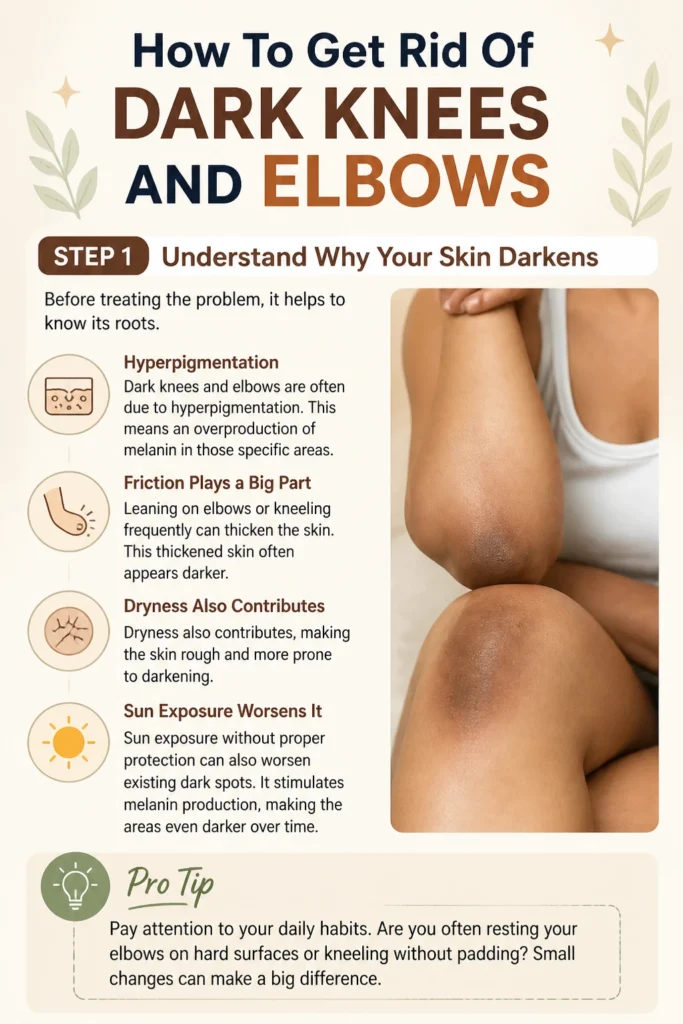
Friction plays a big part. Leaning on elbows or kneeling frequently can thicken the skin. This thickened skin often appears darker. Dryness also contributes, making the skin rough and more prone to darkening.
Sun exposure without proper protection can also worsen existing dark spots. It stimulates melanin production, making the areas even darker over time. Addressing these underlying causes is crucial for lasting results.
Pro Tip: Pay attention to your daily habits. Are you often resting your elbows on hard surfaces or kneeling without padding? Small changes can make a big difference.
Step 2: Start with Gentle Exfoliation
Exfoliation is essential for removing dead skin cells that accumulate and contribute to darkness. Choose between physical or chemical exfoliants, but always opt for gentleness. Harsh scrubbing can irritate the skin and worsen hyperpigmentation.
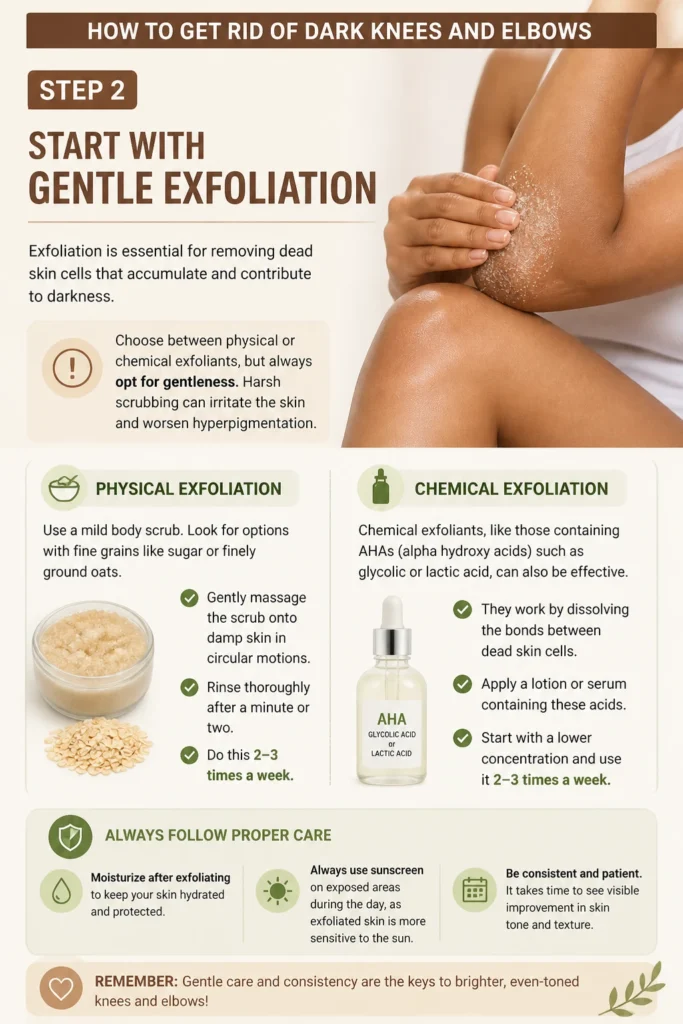
For physical exfoliation, use a mild body scrub. Look for options with fine grains like sugar or finely ground oats. Gently massage the scrub onto damp skin in circular motions.
Rinse thoroughly after a minute or two. Do this 2-3 times a week.
Chemical exfoliants, like those containing AHAs (alpha hydroxy acids) such as glycolic or lactic acid, can also be effective. They work by dissolving the bonds between dead skin cells. Apply a lotion or serum containing these acids.
Start with a lower concentration and use it 2-3 times a week. Always follow product instructions carefully.
Step 3: Moisturize Religiously
Hydrated skin is healthy skin, and it appears brighter. Dryness makes skin rough and accentuates dark patches. Moisturizing is not just about comfort; it’s a vital step in lightening these areas.
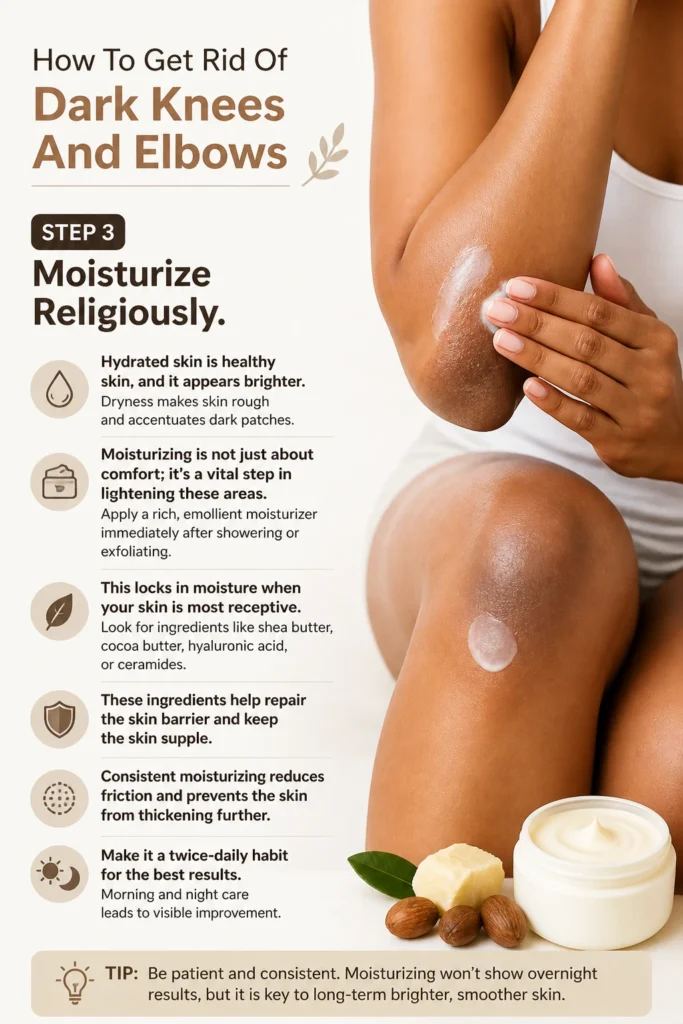
Apply a rich, emollient moisturizer immediately after showering or exfoliating. This locks in moisture when your skin is most receptive. Look for ingredients like shea butter, cocoa butter, hyaluronic acid, or ceramides.
These ingredients help repair the skin barrier and keep the skin supple. Consistent moisturizing reduces friction and prevents the skin from thickening further. Make it a twice-daily habit for the best results.
Step 4: Incorporate Natural Lightening Agents
Nature offers several ingredients known for their skin-lightening properties. These can be used as a supplementary treatment. Always perform a patch test first to check for any sensitivity.
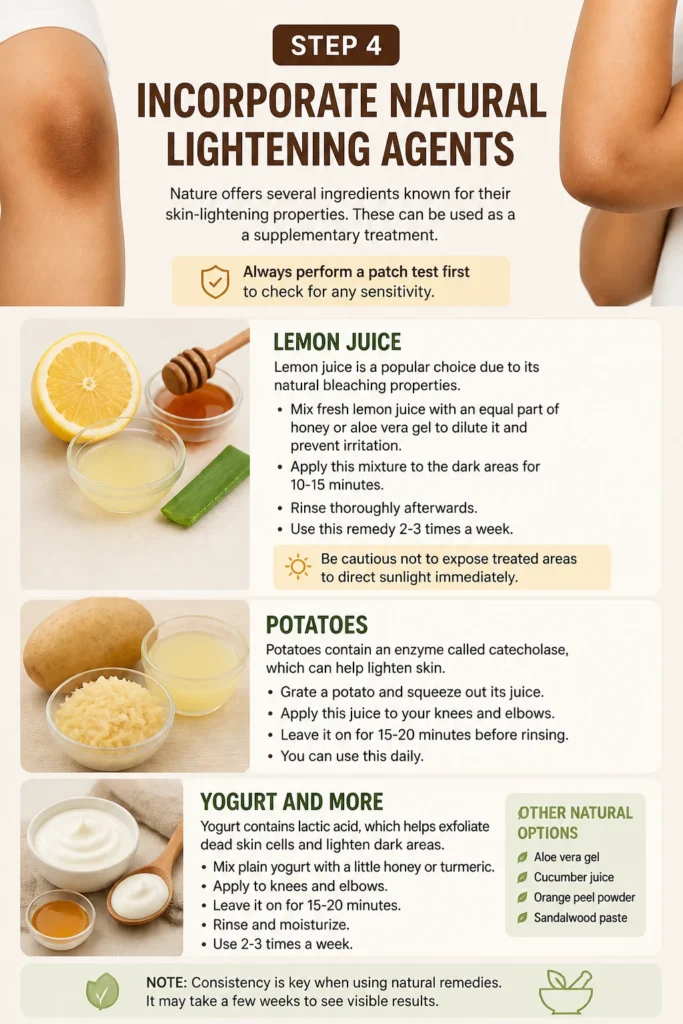
Lemon juice is a popular choice due to its natural bleaching properties. Mix fresh lemon juice with an equal part of honey or aloe vera gel to dilute it and prevent irritation. Apply this mixture to the dark areas for 10-15 minutes.
Rinse thoroughly afterwards. Use this remedy 2-3 times a week. Be cautious not to expose treated areas to direct sunlight immediately.
Potatoes contain an enzyme called catecholase, which can help lighten skin. Grate a potato and squeeze out its juice. Apply this juice to your knees and elbows.
Leave it on for 15-20 minutes before rinsing. You can use this daily.
Yogurt and gram flour (besan) make a brightening paste. Yogurt has lactic acid, a mild AHA. Mix a tablespoon of yogurt with a tablespoon of gram flour and a pinch of turmeric.
Apply the paste, let it dry for 20 minutes, then gently scrub off while rinsing. This can be done 2-3 times a week.
Step 5: Use Targeted Treatment Creams
For more stubborn darkness, over-the-counter creams specifically designed for hyperpigmentation can be very effective. Look for products containing specific active ingredients. These ingredients work to inhibit melanin production or speed up cell turnover.
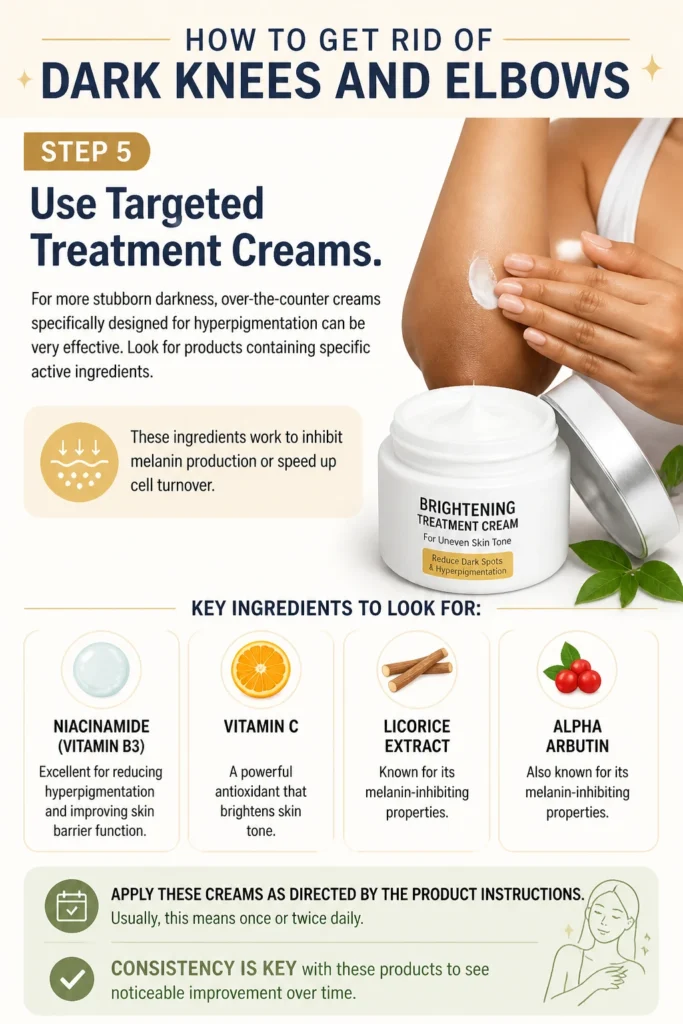
Ingredients like niacinamide (Vitamin B3) are excellent for reducing hyperpigmentation and improving skin barrier function. Vitamin C is another powerful antioxidant that brightens skin tone. Licorice extract and alpha arbutin are also known for their melanin-inhibiting properties.
Apply these creams as directed by the product instructions. Usually, this means once or twice daily. Consistency is key with these products to see noticeable improvement over time.
Step 6: Protect Your Skin from the Sun
Sun exposure is a major contributor to hyperpigmentation. Even if you’re using lightening treatments, unprotected sun exposure can undo all your efforts. It can even worsen the dark patches.
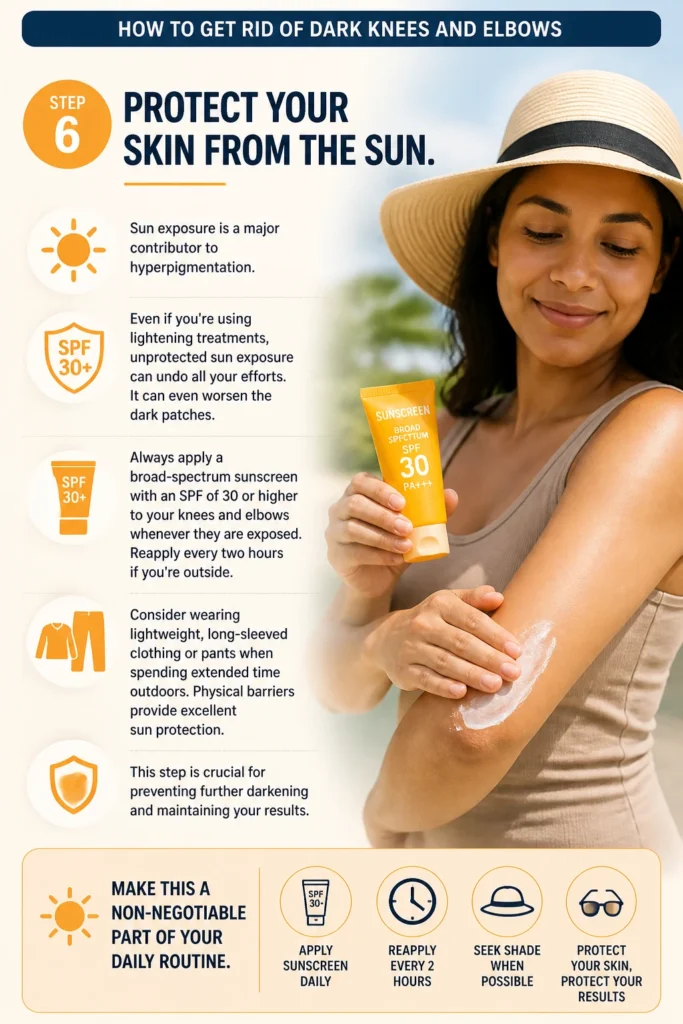
Always apply a broad-spectrum sunscreen with an SPF of 30 or higher to your knees and elbows whenever they are exposed. Reapply every two hours if you’re outside. Make this a non-negotiable part of your daily routine.
Consider wearing lightweight, long-sleeved clothing or pants when spending extended time outdoors. Physical barriers provide excellent sun protection. This step is crucial for preventing further darkening and maintaining your results.
Step 7: Adjust Your Lifestyle Habits
Beyond topical treatments, some simple lifestyle adjustments can prevent the recurrence of dark knees and elbows. These habits focus on reducing friction and irritation. Small changes can make a big difference in the long run.
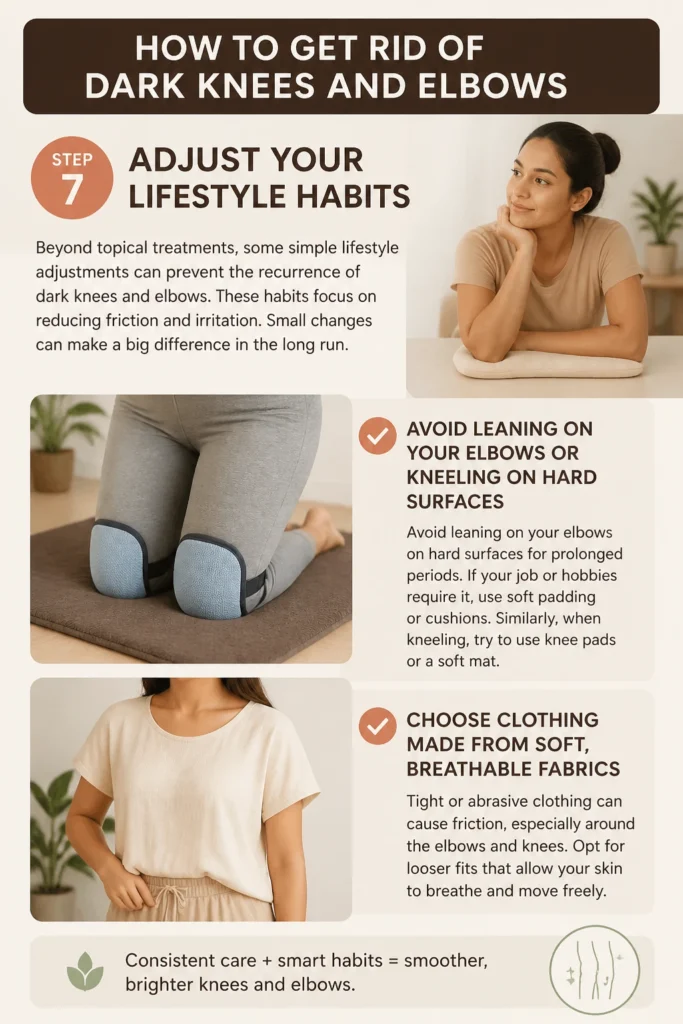
Avoid leaning on your elbows on hard surfaces for prolonged periods. If your job or hobbies require it, use soft padding or cushions. Similarly, when kneeling, try to use knee pads or a soft mat.
Choose clothing made from soft, breathable fabrics. Tight or abrasive clothing can cause friction, especially around the elbows and knees. Opt for looser fits that allow your skin to breathe and move freely.
Step 8: Be Patient and Consistent
Skin lightening is not an overnight process. It requires dedication and patience. Expect to see gradual improvements rather than immediate dramatic changes.
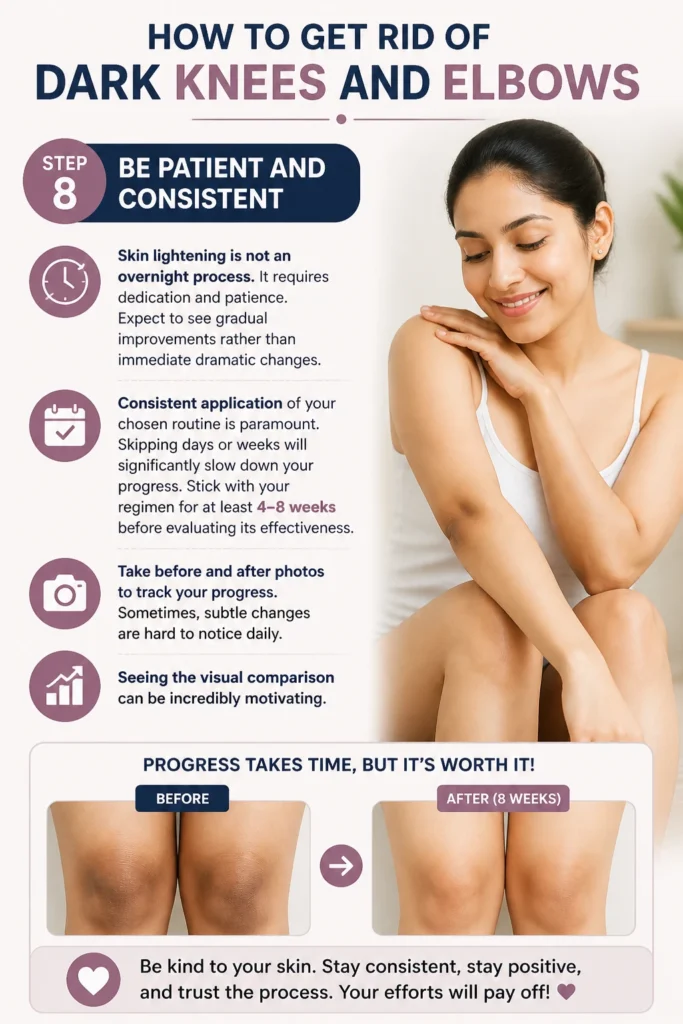
Consistent application of your chosen routine is paramount. Skipping days or weeks will significantly slow down your progress. Stick with your regimen for at least 4-8 weeks before evaluating its effectiveness.
Take before and after photos to track your progress. Sometimes, subtle changes are hard to notice daily. Seeing the visual comparison can be incredibly motivating.
Common Mistakes to Avoid
Over-Exfoliating
It’s tempting to scrub vigorously or exfoliate daily, thinking it will speed up results. However, over-exfoliation can do more harm than good. It strips the skin’s natural barrier, leading to irritation, redness, and even increased hyperpigmentation as the skin tries to protect itself.
Stick to exfoliating 2-3 times a week at most. Always use gentle products and a light touch. Listen to your skin; if it feels sensitive or raw, reduce the frequency.
Skipping Sun Protection
Many people diligently apply lightening creams but neglect sunscreen. This is a critical error. UV radiation stimulates melanin production, directly counteracting any lightening efforts.
Even on cloudy days or indoors near windows, UV rays can impact your skin. Make broad-spectrum SPF 30+ a non-negotiable daily step for exposed areas, especially your knees and elbows. This prevents new darkening and protects treated skin.
Expecting Instant Results
The desire for quick fixes is understandable, but skin cells take time to regenerate. Dark spots fade gradually as new, lighter skin cells come to the surface. Impatience can lead to abandoning a routine too soon.
Give any new regimen at least 4-8 weeks to show noticeable improvement. For significant changes, it might take several months. Celebrate small victories and remain consistent.
Using Harsh Home Remedies
While natural remedies can be effective, some ingredients, if used incorrectly or in high concentrations, can be too harsh. Pure, undiluted lemon juice, for instance, can cause photosensitivity and irritation if not diluted or followed by proper sun protection.
Always dilute strong ingredients and perform a patch test on a small, inconspicuous area first. If you experience burning, redness, or excessive dryness, discontinue use. Prioritize gentle and safe approaches.
Troubleshooting
No Visible Improvement After Several Weeks
If you’ve been consistent for 6-8 weeks and see no change, it might be time to adjust your approach. Ensure you’re using products with proven active ingredients like niacinamide, vitamin C, or AHAs in sufficient concentrations.
Re-evaluate your exfoliation method; perhaps you need a slightly stronger chemical exfoliant, but still gentle. Consider consulting a dermatologist for professional treatments if at-home methods aren’t enough. They can offer prescription-strength options or in-office procedures.
Skin Irritation or Redness
Irritation usually indicates that a product is too strong or you’re using it too frequently. This is common with exfoliants or certain lightening agents. First, stop using the product causing the irritation.
Allow your skin to heal for a few days, focusing only on gentle cleansing and moisturizing. Reintroduce products one at a time, at a lower frequency (e.g., once a week instead of three times). If irritation persists, switch to milder alternatives or consult a skin professional.
Darkening Appears Worse
Sometimes, in rare cases, skin can appear darker after starting a treatment. This could be post-inflammatory hyperpigmentation from irritation, especially if you’ve been over-exfoliating or using harsh products. It can also be a reaction to sun exposure on treated skin.
Immediately cease all active lightening treatments and focus on soothing and protecting your skin. Use a gentle moisturizer and rigorous sun protection. If the darkening doesn’t subside, seek advice from a dermatologist.
Key Takeaways
- Consistency is paramount: Daily effort yields gradual, lasting results.
- Gentle exfoliation removes dead skin: Aim for 2-3 times a week to reveal fresh skin.
- Moisturize deeply and frequently: Hydrated skin is less prone to darkening and irritation.
- Sun protection is non-negotiable: Use SPF 30+ daily to prevent new and worsening dark spots.
- Patience is a virtue: Expect to see changes over weeks or months, not days.
- Listen to your skin: Adjust treatments if you experience irritation or discomfort.
Frequently Asked Questions
How long does it typically take to see results?
You should generally expect to see initial improvements within 4-8 weeks of consistent application. Significant changes often require 2-3 months or even longer. Factors like the severity of the darkness and your skin’s response play a role.
Are natural remedies effective, or should I use commercial products?
Natural remedies like lemon juice, potato, and yogurt can be effective for mild cases and as supplementary treatments. However, commercial products with scientifically proven active ingredients (like niacinamide, Vitamin C, AHAs) often deliver more consistent and noticeable results, especially for more stubborn hyperpigmentation.
Can diet or hydration levels impact dark knees and elbows?
While direct links are less clear, a healthy diet rich in antioxidants and proper hydration supports overall skin health. Well-hydrated skin is generally more supple and resilient. Focus on a balanced diet and sufficient water intake for your general well-being, which can indirectly benefit your skin.
When should I consider seeing a dermatologist?
If you’ve tried consistent at-home remedies and over-the-counter products for several months without satisfactory results, or if you experience persistent irritation, it’s wise to consult a dermatologist. They can diagnose underlying causes and offer stronger prescription treatments or in-office procedures like chemical peels or laser therapy.
Our Top Recommended Finds
- Gentle AHA/BHA Body Lotion: Look for a lotion containing lactic acid or salicylic acid to gently exfoliate and smooth rough patches without harsh scrubbing.
- Rich Emollient Cream with Shea Butter: A thick, nourishing cream helps deeply moisturize, repair the skin barrier, and reduce friction-induced darkening.
- Broad-Spectrum SPF 30+ Body Sunscreen: Essential for protecting treated areas from sun exposure and preventing future hyperpigmentation.
Embrace Your Radiant Skin Journey
Taking care of your skin, especially in areas like knees and elbows, is a journey of self-care. It’s about more than just aesthetics; it’s about feeling comfortable and confident in your own skin. You now have a practical roadmap to address these common concerns.
Start today by incorporating one or two of these steps into your routine. Remember, consistency and patience are your best allies. Your skin will thank you for the dedication.
Consider exploring other aspects of skin health, such as full-body moisturizing routines or protecting your skin from environmental stressors. The effort you put in now will lead to lasting results and a renewed sense of confidence.