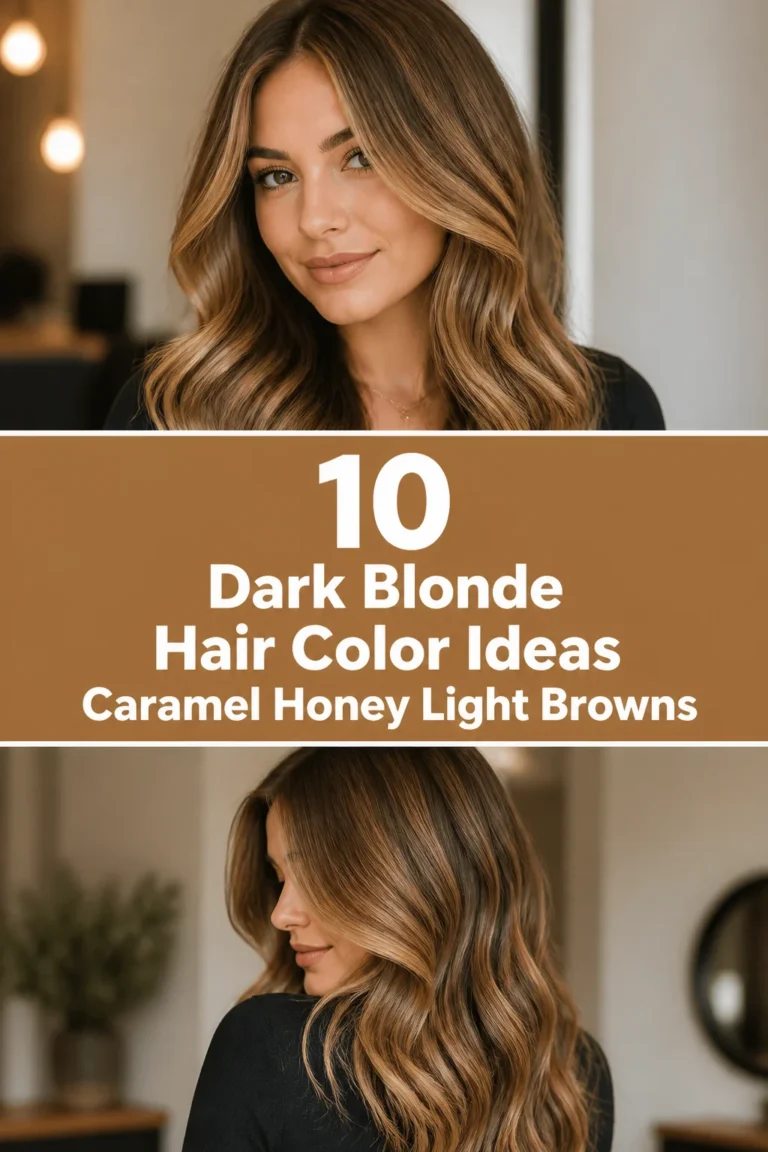
🎨 How To Do Balayage At Home Step By Step
I remember the first time I tried to lighten my own hair in my tiny bathroom, terrified I would end up with orange stripes.
After years of trial and error, I discovered that the secret to a salon-quality balayage isn’t magic; it is all about the technique and the tools you choose.
This guide shares everything I have learned so you can achieve that sun-kissed, blended look without the expensive salon price tag.

Quick Overview
Balayage is a French word meaning “to sweep,” which perfectly describes how you apply the lightener to your hair for a natural gradient.
- Time needed: 2 to 4 hours (depending on hair length and thickness)
- Difficulty: Intermediate
- What you’ll need: Bleach powder, developer (20 or 30 volume), a tint brush, a mixing bowl, sectioning clips, gloves, an old t-shirt, and a high-quality toner.
Step-by-Step Instructions
Step 1: Prepare Your Workspace and Hair
Set up a dedicated station in a well-lit room, preferably with a large mirror and a handheld mirror to see the back of your head.
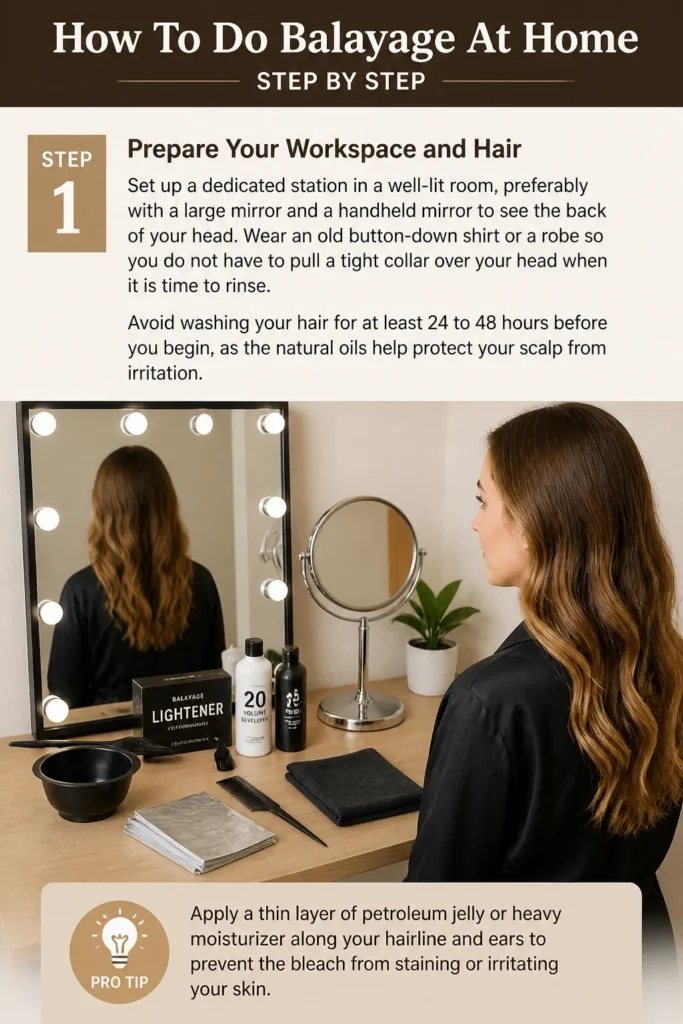
Wear an old button-down shirt or a robe so you do not have to pull a tight collar over your head when it is time to rinse.
Avoid washing your hair for at least 24 to 48 hours before you begin, as the natural oils help protect your scalp from irritation.
Pro Tip: Apply a thin layer of petroleum jelly or heavy moisturizer along your hairline and ears to prevent the bleach from staining or irritating your skin.
Step 2: Mix Your Lightener Properly
Combine your bleach powder and developer in a plastic mixing bowl according to the specific ratios listed on the packaging.
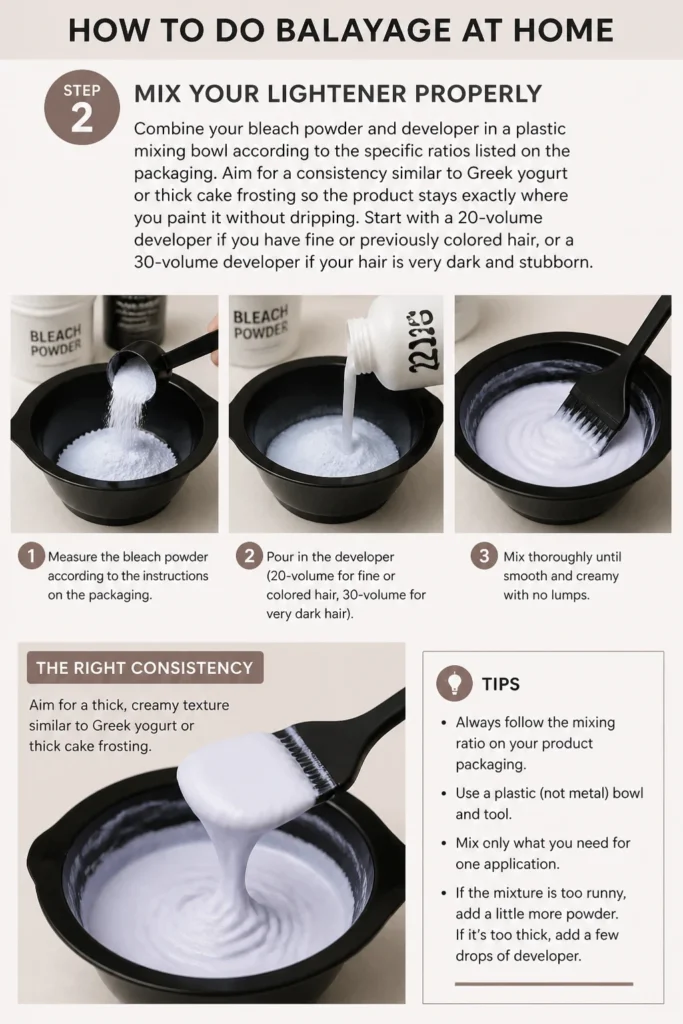
Aim for a consistency similar to Greek yogurt or thick cake frosting so the product stays exactly where you paint it without dripping.
Start with a 20-volume developer if you have fine or previously colored hair, or a 30-volume developer if your hair is very dark and stubborn.
Step 3: Section Your Hair Into Quadrants
Divide your hair down the middle from your forehead to the nape of your neck to create two main sides.
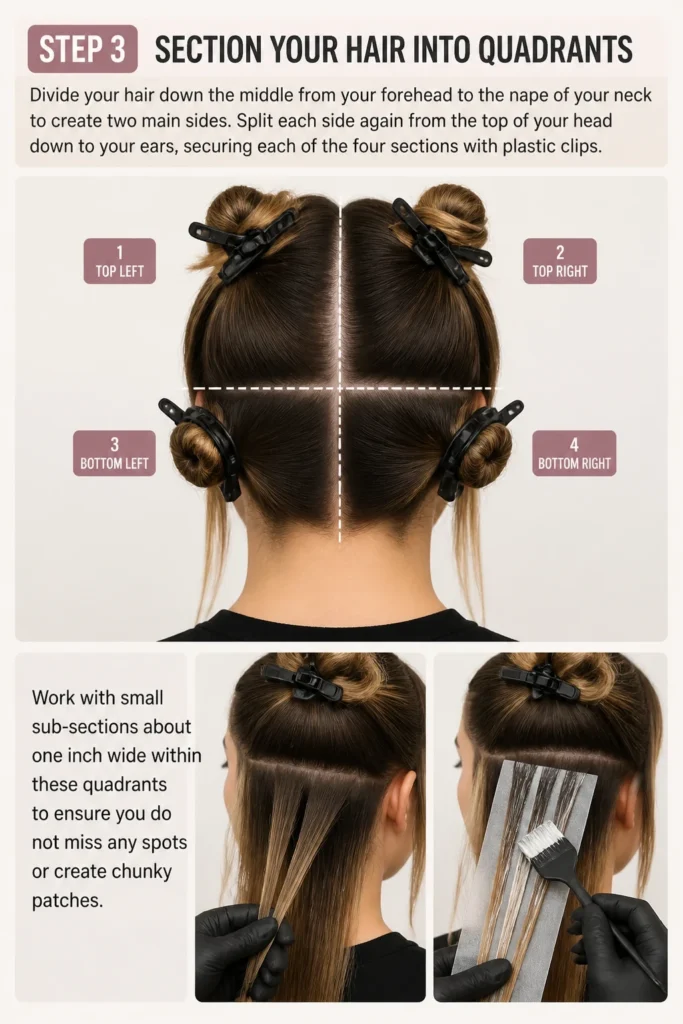
Split each side again from the top of your head down to your ears, securing each of the four sections with plastic clips.
Work with small sub-sections about one inch wide within these quadrants to ensure you do not miss any spots or create chunky patches.
Step 4: Master the “V” Painting Technique
Select a thin strand of hair and hold it taut away from your head with your non-dominant hand.
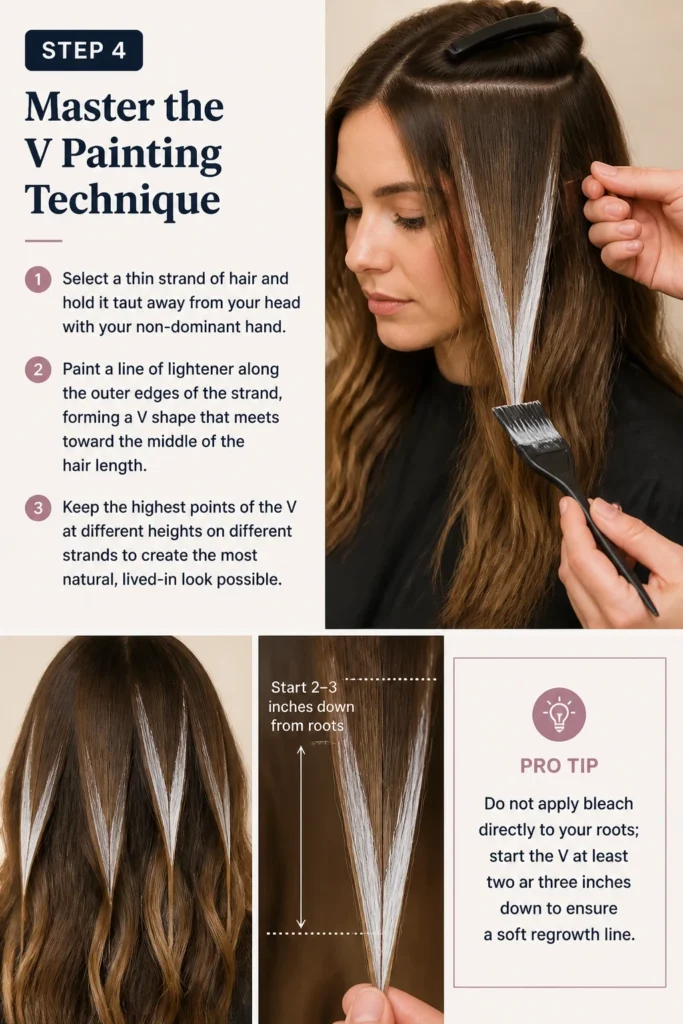
Paint a line of lightener along the outer edges of the strand, forming a “V” shape that meets toward the middle of the hair length.
Keep the highest points of the “V” at different heights on different strands to create the most natural, lived-in look possible.
Pro Tip: Do not apply bleach directly to your roots; start the “V” at least two or three inches down to ensure a soft regrowth line.
Step 5: Saturate the Ends Thoroughly
Load more product onto your brush once you reach the bottom third of the hair strand where you want the most brightness.
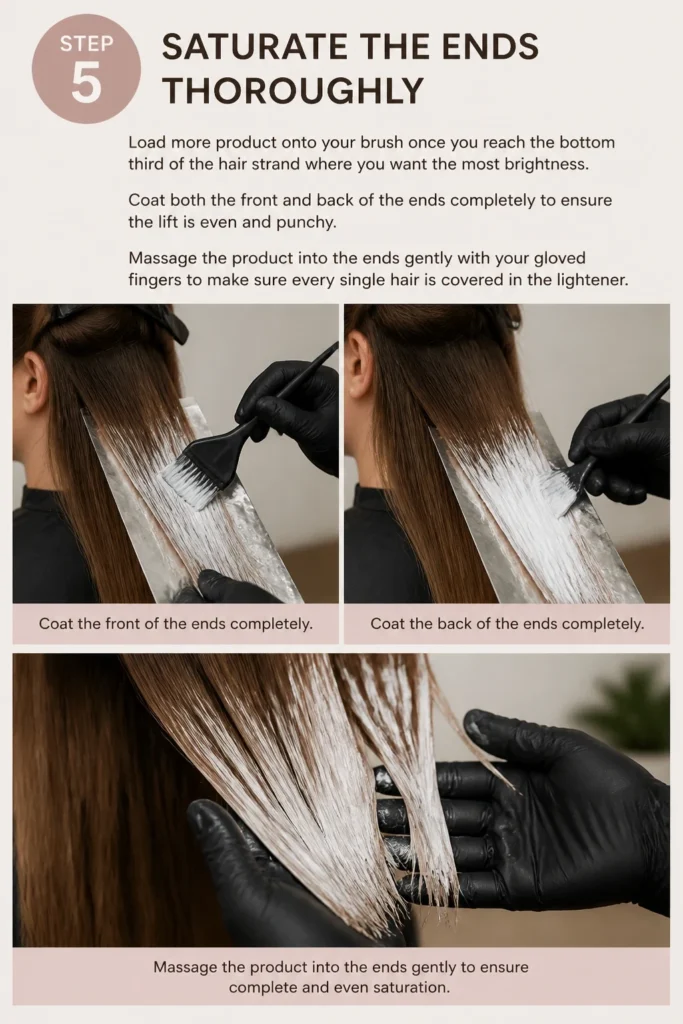
Coat both the front and back of the ends completely to ensure the lift is even and punchy.
Massage the product into the ends gently with your gloved fingers to make sure every single hair is covered in the lightener.
Step 6: Feather the Transition Area
Use a clean, dry tint brush or a sponge to lightly “flick” the lightener upward where the “V” begins.
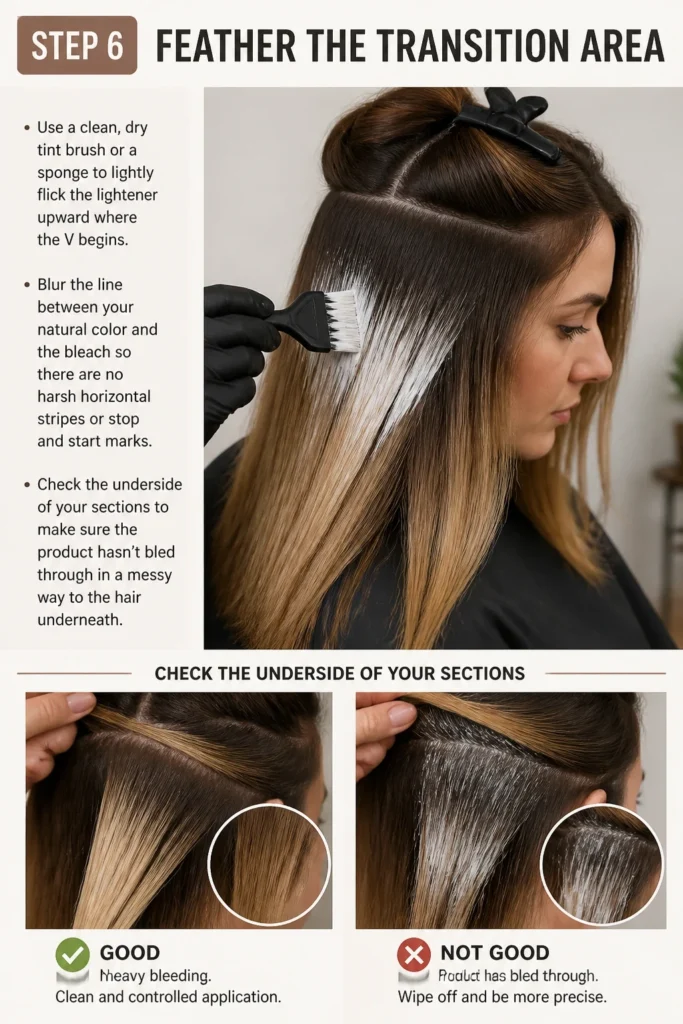
Blur the line between your natural color and the bleach so there are no harsh horizontal stripes or “stop and start” marks.
Check the underside of your sections to make sure the product hasn’t bled through in a messy way to the hair underneath.
Step 7: Monitor the Processing Time
Check a small strand of hair every 10 minutes by wiping away a bit of product with a damp paper towel.
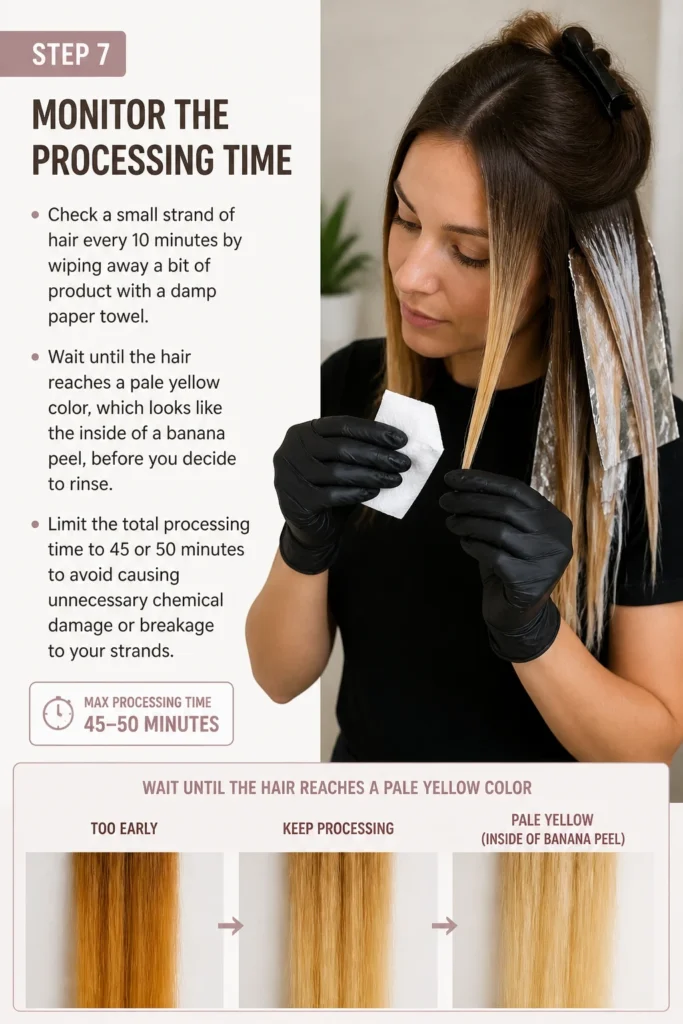
Wait until the hair reaches a “pale yellow” color, which looks like the inside of a banana peel, before you decide to rinse.
Limit the total processing time to 45 or 50 minutes to avoid causing unnecessary chemical damage or breakage to your strands.
Step 8: Rinse and Apply Toner
Wash the bleach out thoroughly with lukewarm water and a gentle clarifying shampoo until the water runs completely clear.
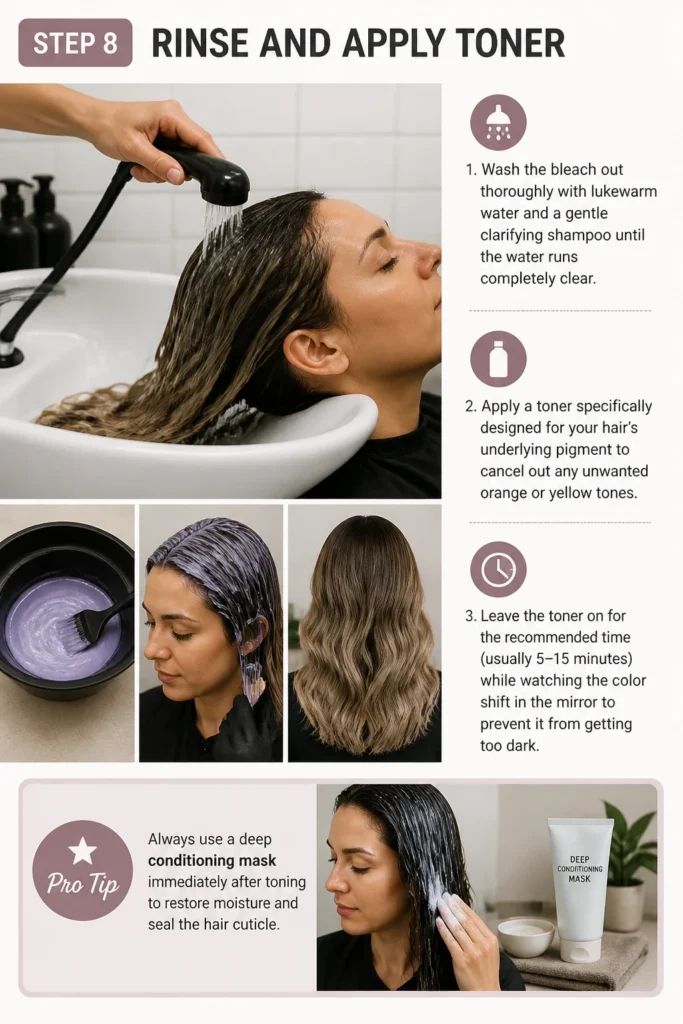
Apply a toner specifically designed for your hair’s “underlying pigment” to cancel out any unwanted orange or yellow tones.
Leave the toner on for the recommended time (usually 5-15 minutes) while watching the color shift in the mirror to prevent it from getting too dark.
Pro Tip: Always use a deep conditioning mask immediately after toning to restore moisture and seal the hair cuticle.
Common Mistakes to Avoid
Starting the Bleach Too High
One of the biggest errors beginners make is painting the lightener all the way up to the scalp. This creates a “harsh line” that looks more like traditional highlights than a soft balayage. You want the transition to be gradual, so always start your strokes lower than you think you should.
Using Too Much Product Near the Top
If you load your brush with too much bleach at the beginning of the stroke, you will end up with “bleeding” or spots. The top of your “V” should be very thin and light. Save the heavy saturation for the very ends of your hair where you want the most impact.
Ignoring the Back of the Head
It is easy to focus only on the pieces framing your face because you can see them clearly. However, neglecting the back leads to a “half-finished” look that is obvious to everyone else. Use a hand mirror and take your time to ensure the back sections are just as blended as the front.
Rinsing the Bleach Too Early
If you rinse the bleach while your hair still looks orange, your toner will not be able to fix the color properly. Toner is meant to refine the shade, not lift it. You must let the bleach work until the hair is a light yellow if you want that bright, creamy blonde result.
Troubleshooting
The Color Looks Brassy or Orange
This usually happens because the bleach didn’t stay on long enough or the developer wasn’t strong enough. You can fix this by using a blue-based toner for orange tones or a purple-based toner for yellow tones. If the hair is still very dark, you may need to wait a few weeks and do a second round of lightener.
There Are Splotches or “Bleed” Marks
If product leaked onto a section it wasn’t supposed to touch, you might see a random bright spot. You can camouflage these areas by using a “root smudge” technique with a hair dye that matches your natural color. Simply paint the darker dye over the splotch and blend it downward to hide the mistake.
The Ends Feel Dry and Crunchy
Bleach is a harsh chemical that strips hair of its natural moisture and proteins. If your hair feels damaged, avoid using heat tools like flat irons or curling wands for at least a week. Invest in a high-quality bond-building treatment to help repair the internal structure of the hair fibers.
Key Takeaways
- Always perform a strand test on a hidden piece of hair to see how the bleach reacts before doing your whole head.
- Keep your sections small and tidy to ensure every hair is properly saturated and blended.
- The “V” shape is the golden rule of balayage because it mimics how the sun naturally lightens hair.
- Toning is a mandatory step that transforms “raw” bleached hair into a professional, polished color.
- Patience is your best friend; rushing the painting process usually leads to uneven results.
Frequently Asked Questions
Can I do balayage on dark brown or black hair?
Yes, but it often requires a two-step process. You will likely need a 30-volume developer and a toner that is specifically formulated for “dark bases” to avoid a muddy red or orange finish. It is often safer to aim for a caramel or honey tone rather than a bright platinum on the first try.
Do I need to use foil for balayage?
Traditional balayage is an “open-air” technique, meaning you do not use foils. Foils trap heat and make the bleach work faster and more intensely, which can lead to a more “stripy” look. Leaving the hair open allows for a softer, more subtle lift that is characteristic of the balayage style.
How long does a home balayage last?
One of the best things about balayage is that it is very low maintenance. Since there is no harsh root line, you can go 3 to 6 months between touch-ups. You will only need to refresh your toner every 4 to 6 weeks to keep the blonde looking fresh and vibrant.
What if my hair has been colored dark recently?
If you have “box dye” in your hair, the bleach will have a harder time lifting the color. You may experience “banding,” where the hair turns different colors in different sections. In this case, it is often better to use a color remover before attempting the balayage to create a more even canvas.
Our Top Recommended Finds
- Professional Grade Lightener Powder: Look for a dust-free formula that contains built-in bond protectors to keep your hair healthy during the lifting process.
- Ergonomic Tint Brushes: A set with both wide and narrow brushes allows you to be precise near the transition area and fast on the ends.
- Bond-Building Treatment: A post-color treatment is essential for repairing the disulfide bonds in your hair that are broken during the bleaching process.
Master Your New Sun-Kissed Look
Now that you have the knowledge and the steps, you are ready to transform your hair right in your own bathroom.
Remember that hair grows back and color can always be adjusted, so do not let the fear of a small mistake stop you from trying.
Once you finish your balayage, you might want to look into how to style beachy waves to really show off those new dimensions.
Grab your clips and your mixing bowl, and start painting your way to the hair of your dreams today.