
🤔 How To Get Rid Of Dry Flaky Skin On Face
Dealing with dry, flaky skin on your face can feel frustrating and uncomfortable. It often leads to a dull complexion and can make makeup application a challenge. I’ve personally experienced the tightness and visible flakes, constantly searching for solutions that actually work.
This guide shares everything I’ve learned, offering practical steps to transform your skin. You’ll discover how to soothe, hydrate, and restore your skin’s natural barrier for a smooth, healthy glow.

Quick Overview
This guide will empower you to understand, treat, and prevent dry, flaky skin on your face. You’ll learn simple yet effective routines and lifestyle adjustments.
- Time needed: 15-30 minutes daily, plus weekly treatments
- Difficulty: Beginner
- What you’ll need: Gentle cleanser, hydrating serum, rich moisturizer, soft cloth, sunscreen, humidifier
Step-by-Step Instructions
Step 1: Understand the Root Causes
Before treating, it’s crucial to identify why your skin is dry and flaky. Common culprits include harsh weather, hot showers, irritating products, or underlying skin conditions. Pinpointing the cause helps you choose the most effective solutions.

Consider if your environment is very dry, or if you’ve recently changed skincare products. Sometimes, even central heating or air conditioning can strip moisture from your skin.
Pro Tip: Keep a simple skin journal for a week. Note down products used, weather conditions, and how your skin feels each day. This can reveal patterns.
Step 2: Cleanse with Care and Gentleness
Harsh cleansers are a major enemy of dry skin, stripping away natural oils. Opt for a creamy, hydrating cleanser that doesn’t foam excessively. Look for ingredients like ceramides, hyaluronic acid, or glycerin.
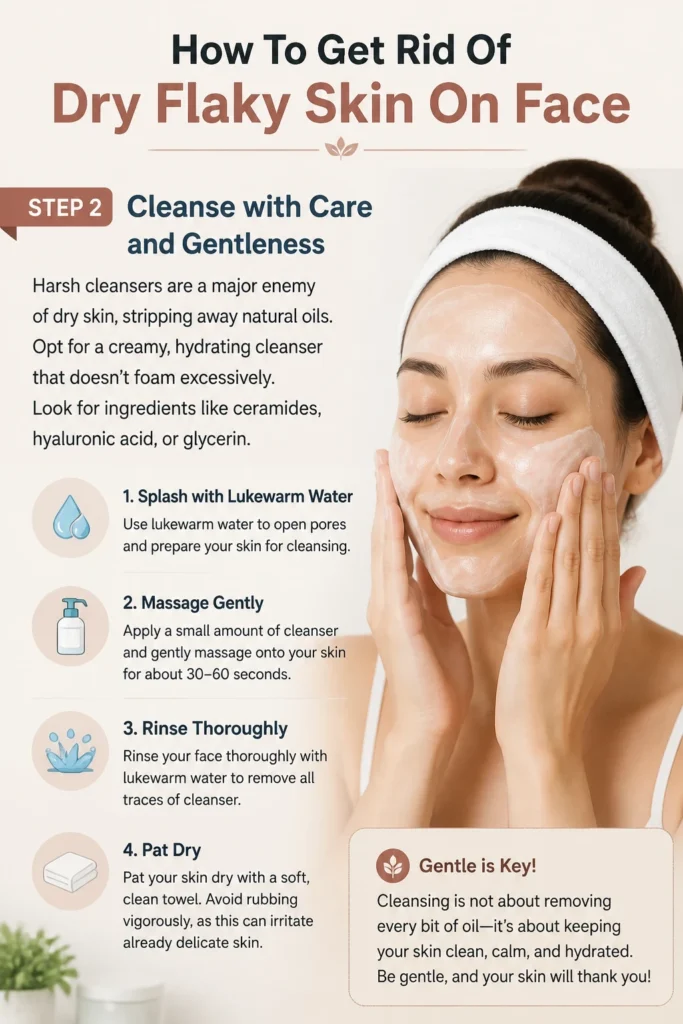
Splash your face with lukewarm water, then gently massage the cleanser onto your skin for about 30-60 seconds. Rinse thoroughly with lukewarm water and pat dry with a soft, clean towel. Avoid rubbing vigorously, as this can irritate already delicate skin.
Step 3: Exfoliate Wisely and Safely
Exfoliation is key to removing dead, flaky skin cells, but it must be done gently. Choose a mild chemical exfoliant with AHAs (like lactic acid) or PHAs, which are less irritating than physical scrubs. Start with once a week.
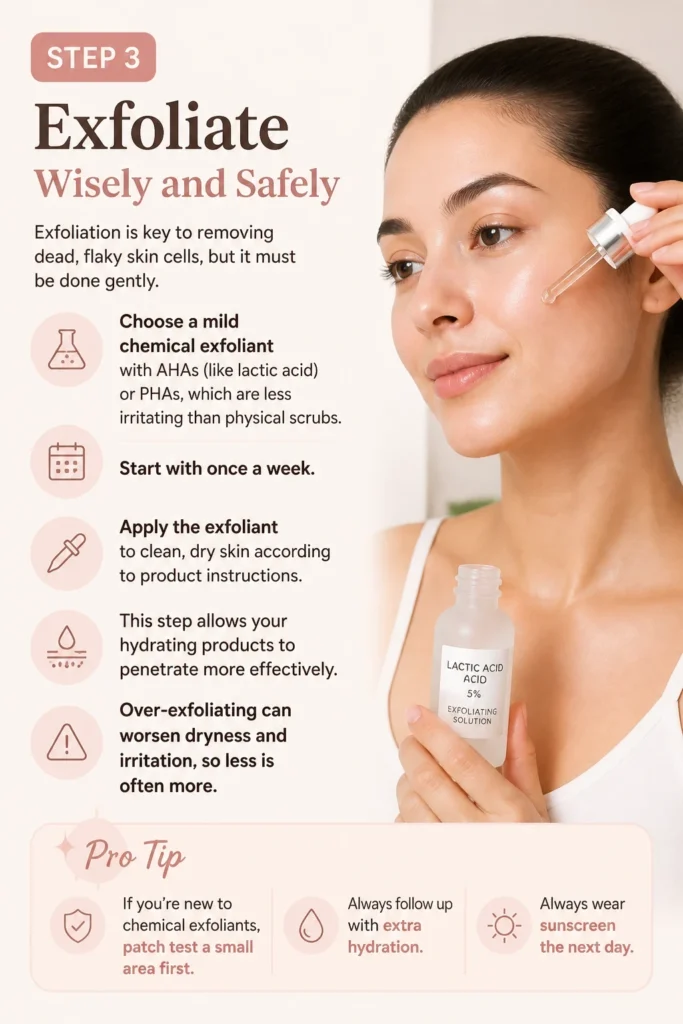
Apply the exfoliant to clean, dry skin according to product instructions. This step allows your hydrating products to penetrate more effectively. Over-exfoliating can worsen dryness and irritation, so less is often more.
Pro Tip: If you’re new to chemical exfoliants, patch test a small area first. Always follow up with extra hydration and sunscreen the next day.
Step 4: Hydrate Deeply with Serums
After cleansing and gentle exfoliation, apply a hydrating serum to damp skin. Serums are concentrated formulas designed to deliver powerful active ingredients deep into the skin. Look for serums rich in hyaluronic acid, glycerin, or polyglutamic acid.

These ingredients act as humectants, drawing moisture from the air and locking it into your skin. Press the serum gently onto your face and neck. Give it a moment to absorb before moving to the next step.
Step 5: Moisturize Consistently and Richly
This is perhaps the most crucial step for combating dry, flaky skin. Choose a rich, emollient moisturizer that helps repair your skin’s barrier. Ingredients like ceramides, shea butter, squalane, or petrolatum are excellent choices.
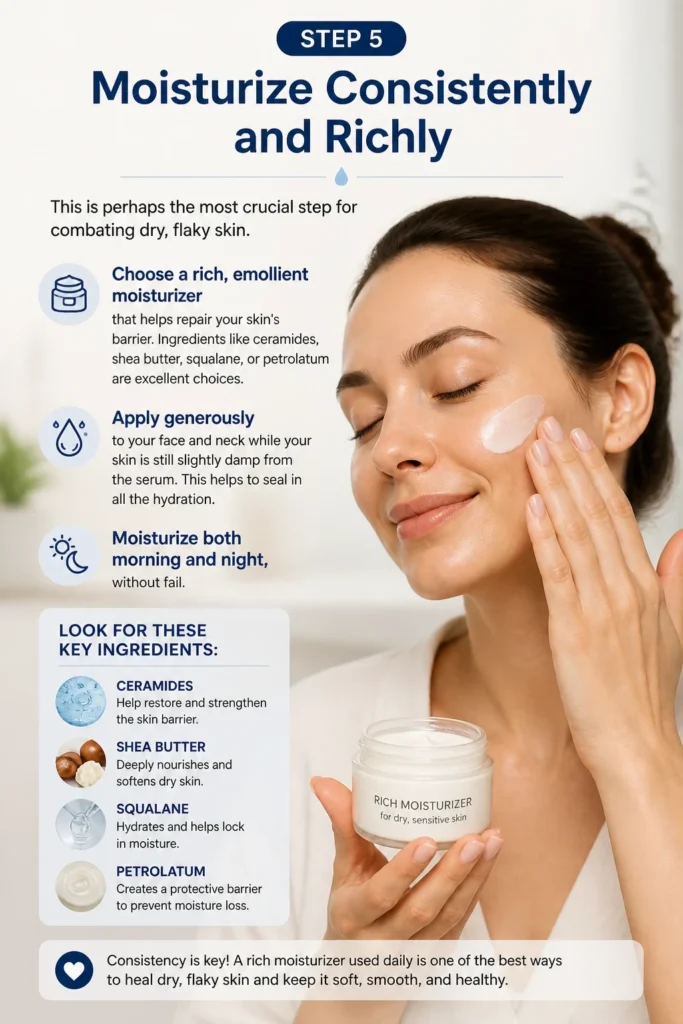
Apply a generous amount to your face and neck while your skin is still slightly damp from the serum. This helps to seal in all the hydration. Moisturize both morning and night, without fail.
Step 6: Protect Your Skin from the Elements
Sun exposure can damage the skin barrier and worsen dryness, even on cloudy days. Always finish your morning routine with a broad-spectrum sunscreen with at least SPF 30. Choose a moisturizing formula to add an extra layer of hydration.
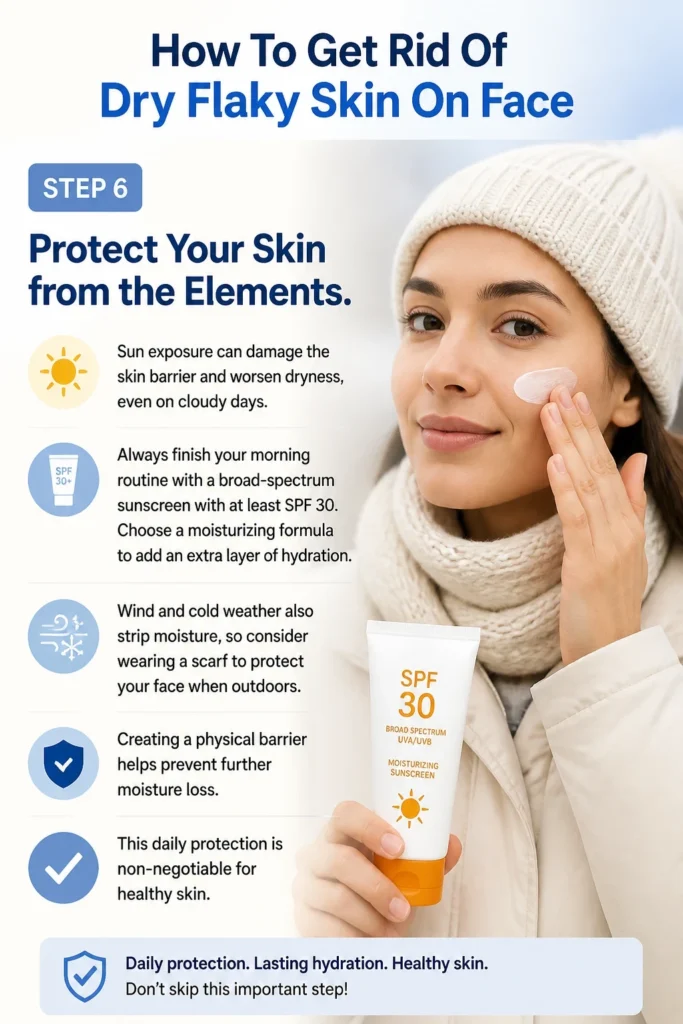
Wind and cold weather also strip moisture, so consider wearing a scarf to protect your face when outdoors. Creating a physical barrier helps prevent further moisture loss. This daily protection is non-negotiable for healthy skin.
Step 7: Adjust Your Environment
Your indoor environment plays a significant role in skin hydration. Dry air, especially from heating or air conditioning, can pull moisture directly from your skin. Consider using a cool-mist humidifier in your bedroom.

Running a humidifier, especially overnight, can significantly increase the moisture in the air around you. This helps your skin retain its natural hydration, preventing it from drying out while you sleep. Keep it clean to avoid mold or bacteria.
Step 8: Review Your Internal Hydration and Diet
What you put into your body directly impacts your skin. Ensure you are drinking enough water throughout the day. Dehydration shows up on your skin as dryness and dullness.

Incorporate foods rich in omega-3 fatty acids, like salmon, flaxseeds, and walnuts. These healthy fats support your skin’s natural barrier function from within. A balanced diet contributes greatly to overall skin health.
Common Mistakes to Avoid
Over-Exfoliating Your Skin
While exfoliation is important, doing it too often or using harsh physical scrubs can strip your skin’s protective barrier. This leads to increased dryness, redness, and irritation, making the flakiness worse. Stick to gentle chemical exfoliants 1-2 times a week at most.
Using Hot Water for Cleansing
Hot water feels comforting, but it can be incredibly harsh on dry skin. It strips away natural oils, leaving your skin feeling tighter and more dehydrated. Always use lukewarm water for cleansing your face to preserve its moisture.
Skipping Sunscreen
Many people think sunscreen is only for sunny beach days, but UV rays are present year-round. Sun exposure damages the skin barrier and contributes to dryness and premature aging. Make a broad-spectrum SPF 30+ a non-negotiable part of your daily routine.
Ignoring Your Body’s Signals
Your skin often reflects your overall health. Ignoring persistent dryness, even after following a good routine, could mean an underlying issue. Listen to your body and consider consulting a dermatologist if symptoms persist.
Troubleshooting
My Skin Still Feels Tight and Flaky After a Week
If your skin hasn’t improved, you might need richer hydration. Double-check your moisturizer ingredients for ceramides, petrolatum, or shea butter. Consider “slugging” – applying a thin layer of occlusive balm (like Vaseline or Aquaphor) over your moisturizer at night to lock everything in. Ensure your cleanser is truly gentle.
I’m Experiencing Redness or Irritation
Redness often indicates irritation, possibly from over-exfoliation or a product ingredient. Pause all active ingredients (exfoliants, retinoids, vitamin C) for a few days. Focus on a simple routine of gentle cleanser, hydrating serum, and a barrier-repairing moisturizer. Gradually reintroduce products one by one to identify the culprit.
I’m Breaking Out While Trying to Hydrate My Skin
Sometimes, rich moisturizers can clog pores for those prone to breakouts. Look for non-comedogenic moisturizers, meaning they are formulated not to block pores. Ensure you are cleansing thoroughly but gently. You might need to experiment with different textures, like a hydrating gel-cream instead of a heavy balm.
Key Takeaways
- Cleanse Gently: Always use a creamy, hydrating cleanser with lukewarm water.
- Exfoliate Mindfully: Opt for mild chemical exfoliants 1-2 times a week to remove dead skin.
- Hydrate and Moisturize: Layer a hydrating serum under a rich, barrier-repairing moisturizer twice daily.
- Protect Daily: Apply broad-spectrum SPF 30+ every morning, rain or shine.
- Support Internally: Drink plenty of water and consume omega-rich foods for skin health.
- Be Patient and Consistent: Skin recovery takes time; stick to your routine for lasting results.
Frequently Asked Questions
How often should I exfoliate dry, flaky skin?
For dry, flaky skin, start with exfoliating once a week. If your skin tolerates it well and you still see some flakiness, you can cautiously increase to twice a week. Always listen to your skin and reduce frequency if you notice any irritation or increased dryness.
What are the best ingredients for very dry and flaky facial skin?
Look for ingredients that hydrate and repair the skin barrier. Hyaluronic acid and glycerin are excellent humectants, while ceramides, cholesterol, and fatty acids help rebuild the barrier. Occlusives like petrolatum, shea butter, and squalane lock in moisture effectively.
Can makeup make my dry, flaky skin worse?
Yes, certain types of makeup, especially matte or powder foundations, can cling to dry patches and emphasize flakes. They can also further dehydrate your skin. Opt for hydrating liquid or cream foundations, and always prep your skin thoroughly with moisturizer and primer.
When should I see a dermatologist for dry, flaky skin?
If your dry, flaky skin persists despite consistent care, or if you experience severe redness, itching, pain, or cracking, it’s wise to consult a dermatologist. They can rule out underlying conditions like eczema, psoriasis, or fungal infections and recommend prescription treatments.
Our Top Recommended Finds
- Creamy Hydrating Cleanser: A gentle, non-foaming formula to clean without stripping.
- Hyaluronic Acid Serum: A lightweight serum to draw and hold moisture in your skin.
- Ceramide-Rich Moisturizer: A thick cream designed to repair and strengthen your skin barrier.
- Cool Mist Humidifier: An essential tool for adding moisture back into dry indoor air.
Embrace Your Radiant, Hydrated Skin
Getting rid of dry, flaky skin on your face is a journey, not a quick fix. It requires understanding your skin, choosing the right products, and committing to a consistent, gentle routine. You have the power to transform your complexion.
Start today by making small, intentional changes to your skincare habits and lifestyle. Your skin will thank you with a healthier, smoother, and more comfortable feel. Celebrate each step towards your radiant, hydrated glow.