✨ How To Make Your Hair Grow Faster Longer Black Women
Growing out your hair can feel like a marathon, especially when you desire length and health. It’s a journey many Black women embark on, seeking vibrant, long tresses. I’ve personally navigated this path and seen the incredible transformations that consistency brings.
This guide shares practical, actionable steps to help you reach your hair growth goals. Trust in these methods, rooted in understanding our unique hair needs.
Quick Overview
This guide will empower you to cultivate healthier hair habits. You’ll learn how to nurture your scalp and strands for optimal growth. We’ll cover everything from internal wellness to external care.
- Time needed: Consistent daily and weekly effort over several months
- Difficulty: Intermediate
- What you’ll need: Gentle hair products, satin/silk accessories, a spray bottle, wide-tooth comb, and patience.
Step-by-Step Instructions
Step 1: Prioritize Scalp Health
Your hair grows from your scalp. A healthy scalp is fundamental for strong, fast-growing hair. Think of it as the fertile ground for your strands.
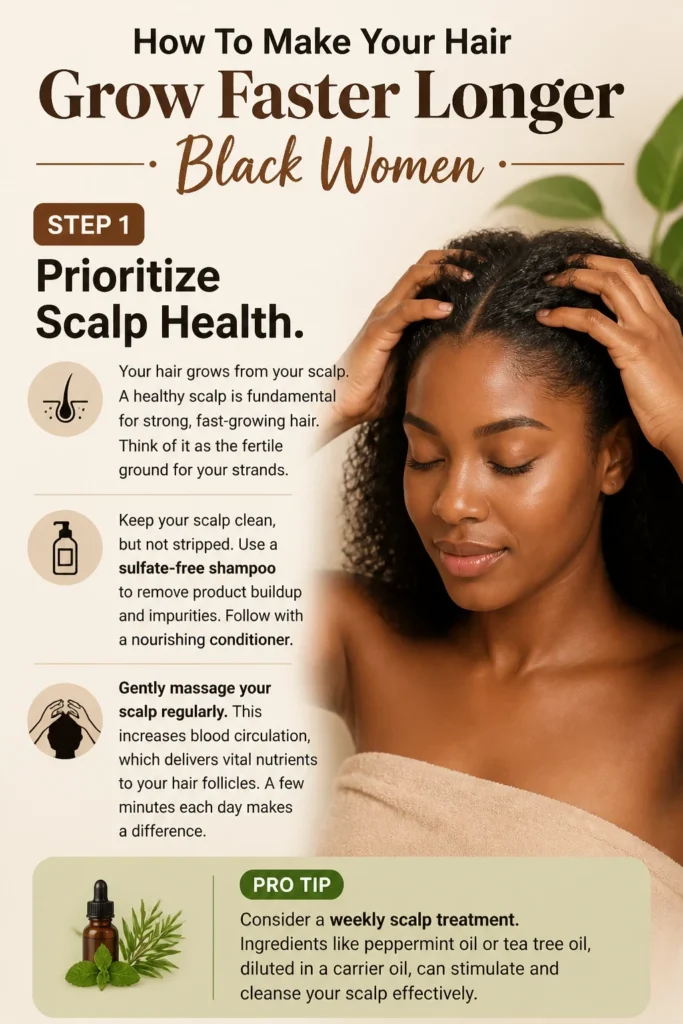
Keep your scalp clean, but not stripped. Use a sulfate-free shampoo to remove product buildup and impurities. Follow with a nourishing conditioner.
Gently massage your scalp regularly. This increases blood circulation, which delivers vital nutrients to your hair follicles. A few minutes each day makes a difference.
Pro Tip: Consider a weekly scalp treatment. Ingredients like peppermint oil or tea tree oil, diluted in a carrier oil, can stimulate and cleanse your scalp effectively.
Step 2: Deeply Moisturize and Condition
Black hair thrives on moisture. Dry hair is brittle hair, leading to breakage and stunted growth. Hydration is your greatest ally.
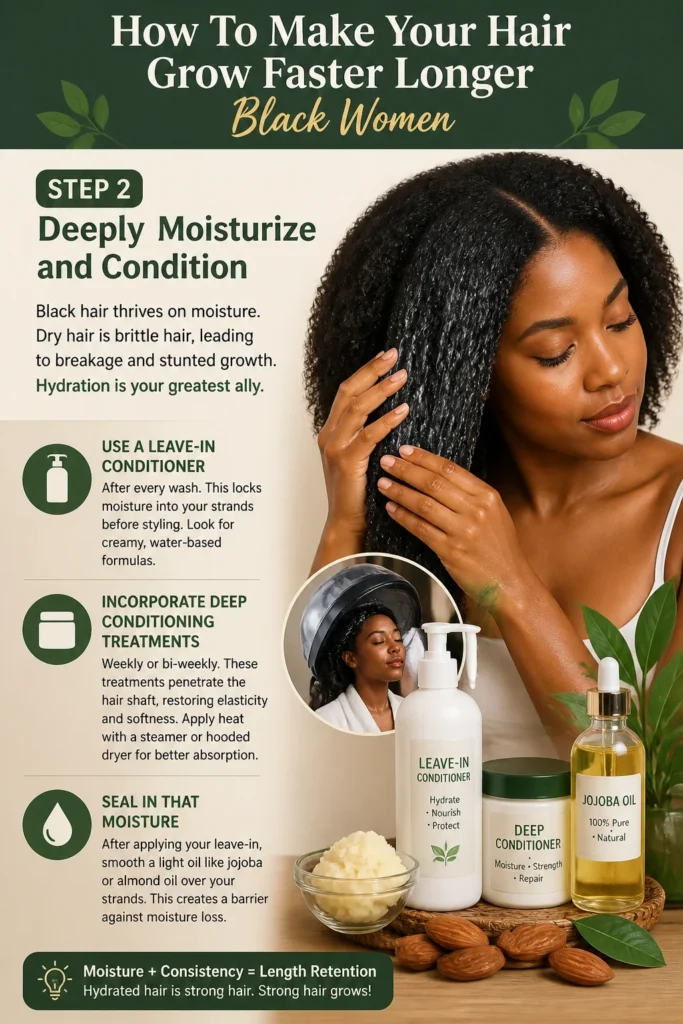
Use a leave-in conditioner after every wash. This locks moisture into your strands before styling. Look for creamy, water-based formulas.
Incorporate deep conditioning treatments weekly or bi-weekly. These treatments penetrate the hair shaft, restoring elasticity and softness. Apply heat with a steamer or hooded dryer for better absorption.
Seal in that moisture with an oil or butter. After applying your leave-in, smooth a light oil like jojoba or almond oil over your strands. This creates a barrier against moisture loss.
Step 3: Embrace Protective Styling
Protective styles shield your ends from manipulation and environmental damage. They are a cornerstone of length retention. Styles like braids, twists, and buns minimize daily wear and tear.
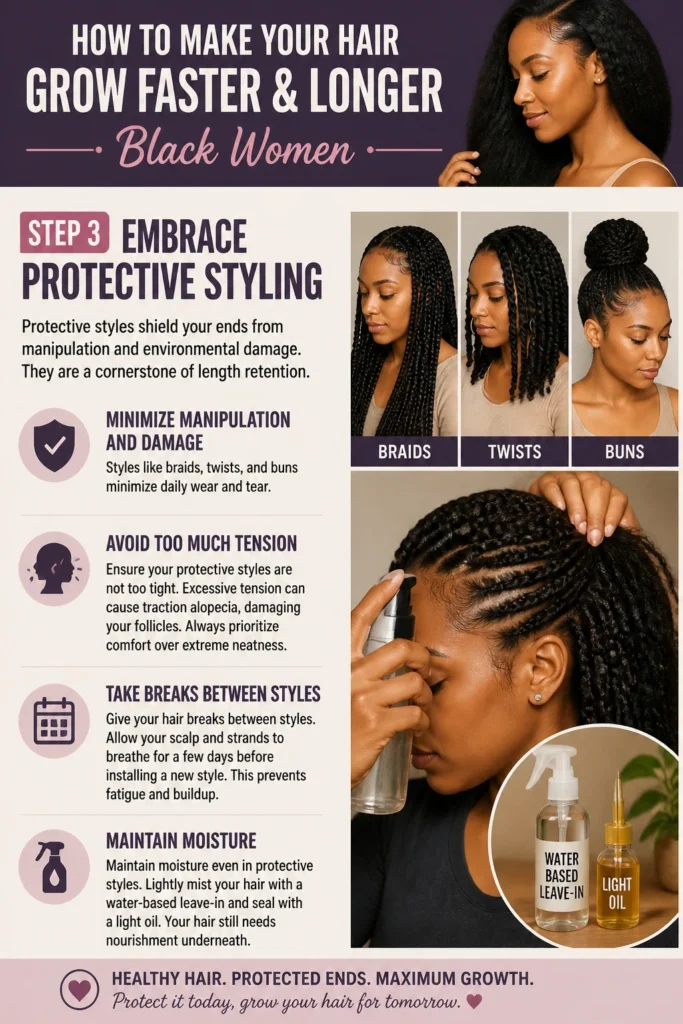
Ensure your protective styles are not too tight. Excessive tension can cause traction alopecia, damaging your follicles. Always prioritize comfort over extreme neatness.
Give your hair breaks between styles. Allow your scalp and strands to breathe for a few days before installing a new style. This prevents fatigue and buildup.
Maintain moisture even in protective styles. Lightly mist your hair with a water-based leave-in and seal with a light oil. Your hair still needs nourishment underneath.
Step 4: Handle Your Hair with Utmost Gentleness
Rough handling is a major cause of breakage. Treat your hair like delicate silk, especially when wet. Wet hair is most vulnerable to damage.
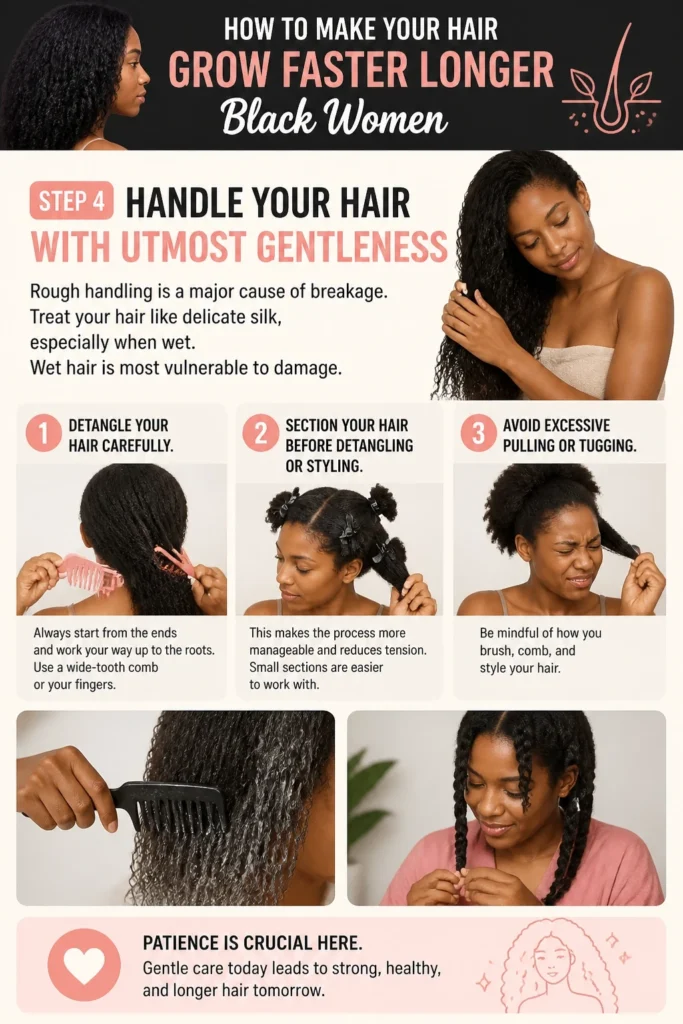
Detangle your hair carefully. Always start from the ends and work your way up to the roots. Use a wide-tooth comb or your fingers.
Section your hair before detangling or styling. This makes the process more manageable and reduces tension. Small sections are easier to work with.
Avoid excessive pulling or tugging. Be mindful of how you brush, comb, and style your hair. Patience is crucial here.
Step 5: Nourish Your Body from Within
Hair growth isn’t just about what you put on your hair. What you put into your body plays an equally important role. A balanced diet supports healthy hair.
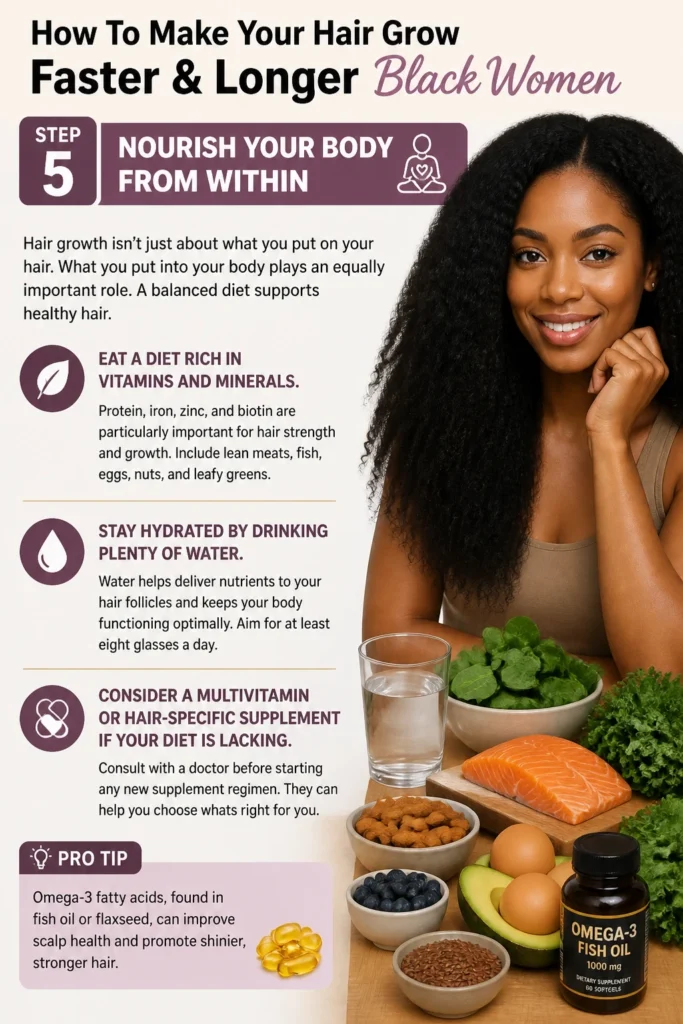
Eat a diet rich in vitamins and minerals. Protein, iron, zinc, and biotin are particularly important for hair strength and growth. Include lean meats, fish, eggs, nuts, and leafy greens.
Stay hydrated by drinking plenty of water. Water helps deliver nutrients to your hair follicles and keeps your body functioning optimally. Aim for at least eight glasses a day.
Consider a multivitamin or hair-specific supplement if your diet is lacking. Consult with a doctor before starting any new supplement regimen. They can help you choose what’s right for you.
Pro Tip: Omega-3 fatty acids, found in fish oil or flaxseed, can improve scalp health and hair shine. Incorporate these into your diet or through supplements.
Step 6: Protect Your Hair While You Sleep
Your pillowcase can be a silent enemy to your hair. Cotton pillowcases absorb moisture and cause friction. This leads to dryness and breakage.
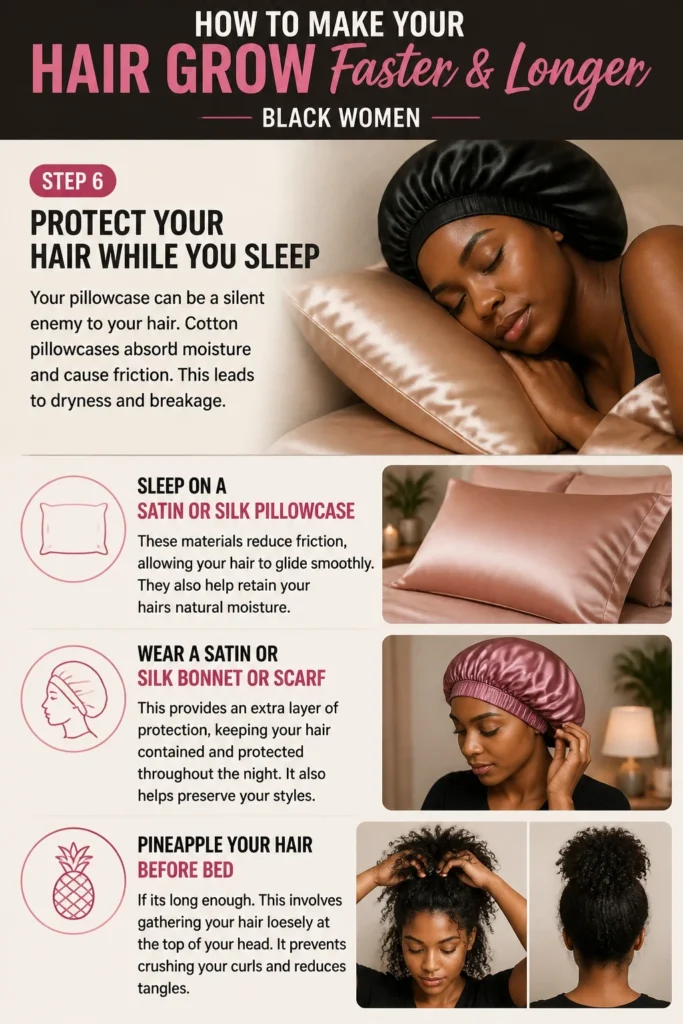
Sleep on a satin or silk pillowcase. These materials reduce friction, allowing your hair to glide smoothly. They also help retain your hair’s natural moisture.
Wear a satin or silk bonnet or scarf. This provides an extra layer of protection, keeping your hair contained and protected throughout the night. It also helps preserve your styles.
Pineapple your hair before bed if it’s long enough. This involves gathering your hair loosely at the top of your head. It prevents crushing your curls and reduces tangles.
Step 7: Trim Your Ends Regularly (But Wisely)
It might seem counterintuitive to cut your hair when you want it to grow. However, trims are essential for length retention. Split ends travel up the hair shaft, causing more damage.
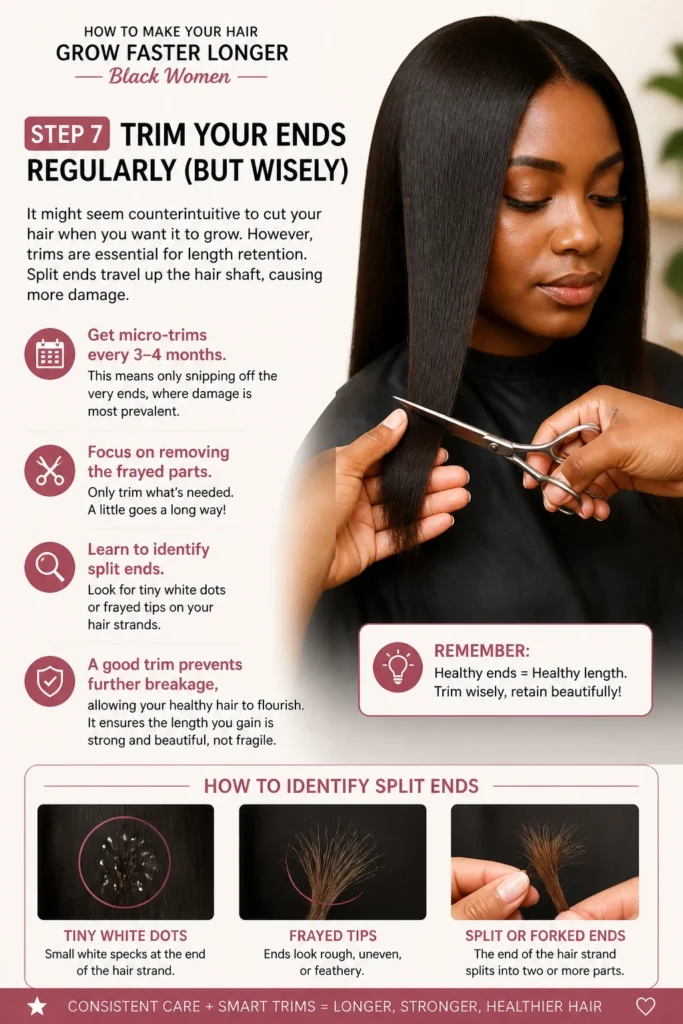
Get micro-trims every 3-4 months. This means only snipping off the very ends, where damage is most prevalent. Focus on removing the frayed parts.
Learn to identify split ends. Look for tiny white dots or frayed tips on your hair strands. These are clear indicators that a trim is needed.
A good trim prevents further breakage, allowing your healthy hair to flourish. It ensures the length you gain is strong and beautiful, not fragile.
Common Mistakes to Avoid
Over-Manipulation and Excessive Styling
Constantly touching, styling, or combing your hair leads to breakage. Each time you manipulate your strands, you put stress on them. This wear and tear prevents length retention.
Choose styles that last several days or weeks. Give your hair a break from daily styling tools and products. Less handling means less breakage.
Neglecting Your Scalp
Many focus solely on the hair strands, forgetting the source. A neglected scalp, full of buildup or dryness, cannot support healthy hair growth. This oversight hinders your progress.
Ensure your scalp is clean, moisturized, and stimulated regularly. It’s the foundation for everything else. Treat your scalp with the same care as your face.
Ignoring Your Hair’s Moisture Needs
Black hair is naturally drier than other hair types due to its curl pattern. Not providing enough moisture results in brittle, fragile hair that breaks easily. This stops growth in its tracks.
Make moisture a non-negotiable part of your routine. Use water-based products, deep condition, and seal your ends consistently. Your hair will thank you.
Using Excessive Heat
High heat can permanently damage your hair’s protein structure. This leads to dryness, brittleness, and breakage. Heat damage can be irreversible, requiring you to cut off the affected hair.
Limit heat styling as much as possible. When you do use heat, always apply a heat protectant. Opt for low heat settings and air dry whenever you can.
Troubleshooting
Excessive Breakage Despite Care
If you’re experiencing significant breakage, first assess your handling. Are you being gentle enough during detangling and styling? Check for any tight hairstyles or rough tools.
Next, review your moisture routine. Is your hair truly hydrated, or just coated? Deep condition more frequently and ensure you’re sealing in moisture effectively. Consider a protein treatment if your hair feels mushy, but use sparingly.
Slow or Stalled Growth
Slow growth can sometimes point to internal factors. Re-evaluate your diet and water intake. Are you getting enough essential nutrients? Consider blood tests to rule out any deficiencies.
Also, examine your products. Are they truly nourishing, or causing buildup? Try clarifying your scalp and switching to lighter, more natural ingredient products. Patience is key, as hair growth is a slow process for everyone.
Persistent Dryness
If your hair remains dry, your sealing method might not be sufficient. Ensure you’re applying a leave-in conditioner first, then a heavier oil or butter. The L.O.C (Liquid, Oil, Cream) or L.C.O (Liquid, Cream, Oil) method can be very effective.
Consider the humidity in your environment. You might need to adjust your product choices to combat dryness. A humidifier in your home can also help.
Key Takeaways
- Prioritize a healthy, clean, and stimulated scalp for optimal hair growth.
- Deeply moisturize your hair regularly with water-based products and seal with oils.
- Embrace protective styles to minimize manipulation and prevent breakage.
- Handle your hair with extreme gentleness, especially when wet, to retain length.
- Nourish your body from within through a balanced diet and proper hydration.
- Protect your hair from friction and moisture loss overnight with satin or silk.
- Trim split ends consistently to prevent further damage and promote healthy growth.
Frequently Asked Questions
How often should I wash my hair?
The frequency depends on your hair and lifestyle. Many Black women find washing every 1-2 weeks is sufficient. This allows your natural oils to nourish your scalp without excessive stripping. Listen to your hair; if it feels dirty or itchy, it’s time to wash.
Can specific products really make my hair grow faster?
No single product can magically make hair grow faster than its natural rate. Hair grows about half an inch per month on average. However, products that promote scalp health, strengthen strands, and prevent breakage contribute to length retention, which appears as faster growth. Focus on health, not magic.
What about genetics? Do they determine everything?
Genetics play a significant role in your hair’s texture, density, and ultimate length potential. However, proper care and consistent routines can help you reach your maximum genetic potential. You can’t change your genes, but you can optimize your hair’s health.
How often should I get a trim?
Aim for micro-trims every 3-4 months. This schedule helps you remove split ends before they cause significant damage. The goal is to trim just enough to maintain health, not to cut off precious length.
Our Top Recommended Finds
- Satin Bonnet or Pillowcase: Essential for protecting your hair from friction and moisture loss overnight. It makes a noticeable difference in reducing breakage and frizz.
- Fine Mist Spray Bottle: Perfect for lightly misting your hair with water or a diluted leave-in conditioner to refresh and rehydrate without soaking it.
- Wide-Tooth Comb or Denman Brush: Gentle tools for detangling, minimizing pulling and breakage, especially on wet hair.
Cultivating Your Long Hair Vision
Your journey to longer, healthier hair is deeply personal and incredibly rewarding. It demands consistency, patience, and a deep understanding of your hair’s unique needs. Every small, intentional step you take contributes to your ultimate goal.
Don’t get discouraged by setbacks. Hair growth is a marathon, not a sprint. Celebrate the small victories, like softer strands or fewer split ends. Embrace the process, learn from your hair, and enjoy the journey of nurturing your beautiful crown. Start implementing these practices today, and watch your hair thrive.