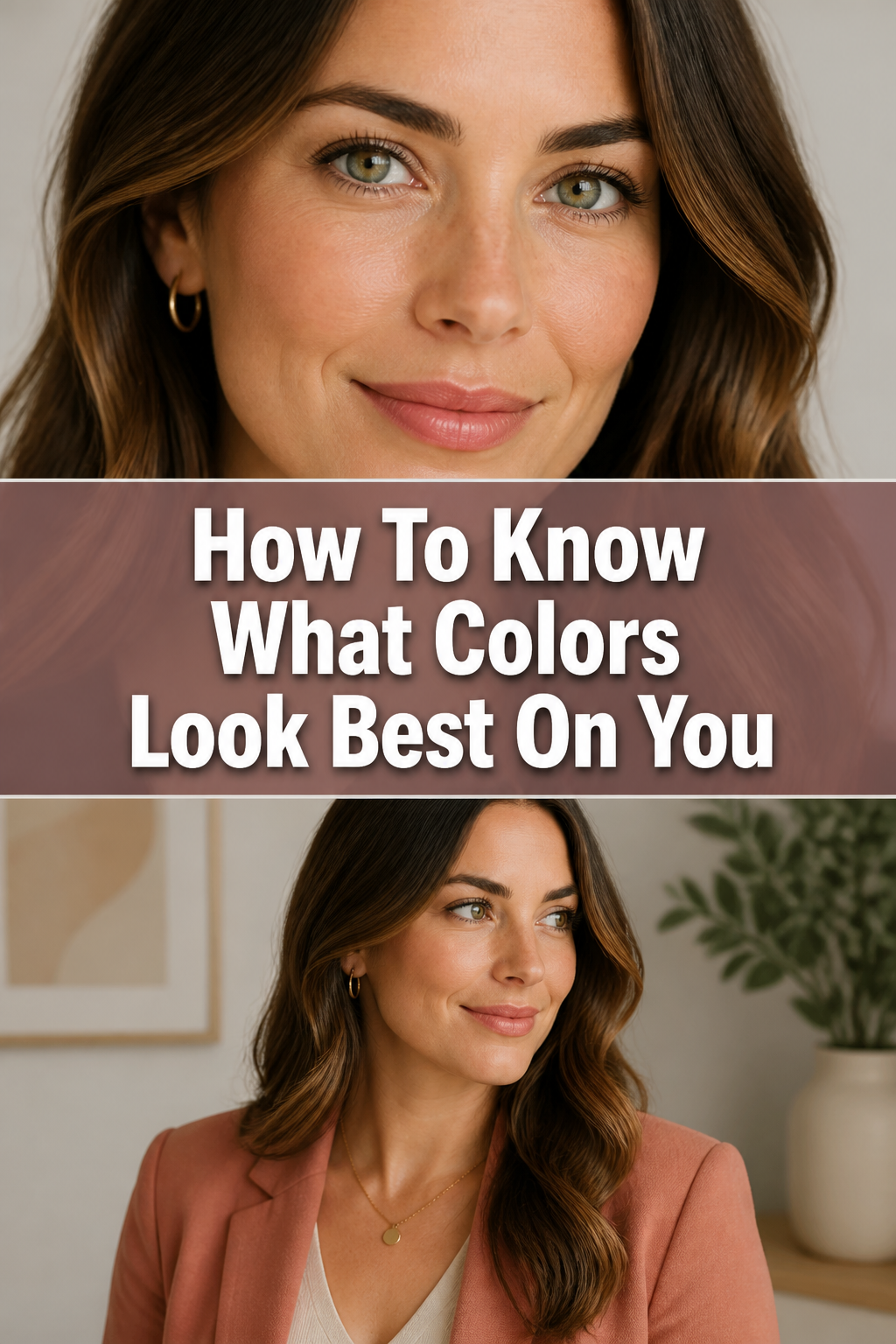
🎨 How To Know What Colors Look Best On You
Have you ever looked in the mirror and felt a particular color just made you glow? Or, conversely, made you look tired and washed out? I’ve been there, staring at a closet full of clothes, wondering why some pieces felt “right” and others never did.
It turns out, there’s a science and an art to understanding which colors truly enhance your natural beauty. This guide will walk you through a simple, practical process to discover your perfect palette, transforming how you approach your wardrobe and makeup. You’ll gain the confidence to choose colors that make you shine every single day.
Quick Overview
This guide will help you identify your unique color characteristics and build a personalized palette. You’ll learn simple tests and principles to make informed color choices for your clothing, accessories, and even makeup.
- Time needed: 1-2 hours (initial assessment) + ongoing practice
- Difficulty: Beginner
- What you’ll need: A mirror, good natural light, a plain white fabric, a plain cream fabric, various colored fabrics/garments, gold and silver jewelry.
Step-by-Step Instructions
Step 1: Understand Your Skin’s Undertone
Your skin’s undertone is the color beneath the surface. It doesn’t change with tanning or blushing. Identifying it is the most crucial step.
There are three main undertones: cool, warm, and neutral. Cool undertones often have hints of pink, red, or blue. Warm undertones show yellow, peach, or golden hues. Neutral undertones have a mix of both or no obvious dominant color.
Examine your veins. Look at the veins on the inside of your wrist in natural light. If they appear blue or purple, you likely have cool undertones. If they look green, you probably have warm undertones.
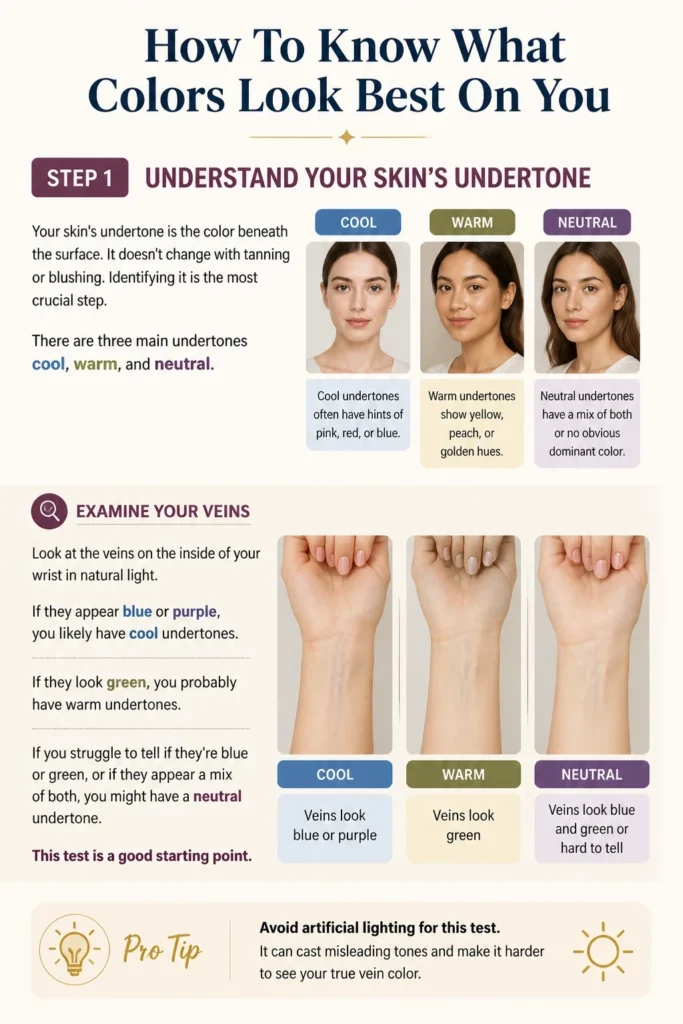
If you struggle to tell if they’re blue or green, or if they appear a mix of both, you might have a neutral undertone. This test is a good starting point.
Pro Tip: Avoid artificial lighting for this test. It can cast misleading colors on your skin and distort your perception of your veins. Always use direct, natural daylight.
Step 2: The Jewelry Test
This test helps confirm your undertone by seeing which metal flatters your skin more. Different metals reflect light differently and interact with your skin’s natural hues.
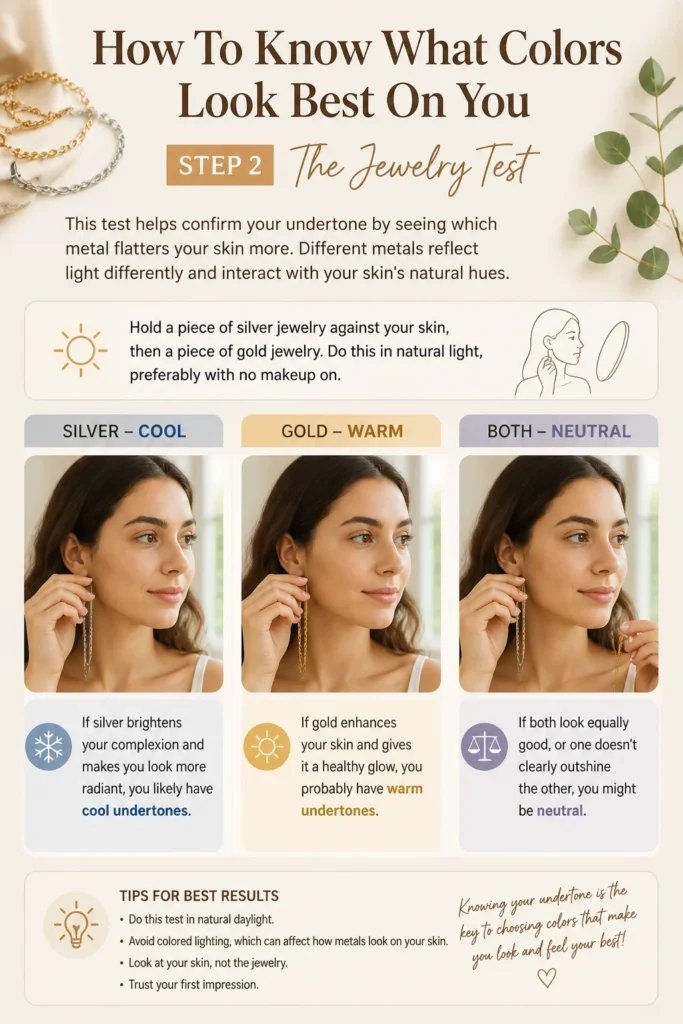
Hold a piece of silver jewelry against your skin, then a piece of gold jewelry. Do this in natural light, preferably with no makeup on. Observe which metal makes your skin look more vibrant and healthy.
If silver brightens your complexion and makes you look more radiant, you likely have cool undertones. If gold enhances your skin and gives it a healthy glow, you probably have warm undertones. If both look equally good, or one doesn’t clearly outshine the other, you might be neutral.
Step 3: The White vs. Cream Test
This is another effective way to pinpoint your undertone, especially for clothing choices. The subtle differences between pure white and off-white can reveal a lot about your skin.
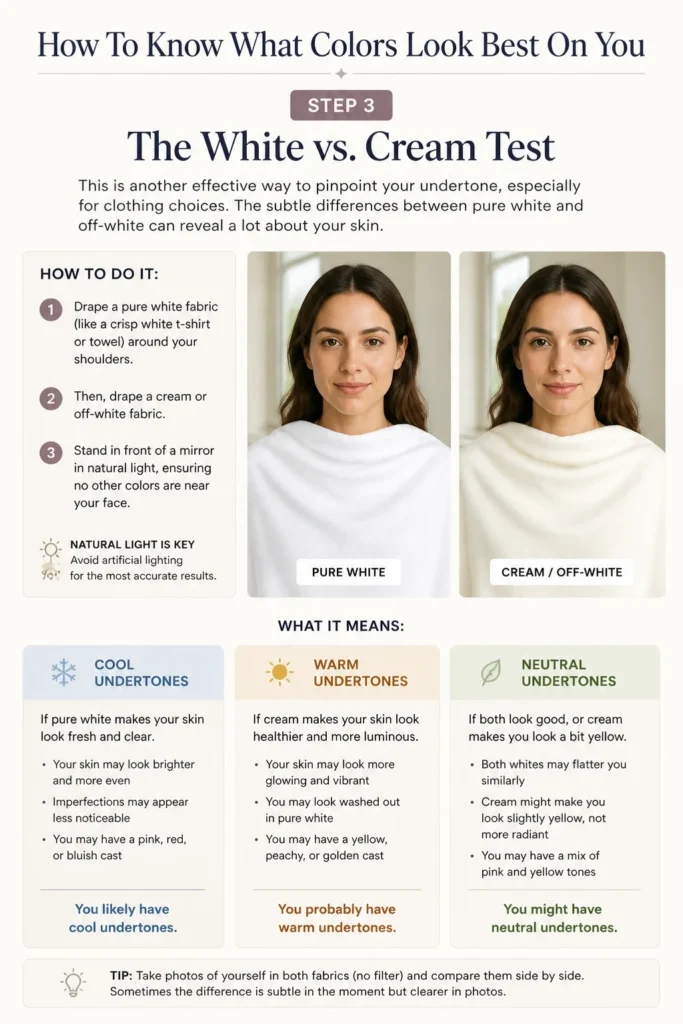
Drape a pure white fabric (like a crisp white t-shirt or towel) around your shoulders, then a cream or off-white fabric. Stand in front of a mirror in natural light, ensuring no other colors are near your face.
If pure white makes your skin look fresh and clear, you likely have cool undertones. If cream makes your skin look healthier and more luminous, you probably have warm undertones. If both look good, or cream makes you look a bit yellow, you might be neutral.
Step 4: Consider Your Hair and Eye Color
While undertone is primary, your natural hair and eye color also play a role in your overall “coloring.” These features contribute to your natural contrast level.
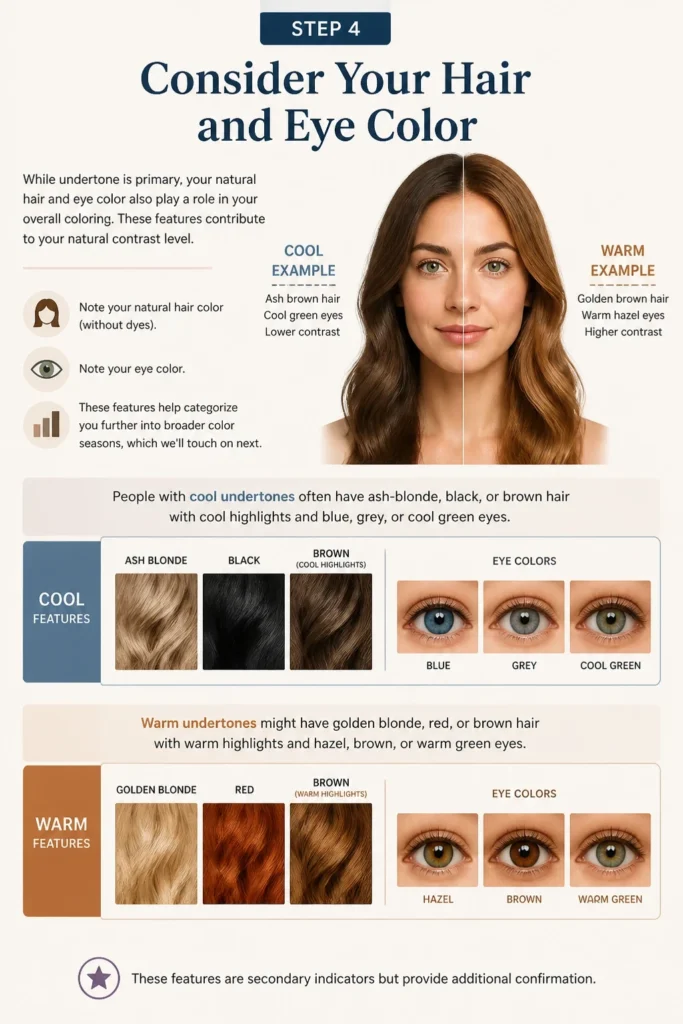
Note your natural hair color (without dyes) and your eye color. People with cool undertones often have ash-blonde, black, or brown hair with cool highlights and blue, grey, or cool green eyes. Warm undertones might have golden blonde, red, or brown hair with warm highlights and hazel, brown, or warm green eyes.
These features help categorize you further into broader color seasons, which we’ll touch on next. They are secondary indicators but provide additional confirmation.
Step 5: Explore Basic Color Seasons
Color seasons offer a framework to understand what palettes work best. They categorize individuals into Spring, Summer, Autumn, or Winter, based on their undertone, hair, and eye color.
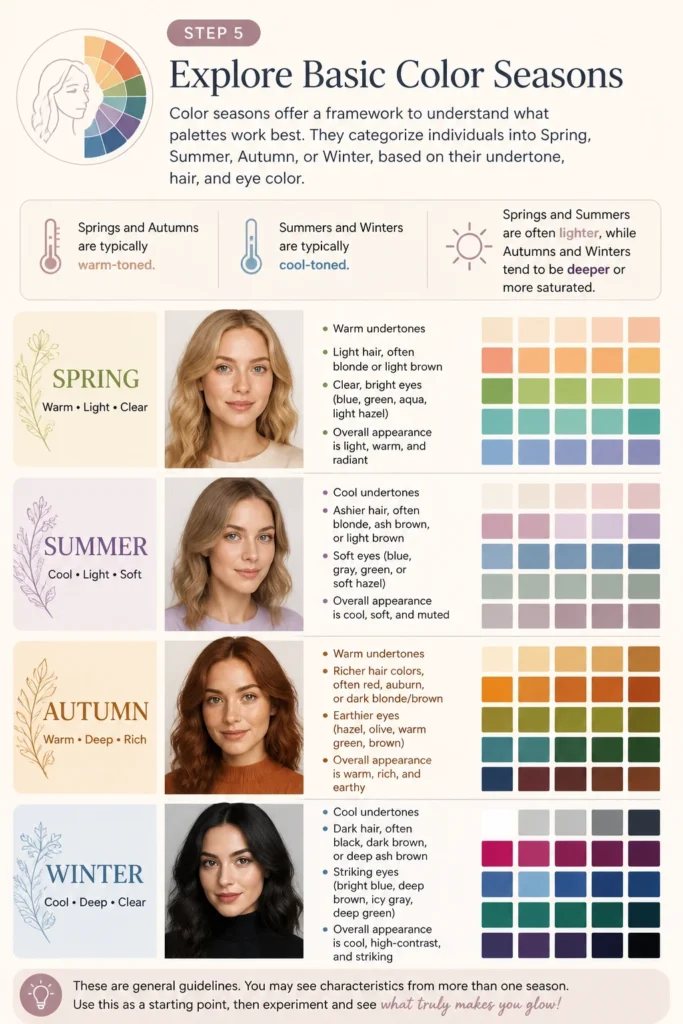
Learn the general characteristics of each season. Springs and Autumns are typically warm-toned. Summers and Winters are typically cool-toned. Springs and Summers are often lighter, while Autumns and Winters tend to be deeper or more saturated.
Spring individuals often have warm undertones, light hair, and clear, bright eyes. Summer individuals have cool undertones, often ashier hair, and soft eyes. Autumn individuals have warm undertones, often richer hair colors, and earthier eyes. Winter individuals have cool undertones, often dark hair with high contrast, and striking eyes.
Step 6: Test Colors with Fabric Swatches
Now it’s time to put your theory into practice. This is where you actively see how different colors react with your skin.
Gather various colored fabrics or garments. Include true reds, blues, yellows, greens, pinks, and purples. Also, get some warm shades (like olive green, mustard yellow, coral) and cool shades (like royal blue, emerald green, fuchsia).
Hold each color up to your face, one at a time, in natural light. Observe how your skin, eyes, and hair react. Does the color make your eyes sparkle? Does your skin look brighter, or does it cast shadows and make you look sallow?
A “good” color will make your skin look smooth, your eyes bright, and your features defined. A “bad” color will highlight dark circles, make your skin look dull, or emphasize imperfections.
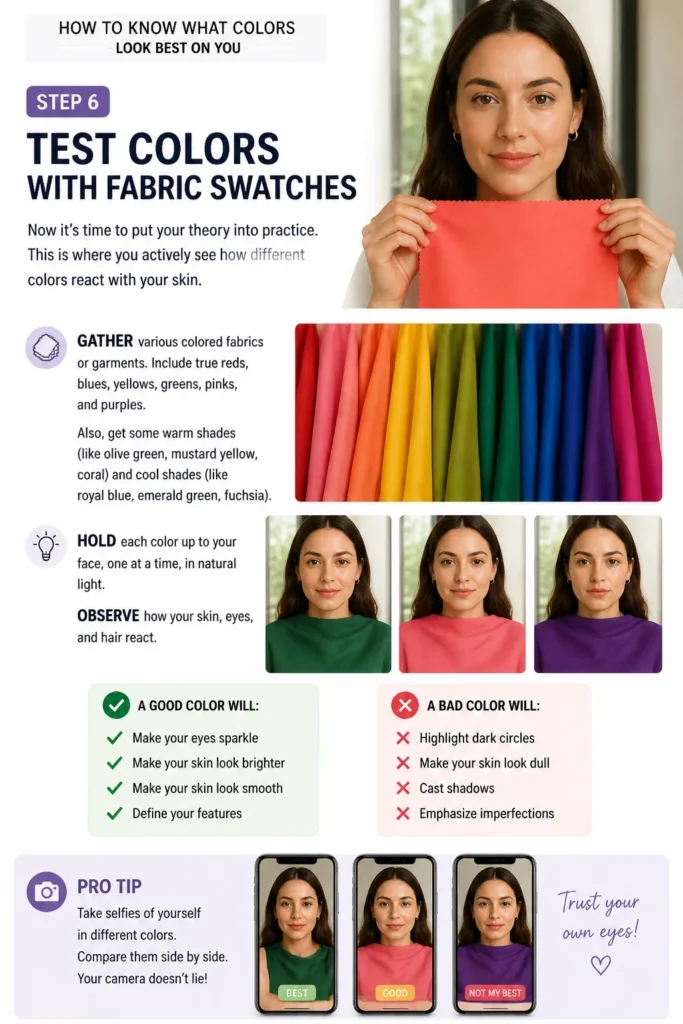
Pro Tip: Take selfies or videos while trying on colors. It can be easier to objectively assess the impact of colors when reviewing them later, as you’re not distracted by holding the fabric.
Step 7: Identify Your Best Neutrals
Neutrals form the foundation of any wardrobe. Knowing your best neutrals is just as important as knowing your best accent colors.
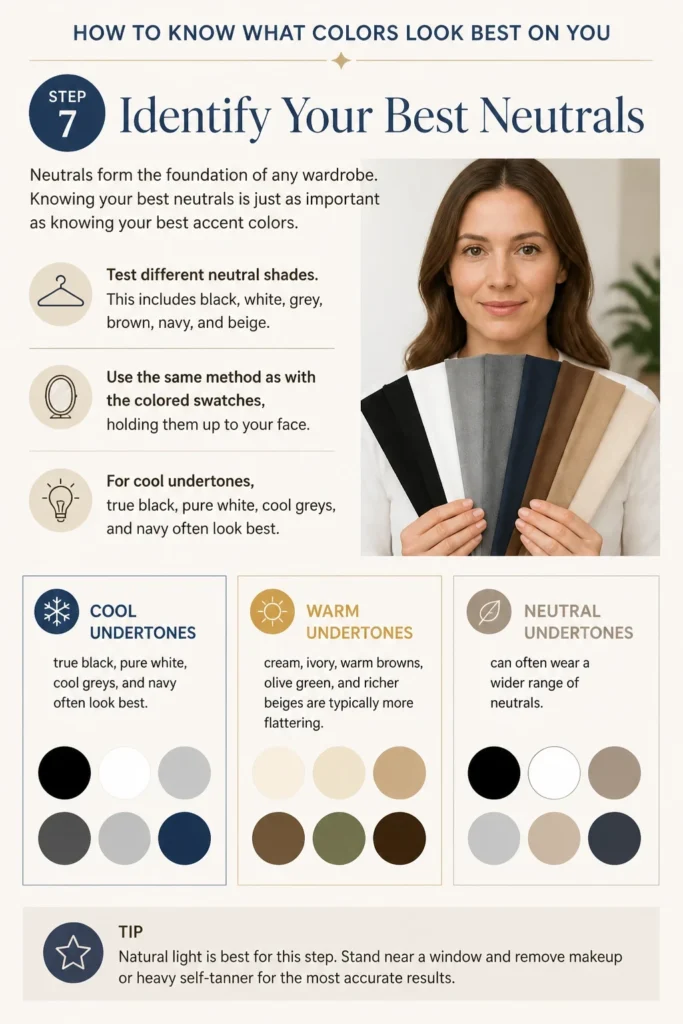
Test different neutral shades. This includes black, white, grey, brown, navy, and beige. Use the same method as with the colored swatches, holding them up to your face.
For cool undertones, true black, pure white, cool greys, and navy often look best. For warm undertones, cream, ivory, warm browns, olive green, and richer beiges are typically more flattering. Neutral undertones can often wear a wider range of neutrals.
Step 8: Build Your Personalized Color Palette
Based on all your tests, you can now start assembling your ideal color palette. This is a collection of colors that consistently make you look and feel your best.
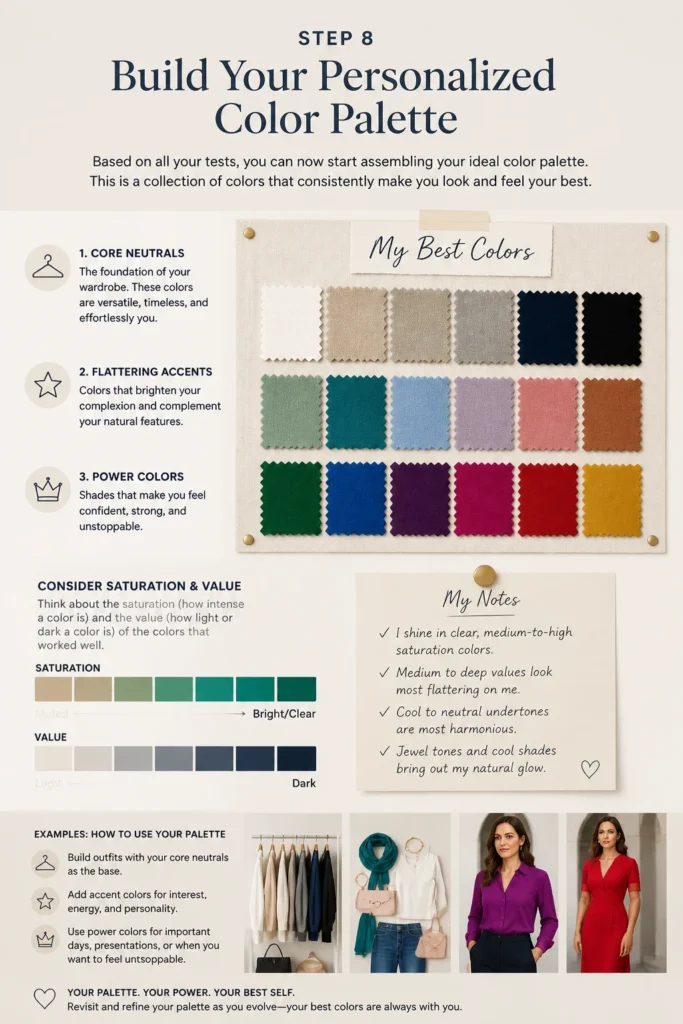
Create a list or a physical mood board of your best colors. Include your core neutrals, your most flattering accent colors, and perhaps a few “power” colors that make you feel confident.
Think about the saturation (how intense a color is) and the value (how light or dark a color is) of the colors that worked well. Do you shine in bright, clear colors, or in muted, softer shades? This helps refine your palette even further.
Step 9: Experiment with Contrast Levels
Your natural contrast level refers to the difference between your hair, skin, and eye color. Understanding this helps you choose patterns and color combinations.
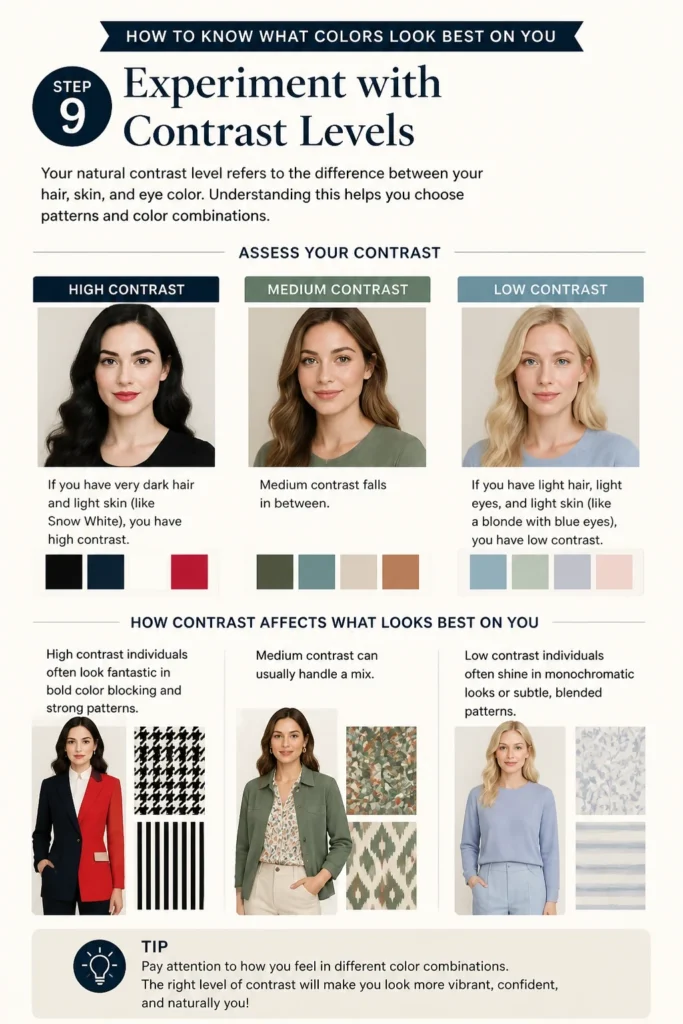
Assess your contrast. If you have very dark hair and light skin (like Snow White), you have high contrast. If you have light hair, light eyes, and light skin (like a blonde with blue eyes), you have low contrast. Medium contrast falls in between.
High contrast individuals often look fantastic in bold color blocking and strong patterns. Low contrast individuals often shine in monochromatic looks or subtle, blended patterns. Medium contrast can usually handle a mix.
Step 10: Trust Your Intuition and Practice
While these steps provide a scientific approach, your personal comfort and intuition are also vital. The ultimate goal is to feel good in what you wear.
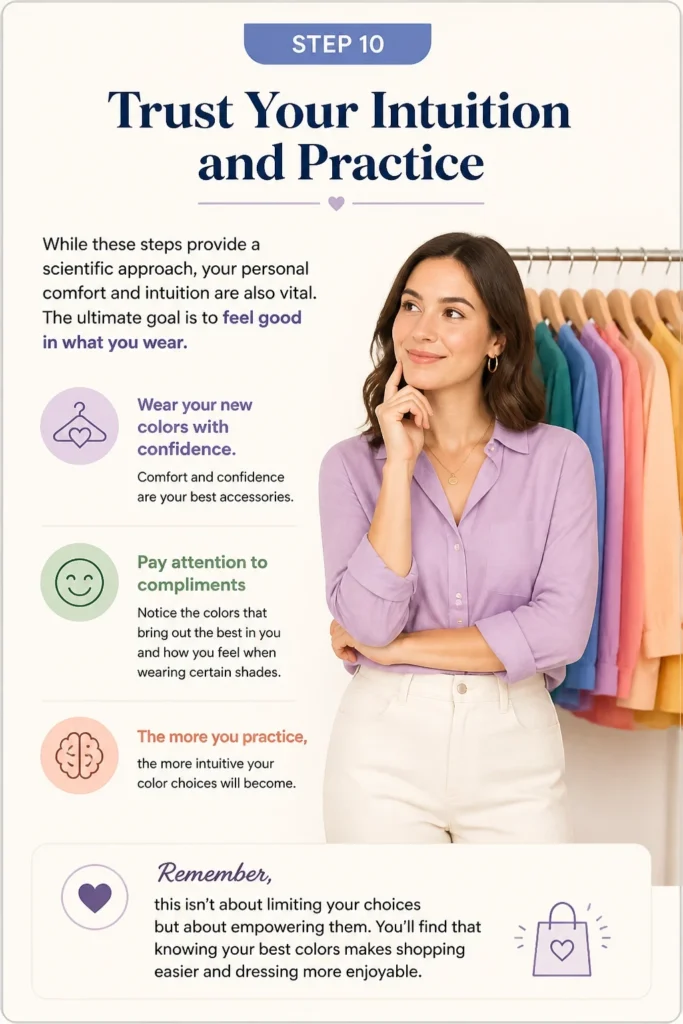
Wear your new colors with confidence. Pay attention to compliments you receive and how you feel when wearing certain shades. The more you practice, the more intuitive your color choices will become.
Remember, this isn’t about limiting your choices but about empowering them. You’ll find that knowing your best colors makes shopping easier and dressing more enjoyable.
Common Mistakes to Avoid
Ignoring Your Undertone
Many people choose colors based on what’s trendy or what they simply “like” without considering their undertone. Wearing a color that clashes with your undertone can make your skin appear dull, sallow, or even sickly, regardless of how fashionable the color is. Always prioritize your undertone over current trends.
Testing Colors in Poor Lighting
Artificial lighting, especially fluorescent lights, can drastically alter how colors appear on your skin. What looks great in a brightly lit dressing room might look terrible in natural daylight. Always test colors near a window with ample natural light to get an accurate assessment.
Over-Reliance on Seasonal Analysis Without Personal Testing
While color seasons provide an excellent guide, they are generalizations. Not everyone fits perfectly into one category. Use seasonal analysis as a starting point, but always confirm with personal fabric testing. Your unique combination of features might mean you can borrow colors from neighboring palettes.
Limiting Yourself Too Strictly
Discovering your best colors doesn’t mean you can never wear a “bad” color. It means you understand its effect. If you love a color that isn’t ideal, wear it away from your face (e.g., in skirts, pants, shoes, or bags). You can also pair it with a scarf in one of your best colors to mitigate its impact.
Troubleshooting
“I Can’t Tell My Undertone!”
This is a common frustration, especially if your veins look like a mix of blue and green. Try repeating the vein test in different natural light conditions (morning, midday). Also, focus heavily on the white vs. cream test and the jewelry test. If you consistently struggle, you might be a neutral undertone, which often looks good in a wider range of colors. Consider consulting a professional color analyst if you’re truly stuck.
“My Favorite Color Doesn’t Suit Me”
It’s disappointing when a beloved shade doesn’t flatter your complexion. Don’t give up on it entirely. Instead, think about how to incorporate it strategically. Wear it on the lower half of your body, as an accessory like a handbag or shoes, or find a variation of that color that has your undertone. For example, if you love yellow but have a cool undertone, try a lemon yellow instead of a mustard yellow.
“I Feel Overwhelmed by All the Color Choices”
Start small. Focus on identifying just your primary undertone (warm, cool, or neutral). Then, pick one or two core neutrals and one or two accent colors that clearly make you feel great. Gradually expand your palette as you become more comfortable and confident. It’s a journey of discovery, not a race.
Key Takeaways
- Your skin’s undertone (cool, warm, neutral) is the most important factor in determining your best colors.
- Use multiple tests like the vein test, jewelry test, and white vs. cream fabric test to confirm your undertone.
- Natural light is crucial for accurate color assessment; avoid artificial lighting.
- Test a variety of colored fabrics directly against your face to see their real impact.
- Identify your best neutrals alongside your accent colors to build a versatile wardrobe foundation.
- Understanding your natural contrast level helps you choose flattering patterns and color combinations.
- Don’t be afraid to experiment, but always trust how colors make you feel and look.
Frequently Asked Questions
Does my hair color change my color season?
Your natural hair color is a key component of your overall coloring and does influence your color season. However, dyed hair doesn’t change your fundamental undertone. If you frequently dye your hair, focus on your natural hair color and undertone for the most accurate assessment. You might find that certain hair colors you’ve chosen in the past were more flattering than others.
Can I be a mix of two seasons?
While the seasonal color analysis system categorizes people, it’s not always black and white. Some individuals might fall on the border between two seasons, often referred to as “blended” or “flow” seasons (e.g., a “Cool Summer” bordering on Winter). This typically means you can wear colors from both palettes that share your dominant characteristic, like coolness. Focus on your core undertone first, then explore colors from adjacent palettes.
How do I know if a color is “cool” or “warm”?
Generally, colors with blue, green-blue, or purple bases are cool (e.g., royal blue, emerald green, fuchsia). Colors with yellow, orange, or red-orange bases are warm (e.g., mustard yellow, coral, olive green). Even a “red” can be warm (tomato red) or cool (cherry red). If a color has an obvious yellow or orange tint, it’s likely warm. If it has a blue or pink tint, it’s likely cool.
Should I only wear my best colors?
Not necessarily! Knowing your best colors empowers you to make informed choices, but it doesn’t mean you must exclusively wear them. Use your best colors for items closest to your face (tops, scarves, earrings) where they have the most impact. For items further away (pants, shoes, bags), you have more flexibility. You can also incorporate less flattering colors as accents or in small doses.
Embrace Your Unique Palette
Discovering the colors that truly make you shine is a journey of self-discovery and empowerment. It’s about more than just fashion; it’s about understanding and celebrating your unique features. Once you know your best colors, getting dressed becomes less of a chore and more of an exciting opportunity to express yourself.
Start experimenting today. Pull out those old clothes, grab some fabric scraps, and spend some time in front of your mirror in natural light. The insights you gain will transform your wardrobe and boost your confidence. You’ll soon find joy in selecting colors that perfectly complement your natural beauty.