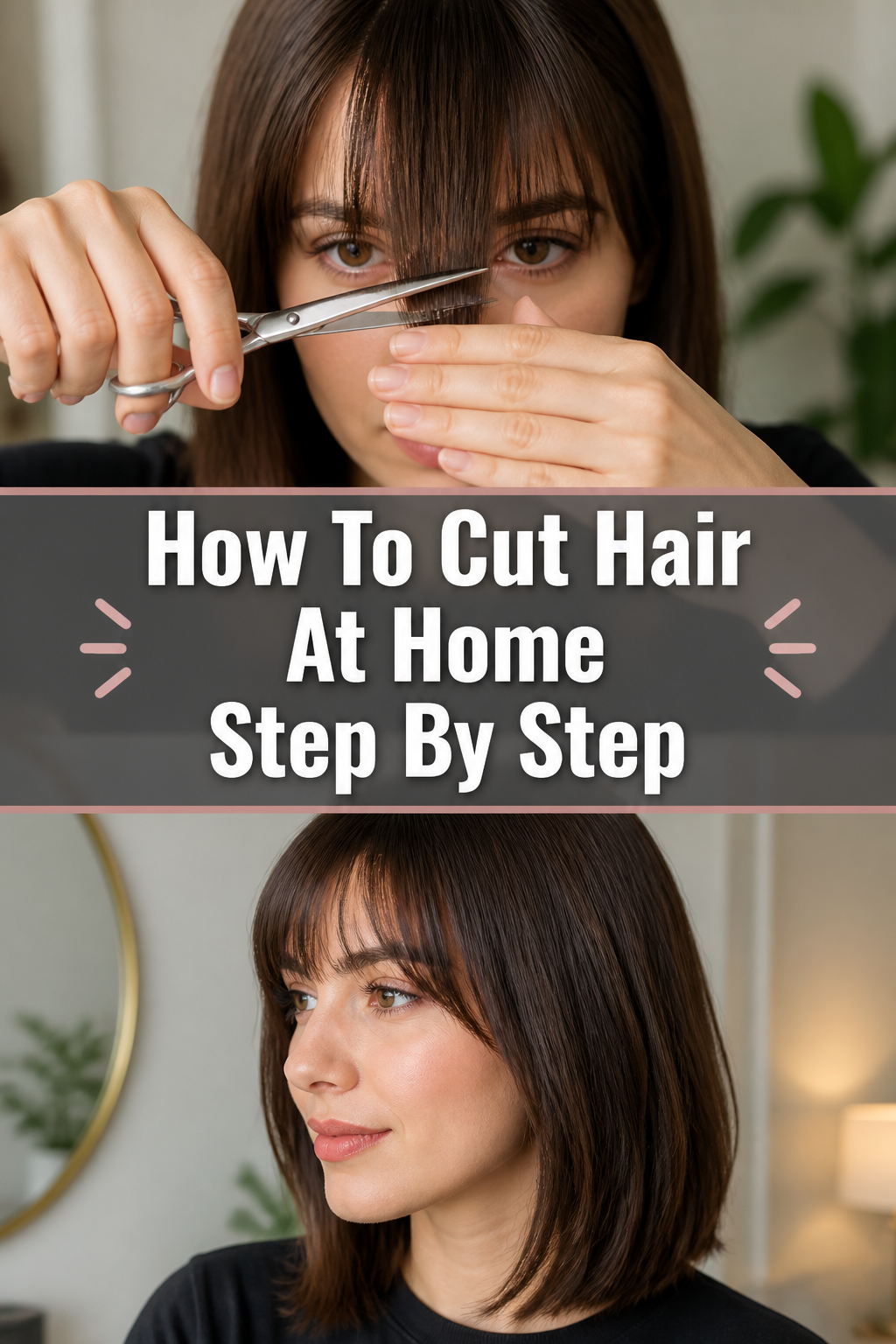
✂️ How To Cut Hair At Home Step By Step
I remember the first time I stood in front of my bathroom mirror with a pair of scissors and a shaky hand.
After years of trial and error, I discovered that a professional-looking DIY haircut is less about innate talent and more about following a strict, patient system.
This guide will show you exactly how to trim your own locks with confidence while avoiding the common pitfalls of home styling.
Quick Overview
Before you make your first snip, it is important to understand the scope of the project and what you are trying to achieve.
- Time needed: 45 to 90 minutes
- Difficulty: Beginner
- What you’ll need: Professional hair shears, fine-tooth comb, sectioning clips, spray bottle, and two mirrors.
Step-by-Step Instructions
Step 1: Set Up Your Cutting Station
Find a space with the best lighting in your home, preferably a bathroom with a large mirror and plenty of overhead light.
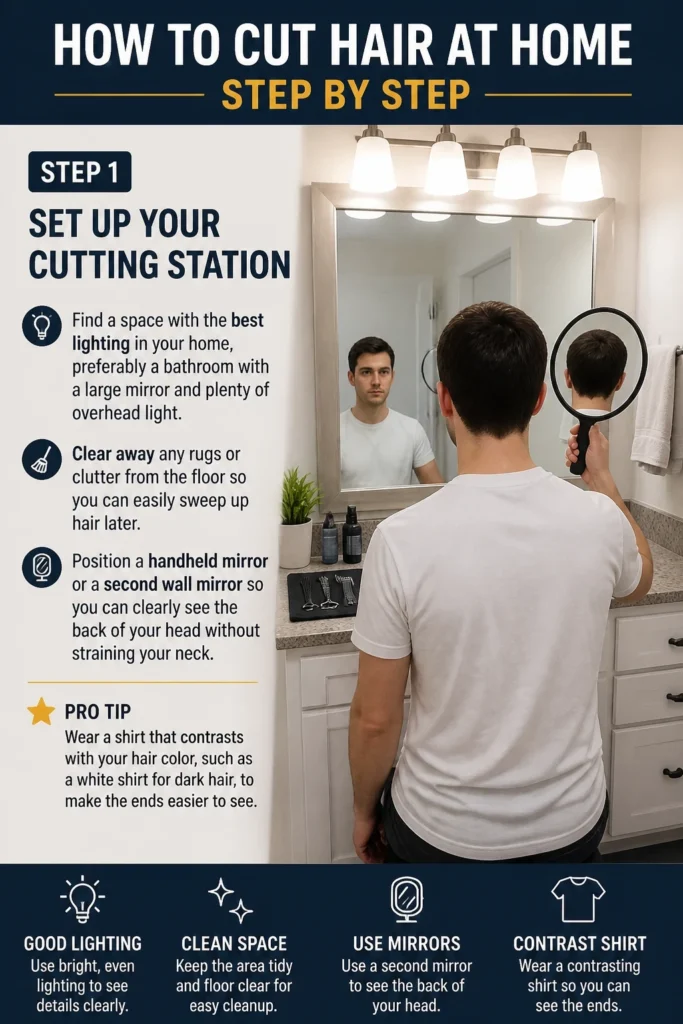
Clear away any rugs or clutter from the floor so you can easily sweep up hair later.
Position a handheld mirror or a second wall mirror so you can clearly see the back of your head without straining your neck.
Pro Tip: Wear a shirt that contrasts with your hair color, such as a white shirt for dark hair, to make the ends easier to see.
Step 2: Prepare Your Hair Properly
Start with hair that is clean and free of any heavy styling products like gels or hairsprays.
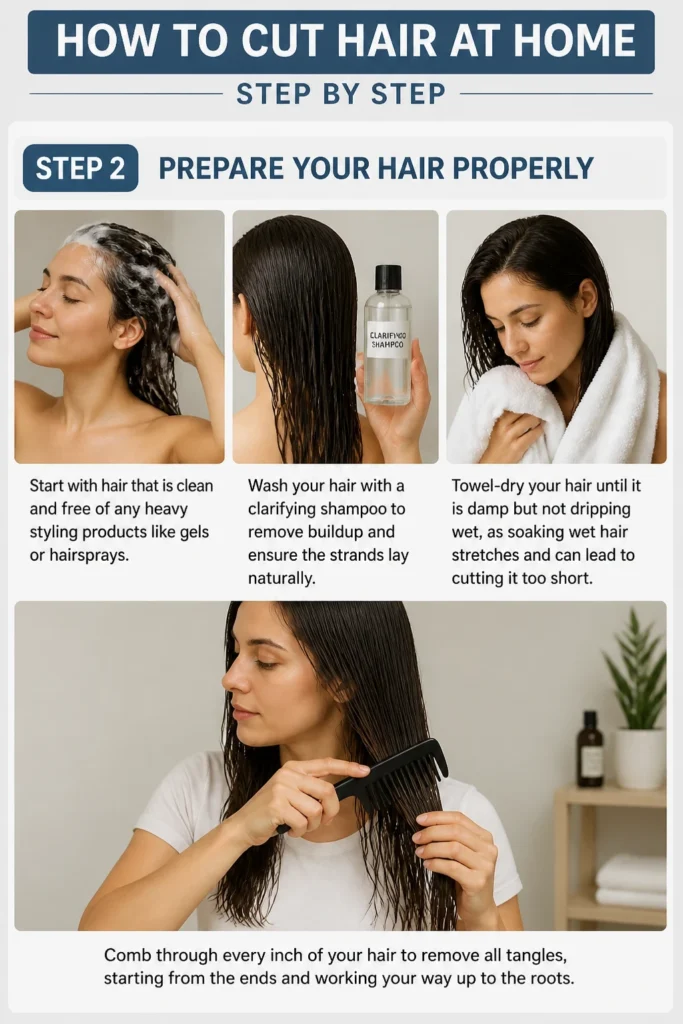
Wash your hair with a clarifying shampoo to remove buildup and ensure the strands lay naturally.
Towel-dry your hair until it is damp but not dripping wet, as soaking wet hair stretches and can lead to cutting it too short.
Comb through every inch of your hair to remove all tangles, starting from the ends and working your way up to the roots.
Step 3: Section Into Four Quadrants
Sectioning is the secret to a controlled haircut because it prevents you from getting overwhelmed by too much hair at once.
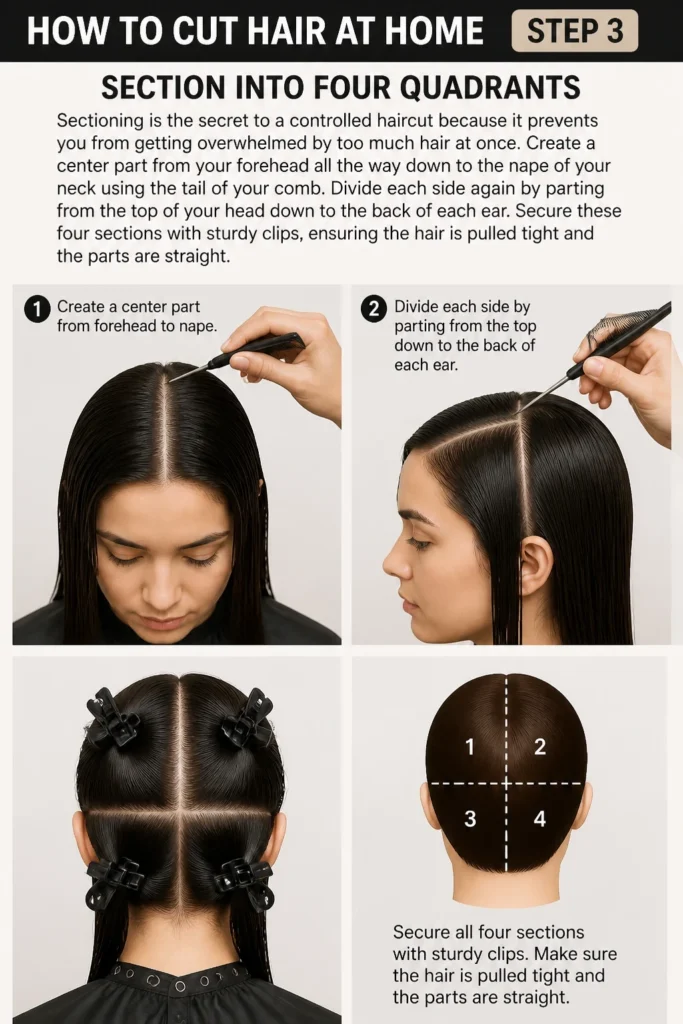
Create a center part from your forehead all the way down to the nape of your neck using the tail of your comb.
Divide each side again by parting from the top of your head down to the back of each ear.
Secure these four sections with sturdy clips, ensuring the hair is pulled tight and the parts are straight.
Step 4: Establish Your Length Guide
The first cut you make will act as the “master guide” for the rest of your hair.
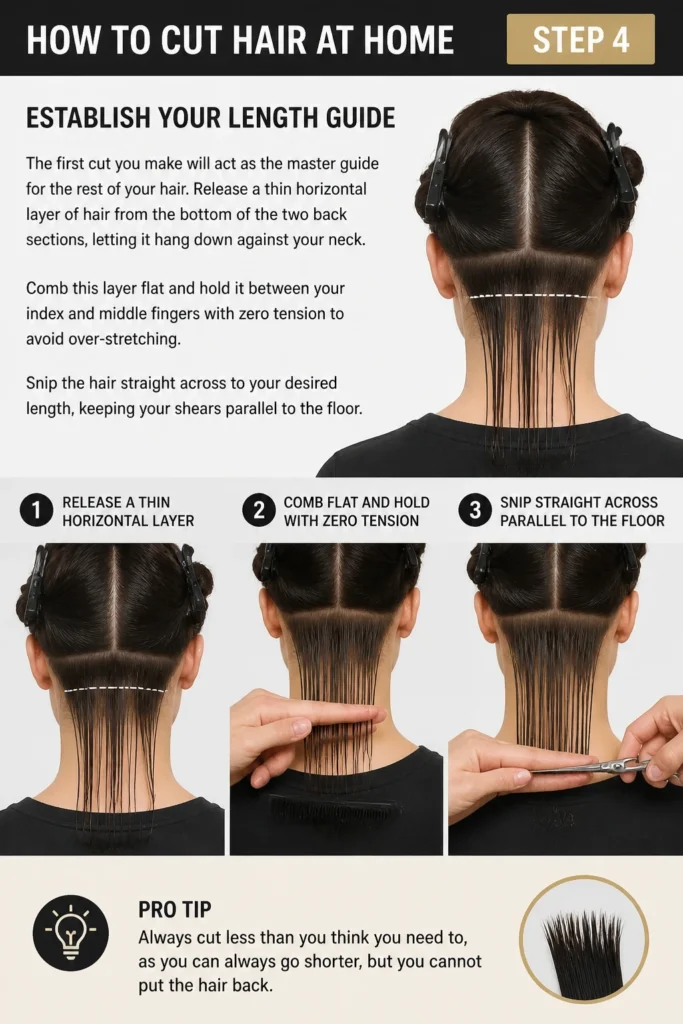
Release a thin horizontal layer of hair from the bottom of the two back sections, letting it hang down against your neck.
Comb this layer flat and hold it between your index and middle fingers with zero tension to avoid over-stretching.
Snip the hair straight across to your desired length, keeping your shears parallel to the floor.
Pro Tip: Always cut less than you think you need to, as you can always go shorter, but you cannot put the hair back.
Step 5: Cut the Back Using the Guide
Now you will work your way up the back of your head using the length you just established.
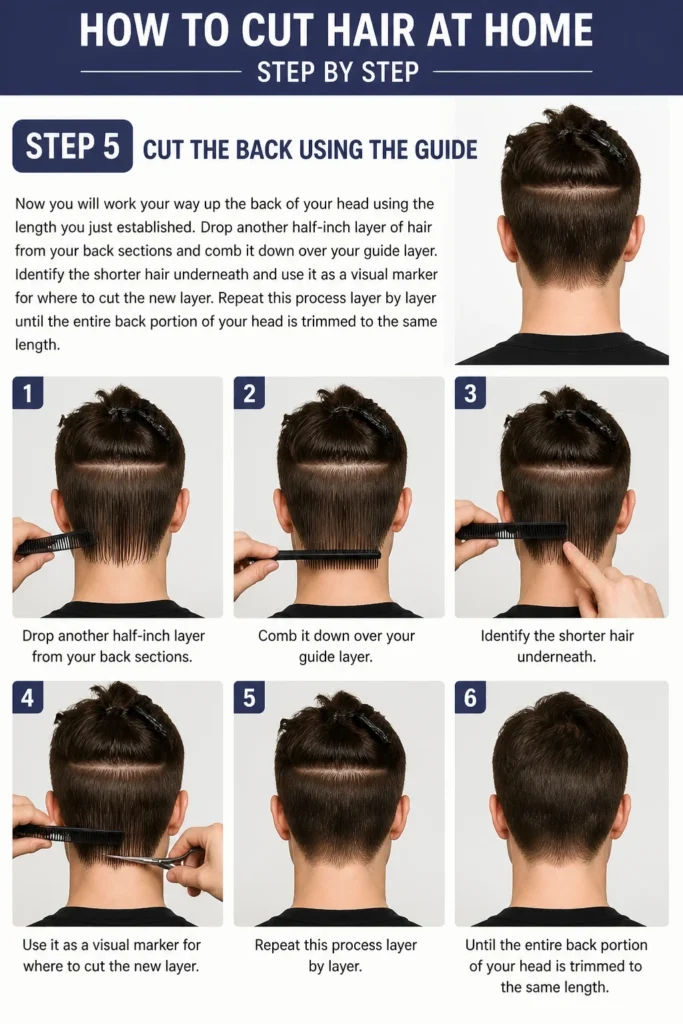
Drop another half-inch layer of hair from your back sections and comb it down over your guide layer.
Identify the shorter hair underneath and use it as a visual marker for where to cut the new layer.
Repeat this process layer by layer until the entire back portion of your head is trimmed to the same length.
Step 6: Blend the Side Sections
Moving to the sides requires careful attention to how the hair frames your face.
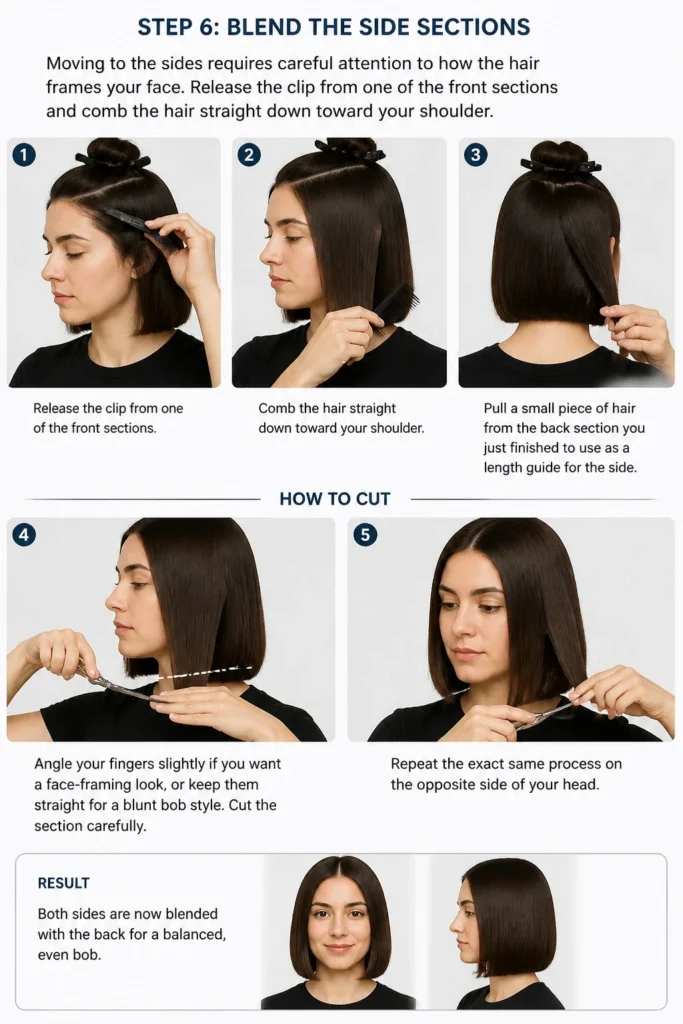
Release the clip from one of the front sections and comb the hair straight down toward your shoulder.
Pull a small piece of hair from the back section you just finished to use as a length guide for the side.
Angle your fingers slightly if you want a face-framing look, or keep them straight for a blunt bob style.
Cut the section carefully, then repeat the exact same process on the opposite side of your head.
Step 7: Check for Balance and Symmetry
Symmetry is the hallmark of a good haircut, and it is easy to lose track of it while working.
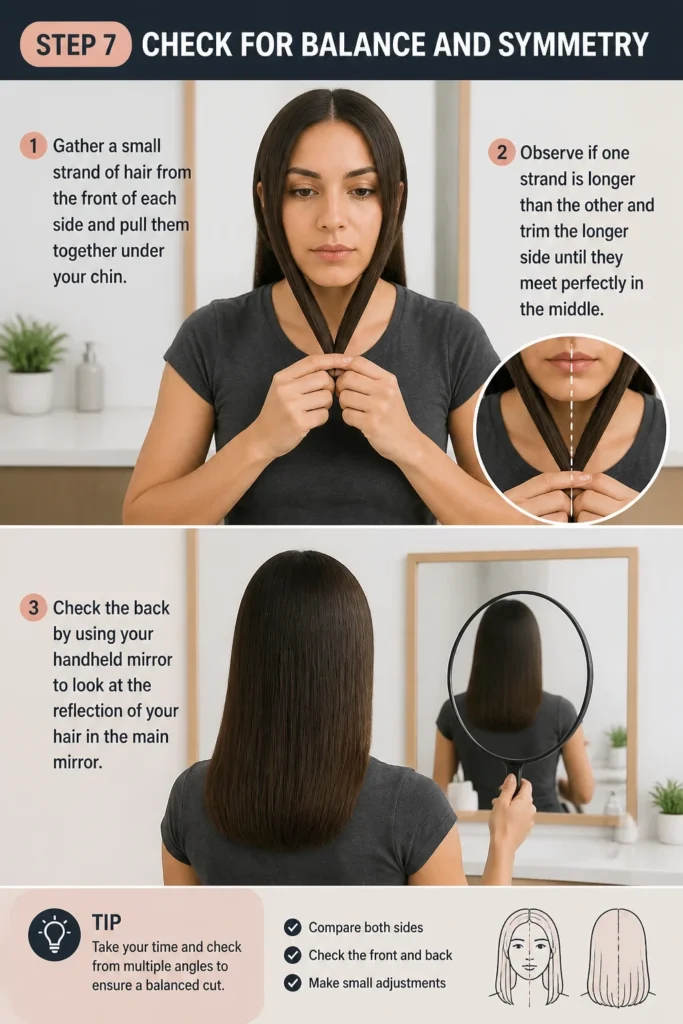
Gather a small strand of hair from the front of each side and pull them together under your chin.
Observe if one strand is longer than the other and trim the longer side until they meet perfectly in the middle.
Check the back by using your handheld mirror to look at the reflection of your hair in the main mirror.
Step 8: Soften the Ends with Point Cutting
Blunt cuts can sometimes look too heavy or “choppy” if your technique isn’t perfect.
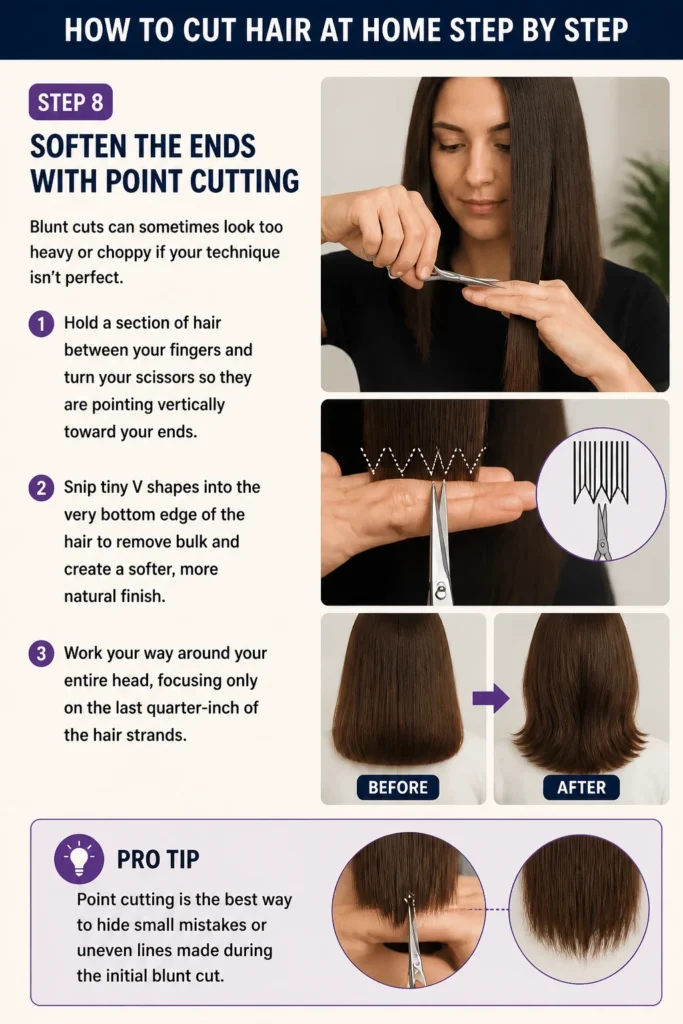
Hold a section of hair between your fingers and turn your scissors so they are pointing vertically toward your ends.
Snip tiny “V” shapes into the very bottom edge of the hair to remove bulk and create a softer, more natural finish.
Work your way around your entire head, focusing only on the last quarter-inch of the hair strands.
Pro Tip: Point cutting is the best way to hide small mistakes or uneven lines made during the initial blunt cut.
Step 9: Dry and Final Polish
Hair looks different when it is dry, so you must do a final check once the moisture is gone.
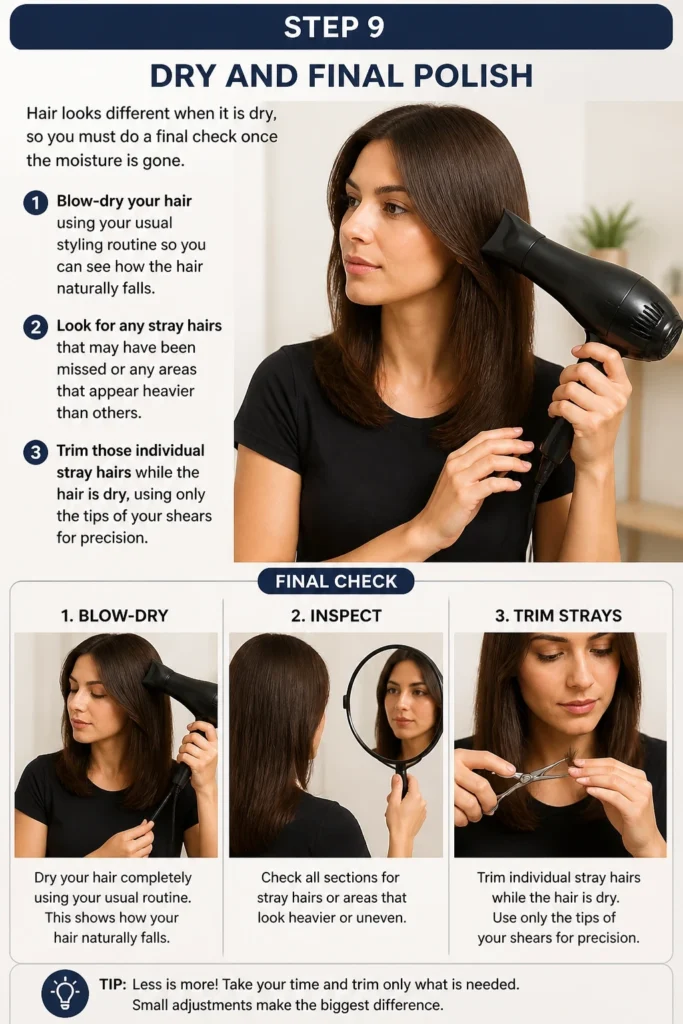
Blow-dry your hair using your usual styling routine so you can see how the hair naturally falls.
Look for any stray hairs that may have been missed or any areas that appear heavier than others.
Trim those individual stray hairs while the hair is dry, using only the tips of your shears for precision.
Common Mistakes to Avoid
Using Dull Kitchen Scissors
Kitchen or craft scissors are designed to saw through paper or food, not to slice through delicate hair fibers. Using these tools will crush the hair shaft and lead to immediate split ends. Invest in a pair of stainless steel hair shears that are specifically sharpened for salon use.
Cutting Too Much While Wet
Hair expands and stretches when it is wet, meaning it appears longer than it actually is. If you cut to your “ideal” length while the hair is damp, it will shrink upward as it dries. This often results in a haircut that is one or two inches shorter than you originally intended.
Tension Overload
Pulling the hair too tight between your fingers while cutting creates an artificial length. When you release the tension, the hair bounces back up, often creating an uneven or jagged line. Use a light touch and let the hair fall as naturally as possible before making your snip.
Troubleshooting
The Back Is Uneven
If you finish and realize the back of your hair is slanted, do not panic and keep cutting higher. Instead, re-section the hair and find the shortest point of the cut. Use that shortest point as your new guide and slowly bring the rest of the hair down to meet it.
The Layers Look Choppy
Choppy layers usually happen when the transitions between sections are too abrupt. To fix this, hold the hair vertically and use the point cutting technique to blur the lines between the layers. This removes the harsh horizontal weight lines and creates a smoother flow.
Missed Strands Near the Ears
It is very common to miss small sections of hair that hide behind or above the ears. Comb your hair forward and back several times to encourage these hidden strands to reveal themselves. Once they appear, simply trim them to match the surrounding length.
Key Takeaways
- Always use professional-grade hair shears to prevent damage and split ends.
- Section your hair into four manageable quadrants before you start cutting.
- Start with small trims and use a guide strand to maintain consistency.
- Check for symmetry frequently by pulling front sections toward the center of your face.
- Perform a final dry check to catch any stray hairs or uneven sections.
- Use point cutting vertically to soften the edges and hide minor errors.
Frequently Asked Questions
How often should I trim my hair at home?
Most experts recommend a light trim every six to eight weeks to maintain the health of your ends. If you are trying to grow your hair out, you can extend this to twelve weeks. Regular trims prevent split ends from traveling up the hair shaft and causing more significant damage.
Can I use this method for curly hair?
Curly hair is best cut using the “Deactivated” or “Curly Cut” method, which involves cutting the hair while it is dry and in its natural curl pattern. Cutting curly hair while wet can lead to unpredictable results due to the “spring factor” of different curl types. If you have tight curls, consider trimming individual curls one by one.
What should I do if I cut my hair too short?
The best course of action is to stop cutting immediately and style your hair to disguise the length. You can use accessories like headbands or try different parting styles to change how the length appears. Remember that hair grows about half an inch per month, so any mistake is only temporary.
Is it better to cut hair wet or dry?
For beginners, cutting damp hair is often easier because it stays together and follows the comb more predictably. However, dry cutting allows you to see the true length and shape in real-time. A hybrid approach—cutting the bulk while damp and refining the details while dry—is usually the most successful strategy.
Our Top Recommended Finds
- Professional Hair Shears: Look for a pair made of Japanese stainless steel with an adjustable tension screw for smooth cutting.
- Carbon Fiber Fine-Tooth Comb: These combs are heat-resistant and anti-static, making them perfect for precise sectioning.
- Heavy-Duty Sectioning Clips: Choose “alligator” style clips that can hold large amounts of hair without slipping.
Master Your Own Style Starting Today
Taking control of your own hair maintenance is an empowering skill that saves both time and money. Now that you understand the mechanics of sectioning, guiding, and texturizing, you are ready to attempt your first trim.
If you enjoyed learning this technique, you might want to explore more advanced DIY beauty skills. Consider researching how to maintain your own bangs or how to apply professional-grade hair color at home.
Grab your shears, set up your mirrors, and take that first confident step toward becoming your own personal stylist today.