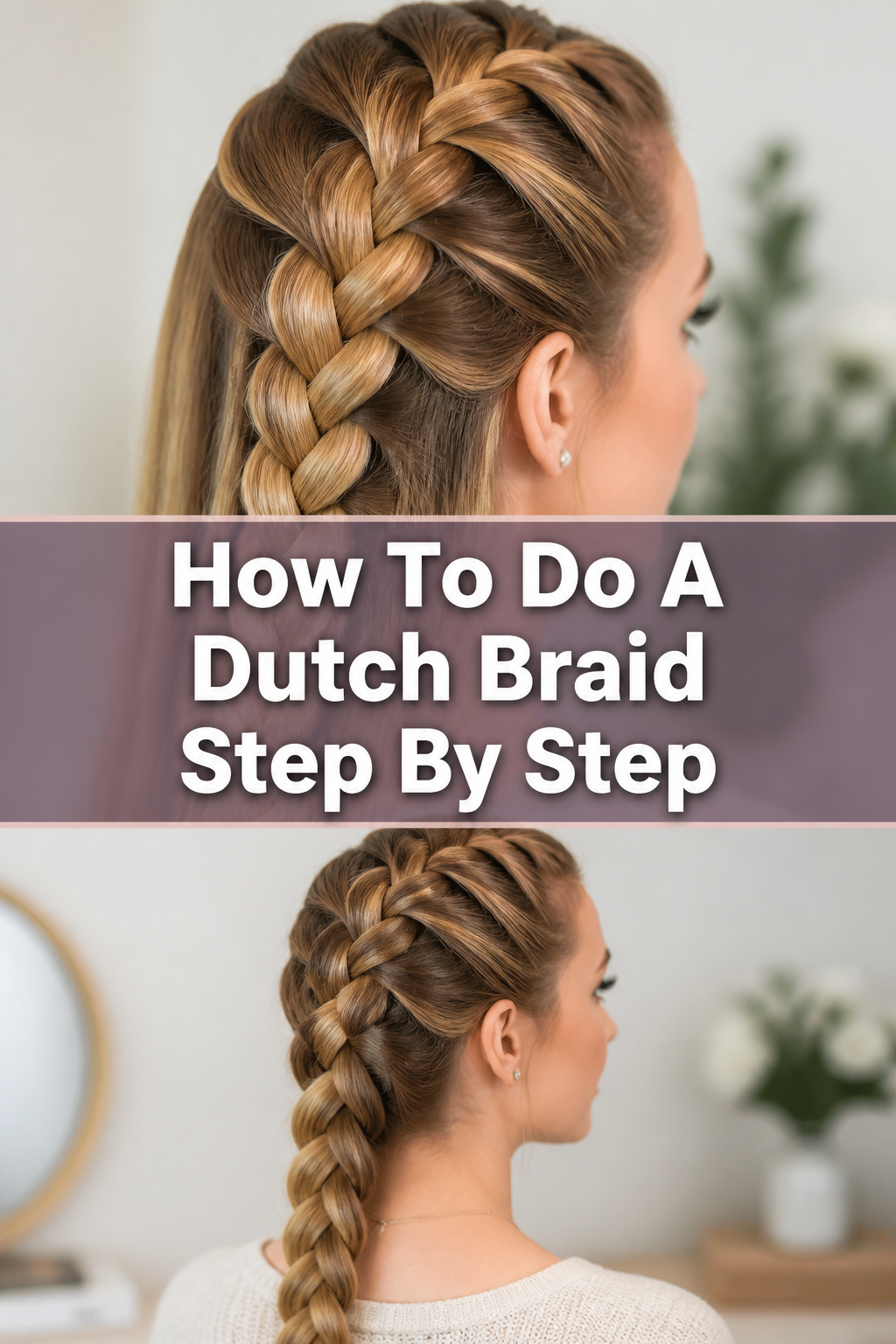
How To Do A Dutch Braid Step By Step
Learning to create a beautiful Dutch braid might seem daunting at first.
I remember my own struggles, tangling hair and feeling frustrated with uneven sections.
Through countless practice sessions on myself and friends, I’ve honed the technique, and I’m here to share those practical insights with you.
Quick Overview
This guide will walk you through the process of creating a classic Dutch braid, often called an “inside-out” braid.
You’ll learn how to transform three simple strands into a stunning, raised braid that stands out beautifully.
- Time needed: 15-30 minutes (for beginners, with practice this shortens)
- Difficulty: Intermediate
- What you’ll need: Hairbrush or comb, hair ties, a mirror (or two), optional styling products
Step-by-Step Instructions
Step 1: Prepare Your Hair
Proper hair preparation is crucial for a smooth braiding experience.
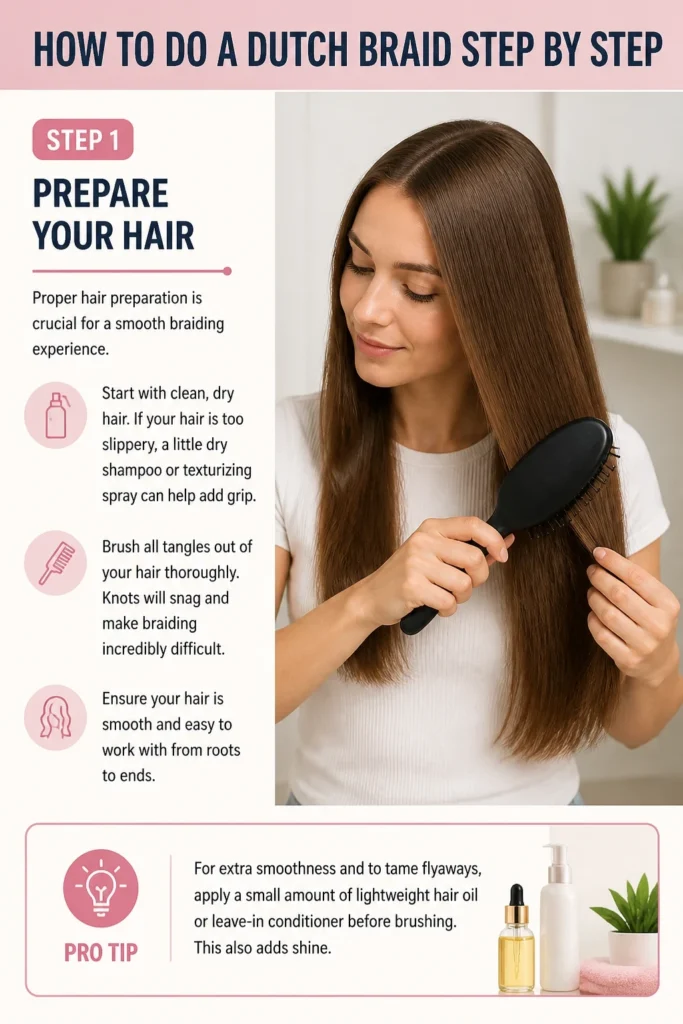
Start with clean, dry hair. If your hair is too slippery, a little dry shampoo or texturizing spray can help add grip.
Brush all tangles out of your hair thoroughly. Knots will snag and make braiding incredibly difficult.
Ensure your hair is smooth and easy to work with from roots to ends.
Pro Tip: For extra smoothness and to tame flyaways, apply a small amount of lightweight hair oil or leave-in conditioner before brushing. This also adds shine.
Step 2: Section the Top
This is where your Dutch braid truly begins to take shape.
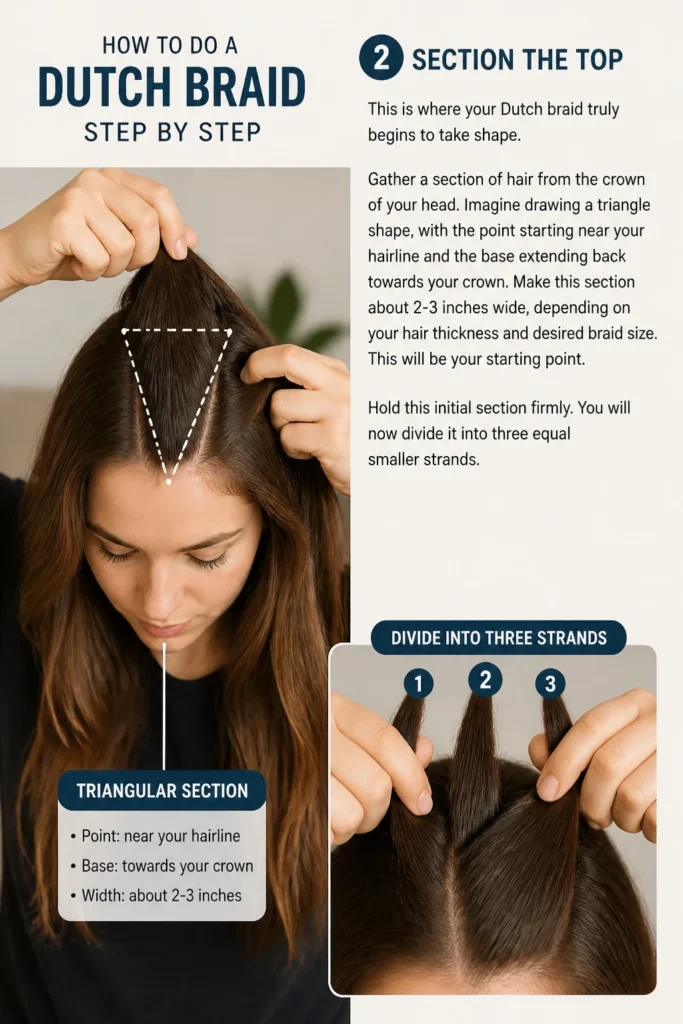
Gather a section of hair from the crown of your head. Imagine drawing a triangle shape, with the point starting near your hairline and the base extending back towards your crown.
Make this section about 2-3 inches wide, depending on your hair thickness and desired braid size. This will be your starting point.
Hold this initial section firmly. You will now divide it into three equal smaller strands.
Step 3: Begin the Braid (First Cross-Under)
The “under” motion is what defines a Dutch braid.
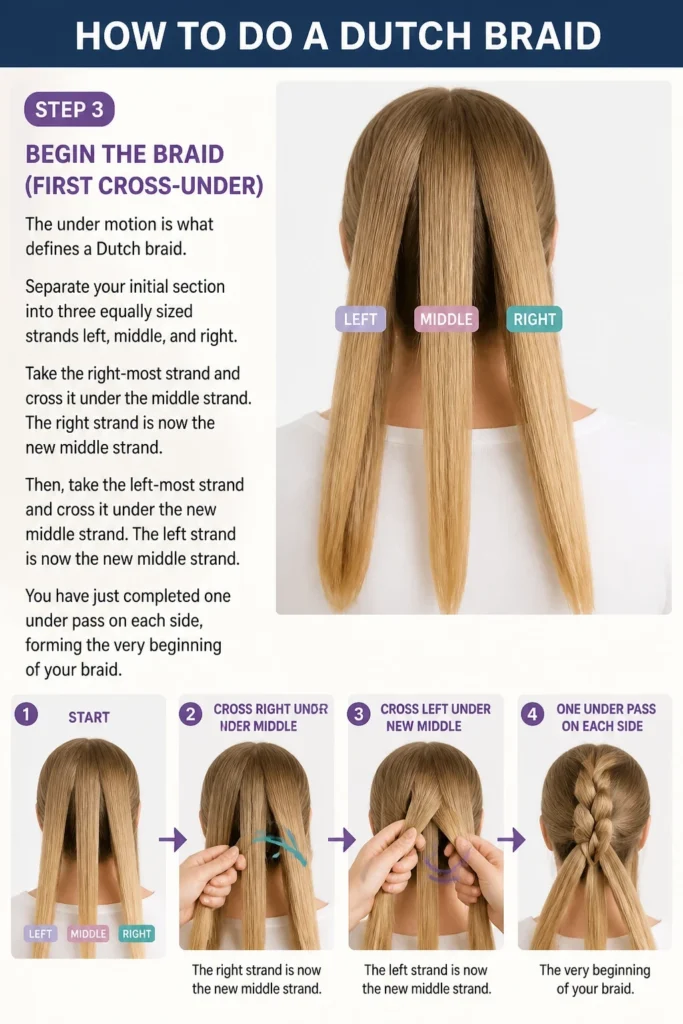
Separate your initial section into three equally sized strands: left, middle, and right.
Take the right-most strand and cross it under the middle strand. The right strand is now the new middle strand.
Then, take the left-most strand and cross it under the new middle strand. The left strand is now the new middle strand.
You have just completed one “under” pass on each side, forming the very beginning of your braid.
Step 4: Add Hair to Side Sections
This step builds the braid by incorporating more hair.
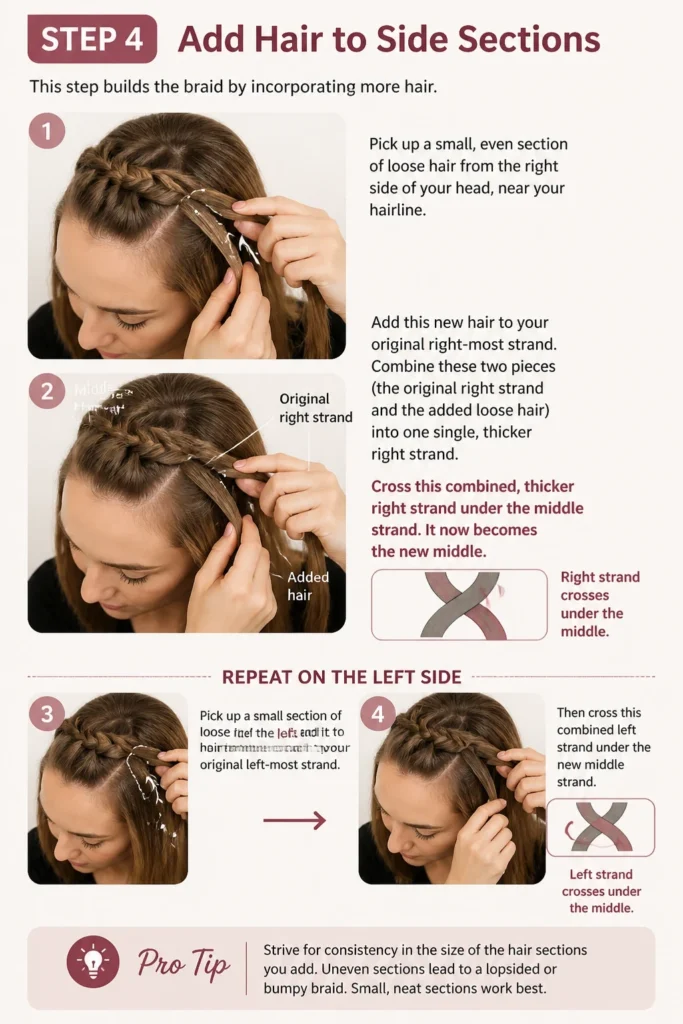
Pick up a small, even section of loose hair from the right side of your head, near your hairline. Add this new hair to your original right-most strand.
Combine these two pieces (the original right strand and the added loose hair) into one single, thicker right strand.
Cross this combined, thicker right strand under the middle strand. It now becomes the new middle.
Repeat this process on the left side: pick up a small section of loose hair from the left, add it to your original left-most strand, and then cross this combined left strand under the new middle strand.
Pro Tip: Strive for consistency in the size of the hair sections you add. Uneven sections lead to a lopsided or bumpy braid. Small, neat sections work best.
Step 5: Continue Braiding Down
Maintain the “under” pattern as you work your way down your head.
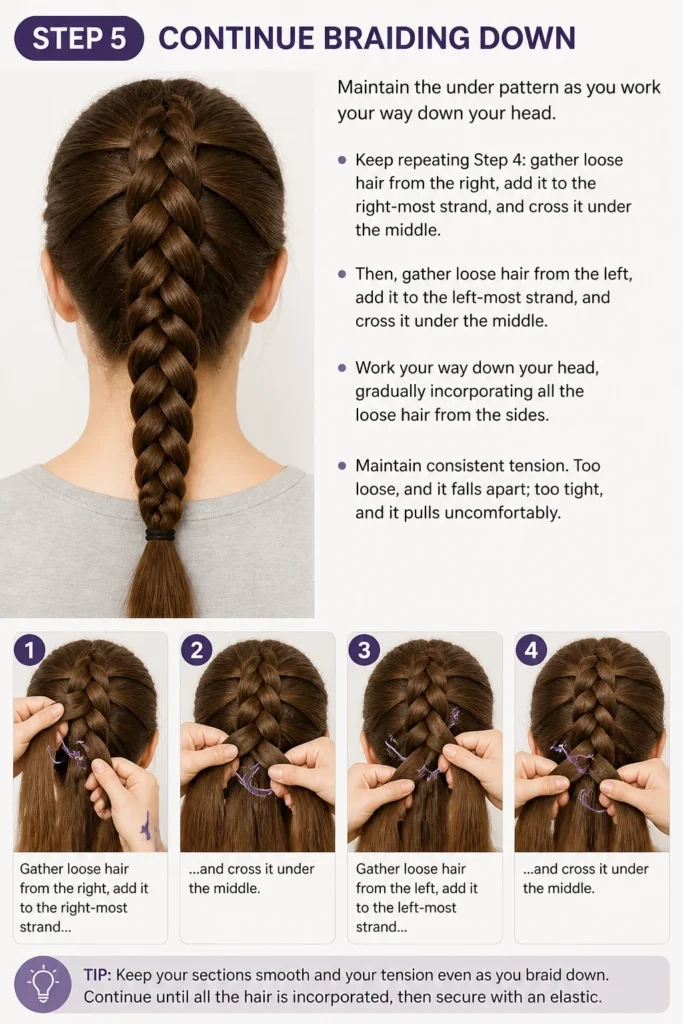
Keep repeating Step 4: gather loose hair from the right, add it to the right-most strand, and cross it under the middle.
Then, gather loose hair from the left, add it to the left-most strand, and cross it under the middle.
Work your way down your head, gradually incorporating all the loose hair from the sides.
Maintain consistent tension. Too loose, and it falls apart; too tight, and it pulls uncomfortably.
Step 6: Finish with a Regular Braid
Once you run out of loose hair to add, transition to a standard three-strand braid.
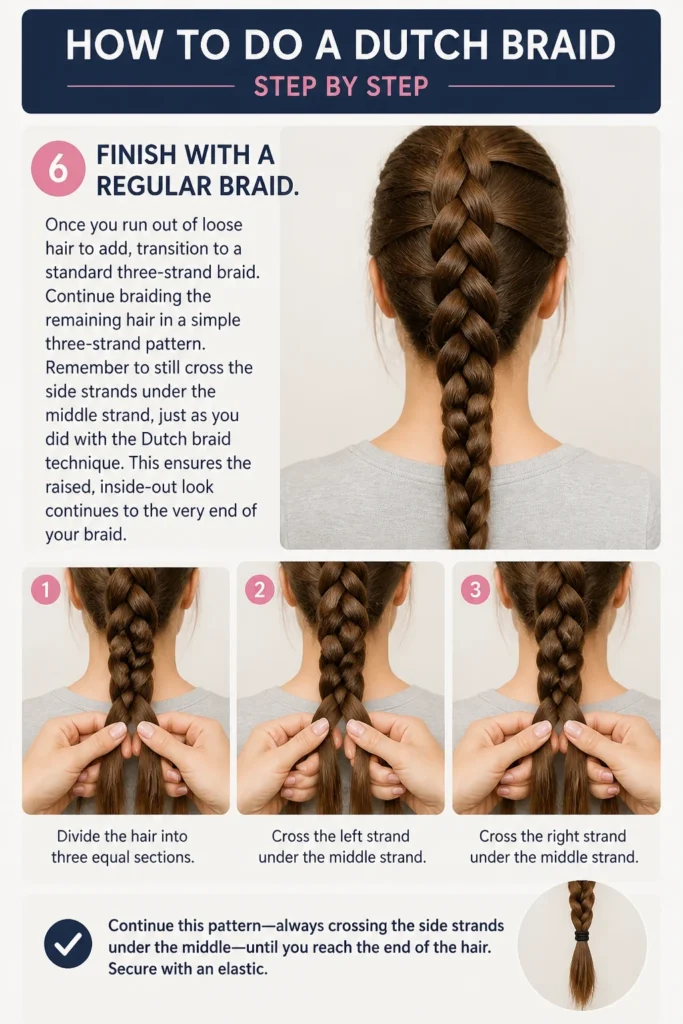
Continue braiding the remaining hair in a simple three-strand pattern.
Remember to still cross the side strands under the middle strand, just as you did with the Dutch braid technique.
This ensures the raised, “inside-out” look continues to the very end of your braid.
Step 7: Secure the Braid
Properly securing your braid prevents it from unraveling.
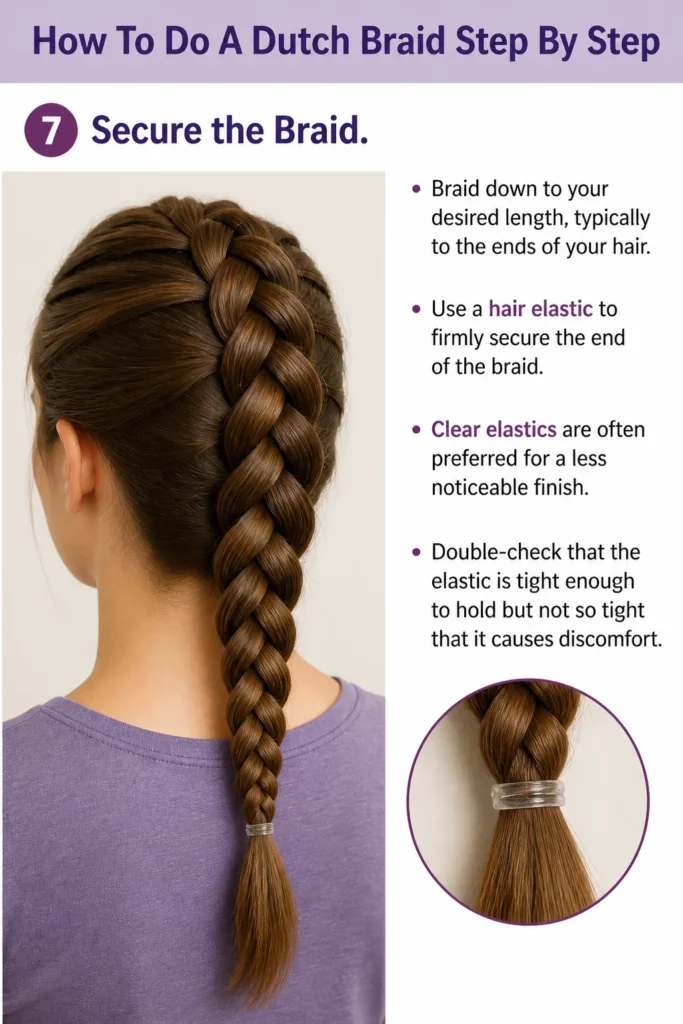
Braid down to your desired length, typically to the ends of your hair.
Use a hair elastic to firmly secure the end of the braid. Clear elastics are often preferred for a less noticeable finish.
Double-check that the elastic is tight enough to hold but not so tight that it causes discomfort.
Step 8: Loosen for Volume (Optional)
Many people prefer a softer, more voluminous Dutch braid.
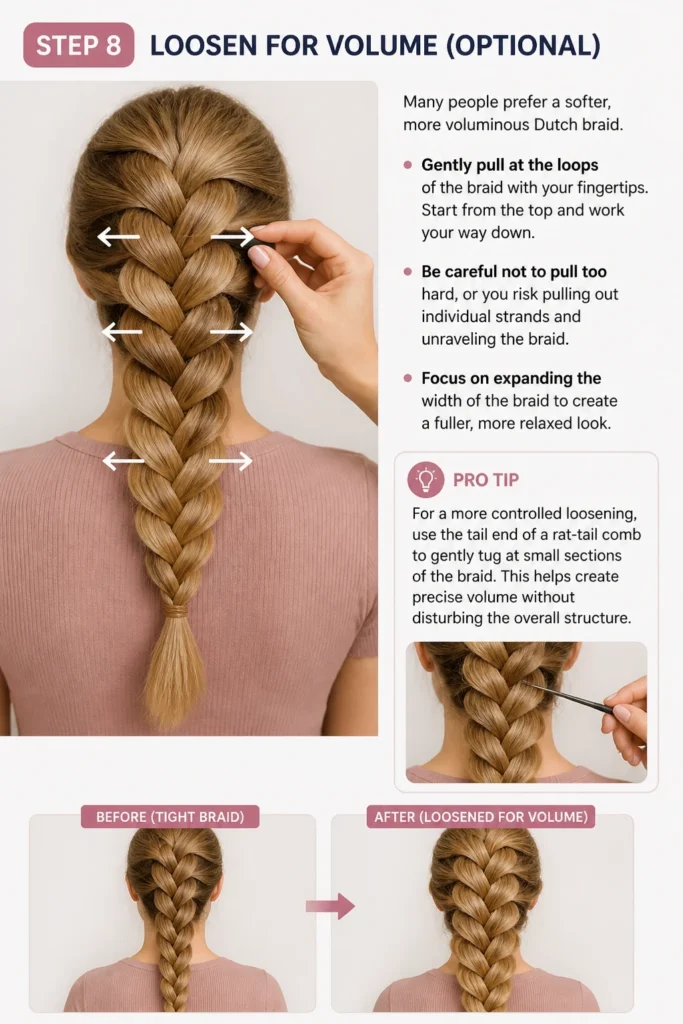
Gently pull at the loops of the braid with your fingertips. Start from the top and work your way down.
Be careful not to pull too hard, or you risk pulling out individual strands and unraveling the braid.
Focus on expanding the width of the braid to create a fuller, more relaxed look.
Pro Tip: For a more controlled loosening, use the tail end of a rat-tail comb to gently tug at small sections of the braid. This helps create precise volume without disturbing the overall structure.
Common Mistakes to Avoid
Not Detangling Thoroughly
Starting with tangled hair is a recipe for frustration. Knots will catch on your fingers and pull, making it impossible to create smooth, even sections.
Always take the time to brush your hair completely free of tangles before you begin. A wide-tooth comb followed by a paddle brush works well for most hair types.
Taking Uneven Sections
If the sections of hair you add are inconsistent in size, your braid will look lopsided or bumpy. This is a common issue for beginners.
Practice makes perfect. Focus on taking small, even sections of hair with each pass. Imagine drawing a clean line with your fingers to ensure consistency.
Braiding Too Loosely at the Start
An initial loose grip means the top of your braid will sag or fall apart quickly. The foundation needs to be firm.
Maintain a good, firm tension when you begin the braid, especially during the first few cross-overs. This solid base will support the rest of your braid.
Crossing Strands Over Instead of Under
This is the fundamental difference between a French and a Dutch braid. If you cross strands over the middle, you’ll end up with a French braid.
Consciously remind yourself to always bring the side strands under the middle strand. This creates the characteristic raised, “inside-out” effect of the Dutch braid.
Troubleshooting
Braid Looks Messy or Bumpy
This often happens due to uneven tension or inconsistent sectioning. Your fingers might be adding hair at different rates.
Try to use a mirror to watch your hands and ensure you’re adding consistent amounts of hair to each side. Also, maintain a firm but not painful grip throughout the braiding process to keep tension even.
Braid Keeps Falling Apart
A braid that unravels quickly usually indicates insufficient tightness or slippery hair. Your strands aren’t holding together well.
Ensure your initial sections are tight enough, and that you’re pulling each cross-under firmly. If your hair is very silky, try adding some texturizing spray or dry shampoo before you start to give it more grip.
Can’t Reach the Back of My Head
Braiding the back of your own head can be tricky, especially for a Dutch braid. It’s a common coordination challenge.
Practice in front of a large mirror, and consider using a second mirror to see the back of your head. You might also try braiding from the bottom up, or doing two smaller Dutch braids instead of one large one.
Key Takeaways
- Preparation is paramount: Always start with thoroughly detangled hair for the best results.
- Master the “under” technique: This is the core difference for a Dutch braid; always cross side strands under the middle.
- Maintain consistent tension: Even tension throughout the braid prevents bumps and ensures it holds.
- Practice sectioning: Strive for equal, neat sections of hair to add for a symmetrical braid.
- Don’t be afraid to loosen: Gently pulling at the loops can add beautiful volume and a softer look.
- Patience is key: Braiding takes practice; your first attempts won’t be perfect, but you’ll improve with time.
Frequently Asked Questions
What’s the difference between a French and Dutch braid?
The main difference lies in how you cross the hair strands. For a French braid, you cross the side strands over the middle strand, tucking the braid inward. For a Dutch braid, you cross the side strands under the middle strand, making the braid appear raised or “popped out” from the head.
Can I do a Dutch braid on short hair?
It’s definitely possible to do a Dutch braid on shorter hair, but it requires more precision. Your hair needs to be long enough to section and cross over comfortably, typically at least bob-length. You might find it easier to do smaller, tighter braids or multiple mini Dutch braids.
How do I make my Dutch braid look fuller?
To achieve a fuller look, gently “pancake” your braid after securing it. This involves carefully pulling at the outer loops of the braid to widen them. Start from the top and work your way down, being careful not to pull out individual strands completely. Using a texturizing spray before braiding can also add grip and volume.
Is it easier to do on wet or dry hair?
Generally, it’s easier to do a Dutch braid on dry or slightly damp hair. Wet hair can be more fragile and harder to grip, leading to a less defined braid. Dry hair allows for better tension control and easier sectioning, though a little product can help tame flyaways.
Our Top Recommended Finds
- Fine-Tooth Comb: Essential for creating clean, precise sections at the start and throughout your braid.
- Clear Hair Elastics: These blend seamlessly with any hair color, making your braid’s end look neat and professional.
- Texturizing Spray or Dry Shampoo: Great for adding grip and volume to fine or slippery hair, making it easier to braid and helping the style last longer.
Embrace Your Braiding Journey
Learning any new hairstyle takes patience and practice. Don’t be discouraged if your first few attempts aren’t perfect.
Each time you try, you’ll gain more control and understanding of your hair.
Once you master the basic Dutch braid, consider trying variations like a double Dutch braid, a Dutch halo braid, or incorporating it into updos.
Grab your comb and elastic, and start braiding today!