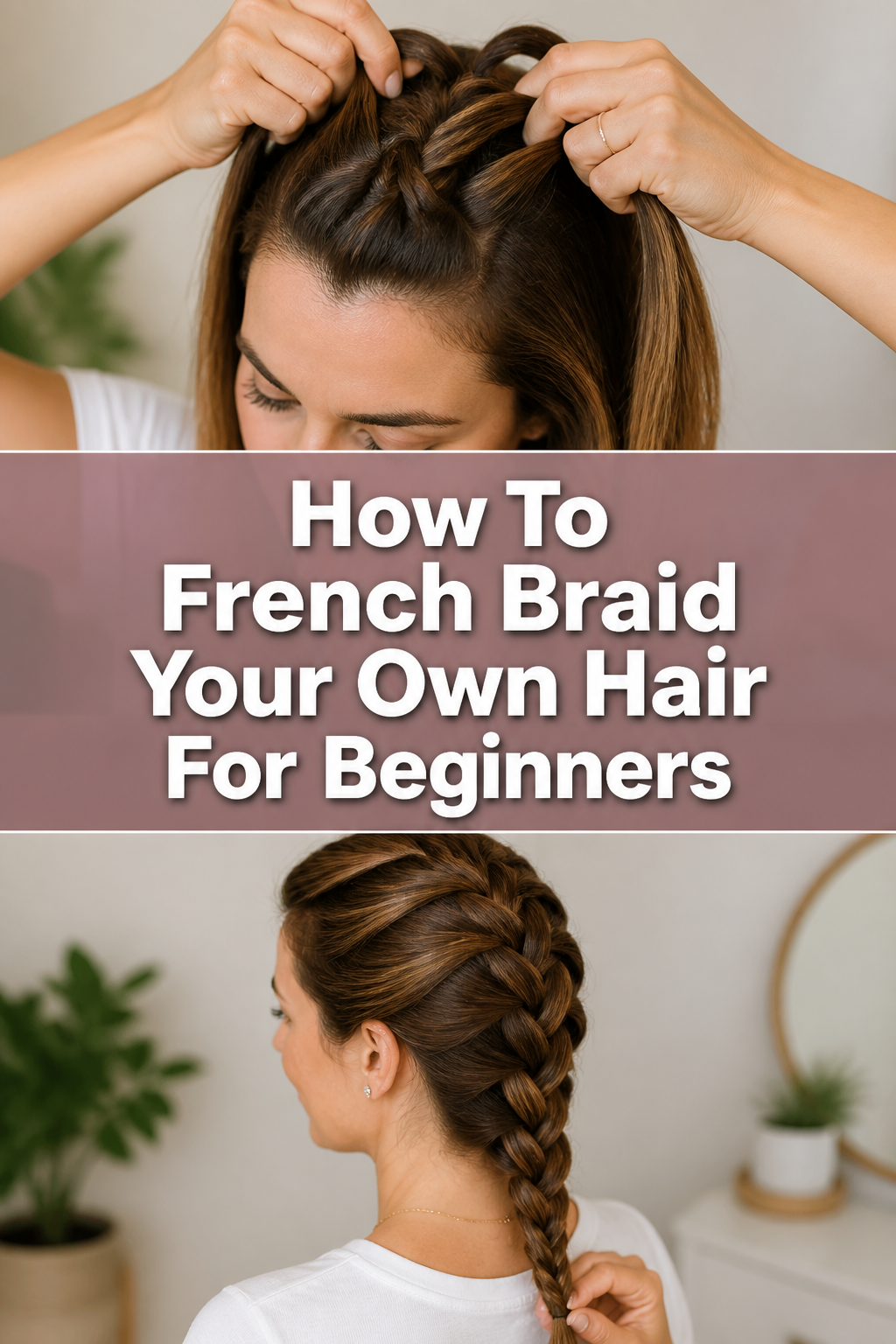
✨ How To French Braid Your Own Hair For Beginners
Learning to French braid your own hair can seem like a magic trick.
I remember countless frustrating attempts in front of the mirror, arms aching, fingers fumbling.
But with patience and the right guidance, it absolutely clicks, and I’m here to share my journey and practical tips to help you master it too.
Quick Overview
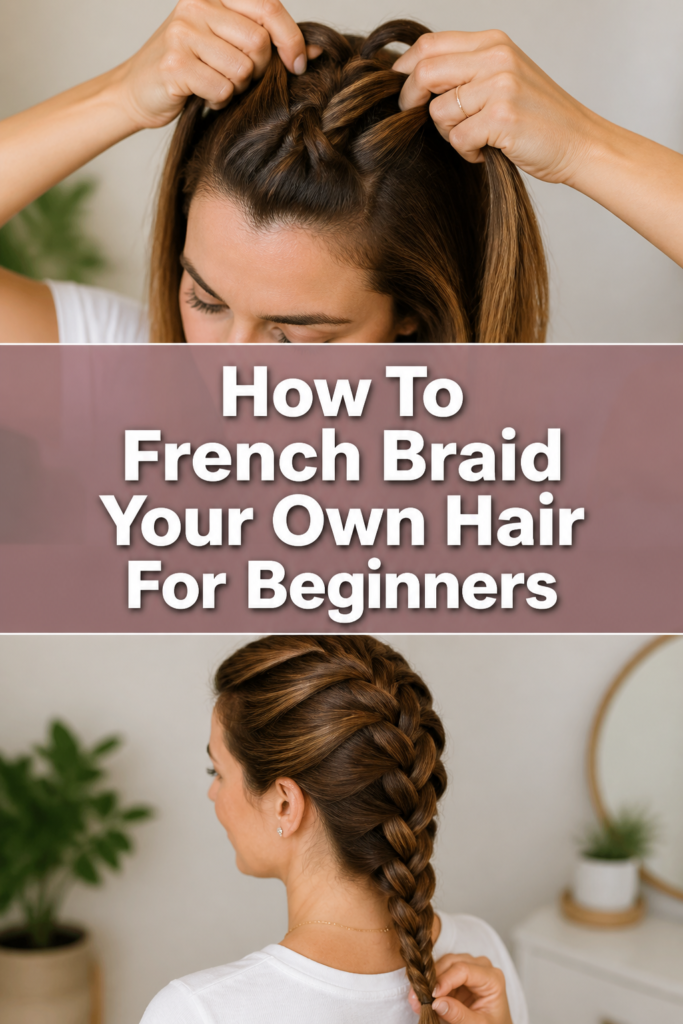
This guide breaks down the French braiding process into simple, manageable steps.
You’ll learn how to create a beautiful, classic French braid that sits neatly against your scalp.
- Time needed: 15-30 minutes (first few attempts might take longer)
- Difficulty: Beginner
- What you’ll need: Hairbrush, spray bottle with water, hair ties, mirror
Step-by-Step Instructions
Step 1: Prepare Your Hair
Start with freshly brushed hair. It should be smooth and free of any tangles.
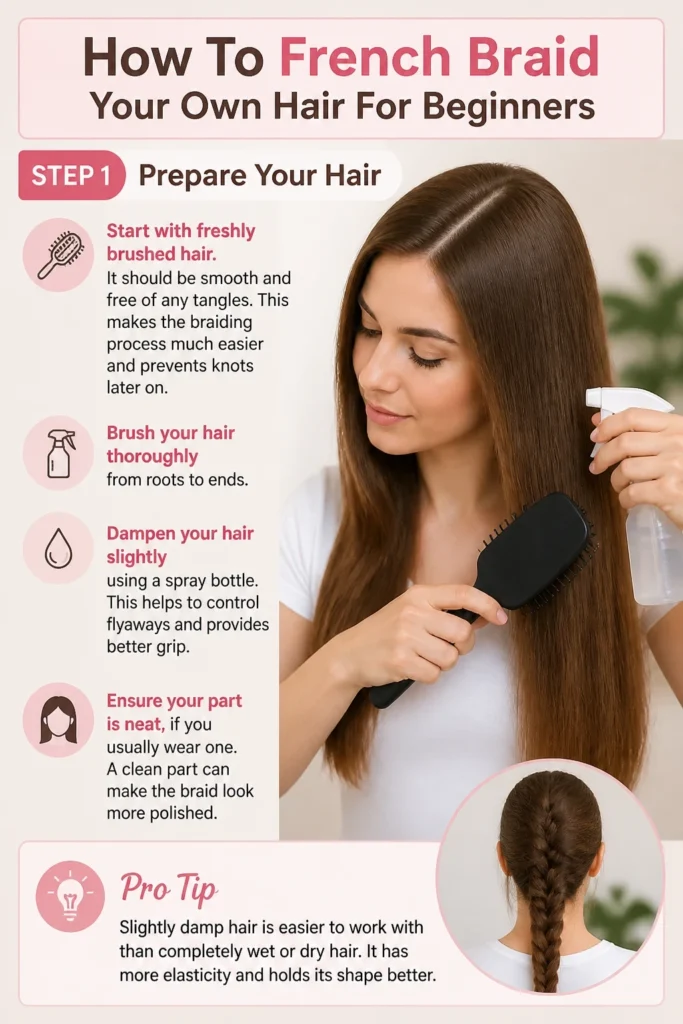
This makes the braiding process much easier and prevents knots later on.
- Brush your hair thoroughly from roots to ends.
- Dampen your hair slightly using a spray bottle. This helps to control flyaways and provides better grip.
- Ensure your part is neat, if you usually wear one. A clean part can make the braid look more polished.
Pro Tip: Slightly damp hair is easier to work with than completely wet or dry hair. It has more elasticity and holds its shape better.
Step 2: Section Your Starting Hair
Identify the section of hair where you want your French braid to begin.
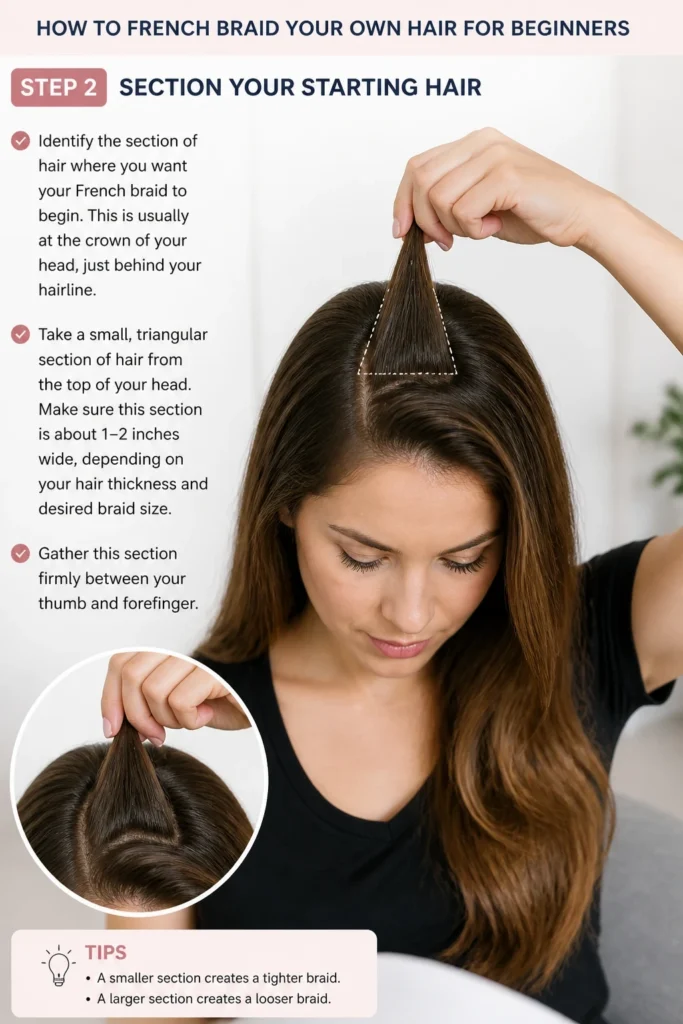
This is usually at the crown of your head, just behind your hairline.
- Take a small, triangular section of hair from the top of your head.
- Make sure this section is about 1-2 inches wide, depending on your hair thickness and desired braid size.
- Gather this section firmly between your thumb and forefinger.
Step 3: Divide Into Three Strands
Once you have your initial section, you need to divide it into three equal parts.
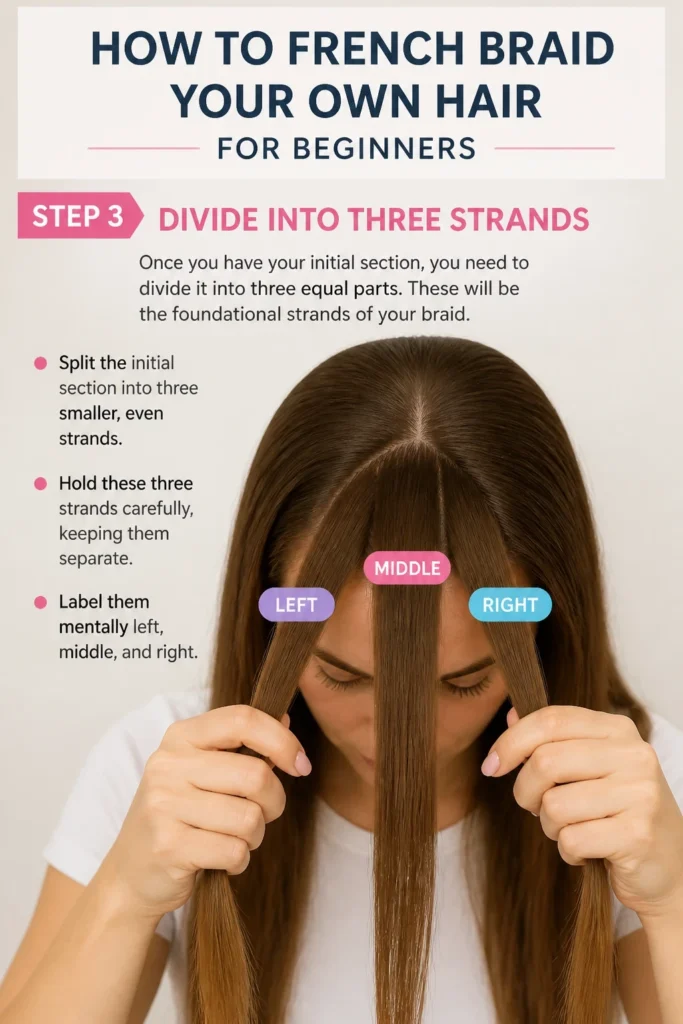
These will be the foundational strands of your braid.
- Split the initial section into three smaller, even strands.
- Hold these three strands carefully, keeping them separate.
- Label them mentally: left, middle, and right.
Step 4: Begin With a Basic Braid
The first few crosses are just like a regular three-strand braid.
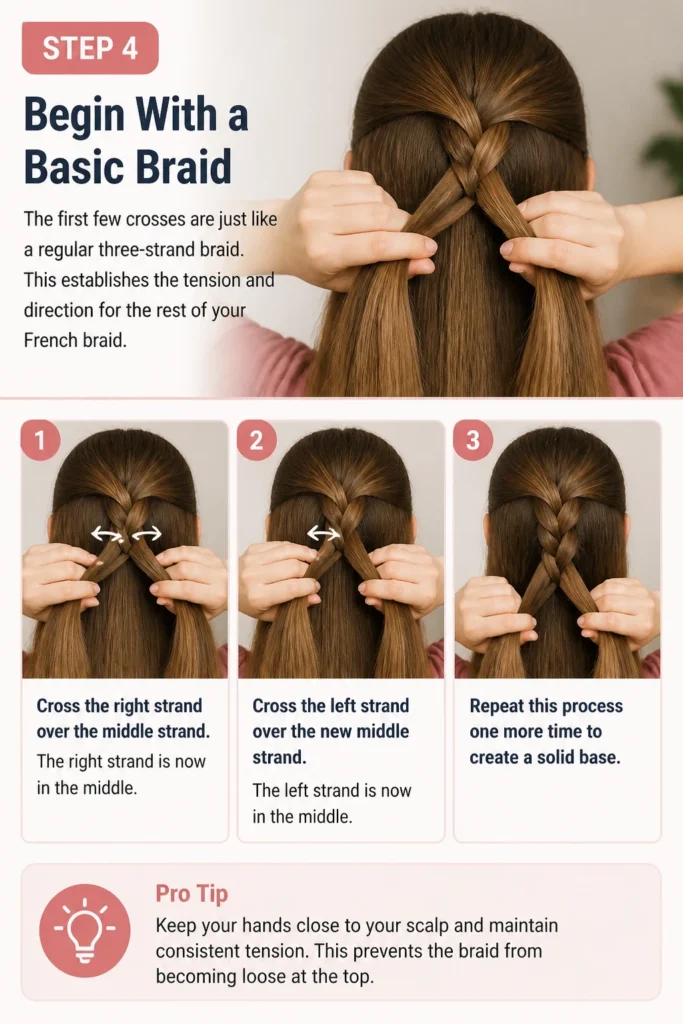
This establishes the tension and direction for the rest of your French braid.
- Cross the right strand over the middle strand. The right strand is now in the middle.
- Cross the left strand over the new middle strand. The left strand is now in the middle.
- Repeat this process one more time to create a solid base.
Pro Tip: Keep your hands close to your scalp and maintain consistent tension. This prevents the braid from becoming loose at the top.
Step 5: Incorporate New Hair (Right Side)
This is where the French braid truly begins to take shape.
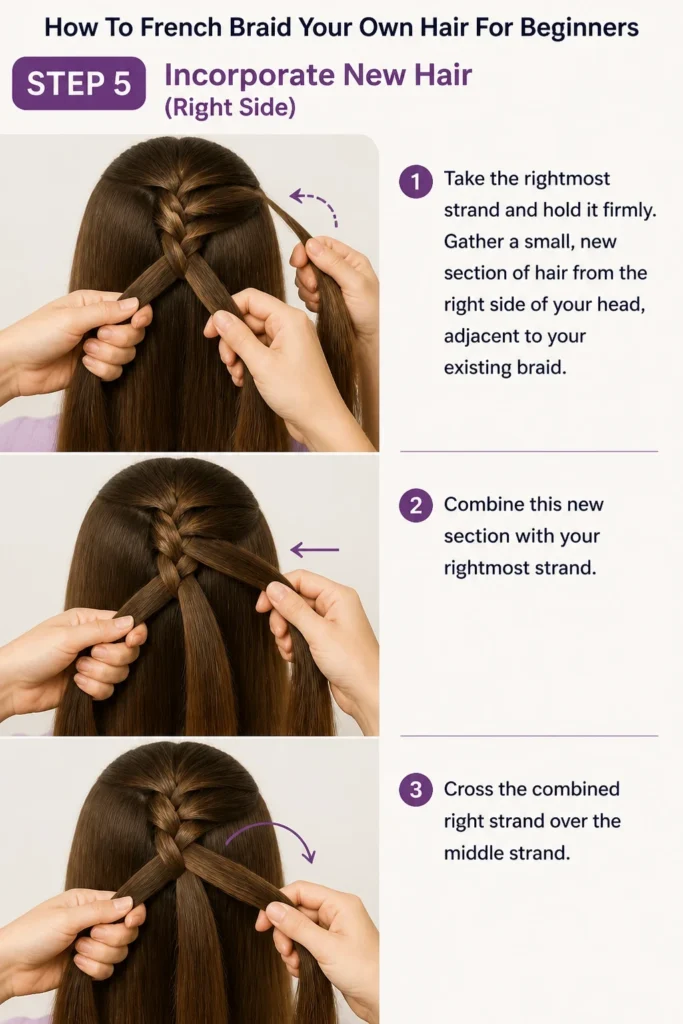
You will start adding small sections of hair from the sides into your existing strands.
- Take the rightmost strand and hold it firmly.
- Gather a small, new section of hair from the right side of your head, adjacent to your existing braid.
- Combine this new section with your rightmost strand.
- Cross the combined right strand over the middle strand.
Step 6: Incorporate New Hair (Left Side)
Mirror the action you just performed on the right side.
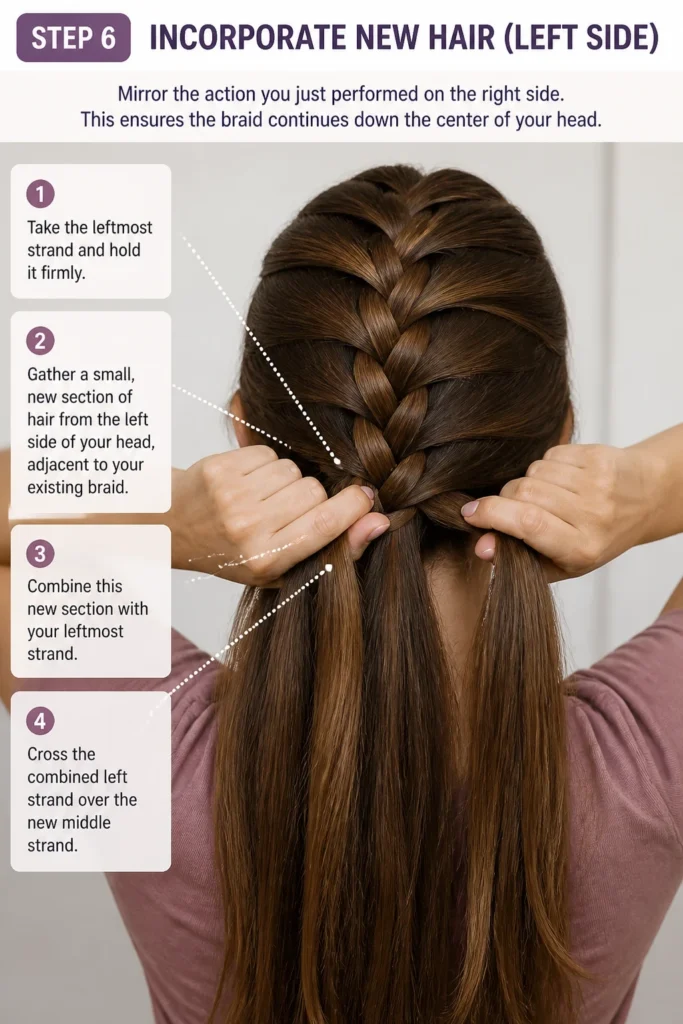
This ensures the braid continues down the center of your head.
- Take the leftmost strand and hold it firmly.
- Gather a small, new section of hair from the left side of your head, adjacent to your existing braid.
- Combine this new section with your leftmost strand.
- Cross the combined left strand over the new middle strand.
Step 7: Continue Braiding Down
Keep repeating steps 5 and 6, working your way down your head.
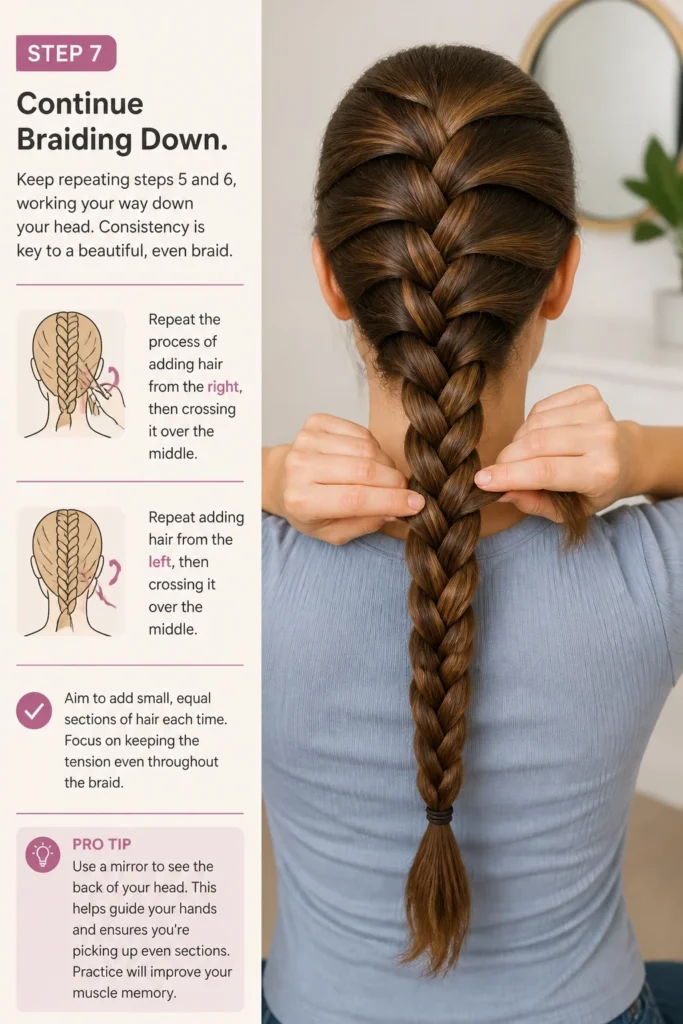
Consistency is key to a beautiful, even braid.
- Repeat the process of adding hair from the right, then crossing it over the middle.
- Repeat adding hair from the left, then crossing it over the middle.
- Aim to add small, equal sections of hair each time.
- Focus on keeping the tension even throughout the braid.
Pro Tip: Use a mirror to see the back of your head. This helps guide your hands and ensures you’re picking up even sections. Practice will improve your muscle memory.
Step 8: Finish the Braid
Once you run out of new hair to add, transition to a regular three-strand braid.
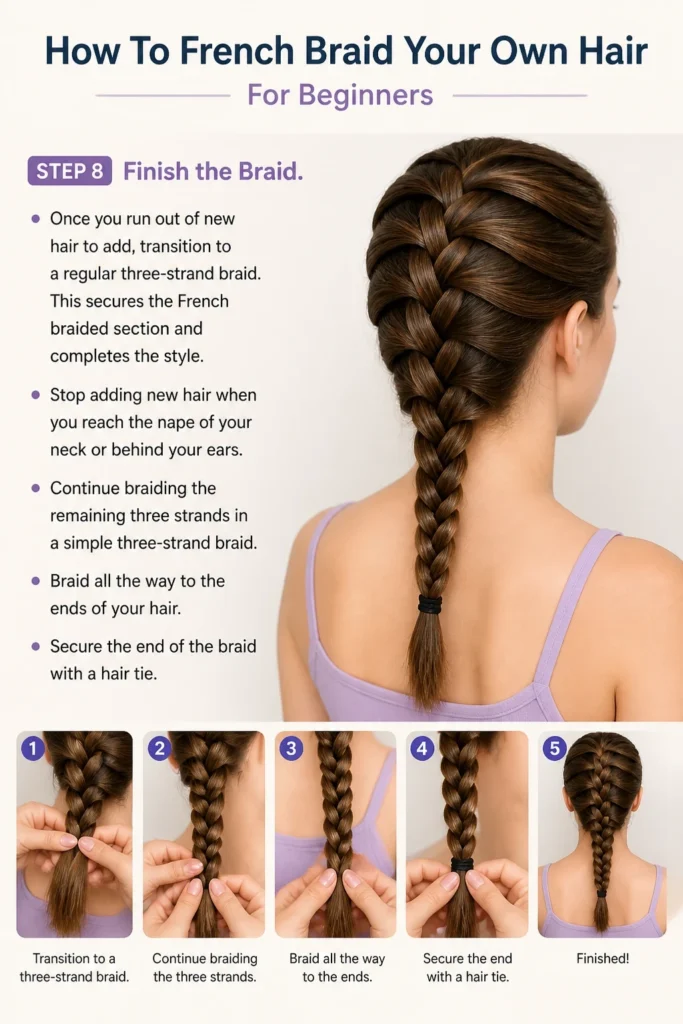
This secures the French braided section and completes the style.
- Stop adding new hair when you reach the nape of your neck or behind your ears.
- Continue braiding the remaining three strands in a simple three-strand braid.
- Braid all the way to the ends of your hair.
- Secure the end of the braid with a hair tie.
Step 9: Refine Your Braid
A few final touches can make your French braid look much more polished.
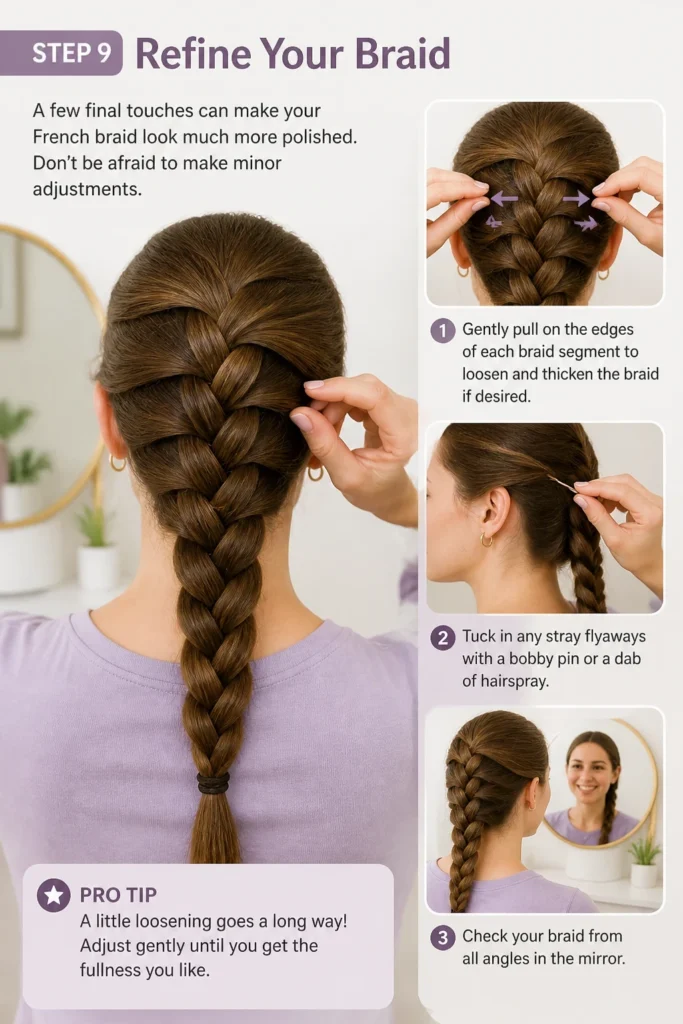
Don’t be afraid to make minor adjustments.
- Gently pull on the edges of each braid segment to loosen and thicken the braid if desired.
- Tuck in any stray flyaways with a bobby pin or a dab of hairspray.
- Check your braid from all angles in the mirror.
Common Mistakes to Avoid
Uneven Sections
One of the most common issues is picking up uneven amounts of hair for each added section. This leads to a lopsided or messy braid.
Always try to gather small, consistent amounts of hair from each side. Practice helps you develop a feel for even sections without looking.
Loose Starting Point
If your braid feels loose or sags at the top, it’s usually because you didn’t start with enough tension. The initial three crosses are crucial for setting the foundation.
Keep your hands close to your scalp and pull those first few sections snug, without being painful. This creates a firm base for the rest of the braid.
Fingers Getting Tangled
Beginners often find their fingers getting confused or tangled, especially when adding new hair. This is normal and improves with practice.
Focus on isolating the three main strands with your dominant hand, then using your non-dominant hand to gather the new section. Keep your movements deliberate and slow at first.
Braid Drifting to One Side
Sometimes the braid starts off centered but gradually drifts to one side of the head. This happens when you consistently pull more hair from one side than the other, or when your crossing motion favors one direction.
Pay close attention to where you are picking up new hair. Try to keep your head straight and use a mirror to ensure your hands are working symmetrically on both sides.
Troubleshooting
My Arms Get Tired
French braiding your own hair can be a workout for your arms, especially when you’re starting out. This is a common complaint.
Take breaks if you need to. Rest your arms down for a moment, then resume. You can also try braiding in front of two mirrors (one in front, one behind) to get a better angle and reduce strain. Your arm endurance will improve with practice.
Flyaways Are Everywhere
Even with damp hair, some hair types are prone to flyaways, especially around the hairline and neck. This can make the braid look less neat.
Use a small amount of styling gel or a strong-hold hairspray on a toothbrush or a clean mascara wand to gently smooth down flyaways. Apply it directly to the problem areas after the braid is complete. A rat-tail comb can also help to gather and smooth stubborn sections before braiding.
The Braid Looks Messy or Uneven
It’s completely normal for your first few attempts to look a bit messy. Consistency in sectioning and tension is the hardest part to master.
Don’t be discouraged. Undo the braid and start again. Focus on taking very small, even sections of hair for each addition. Pay attention to how tightly you are pulling each strand. With repetition, your hands will learn the movements, and your braids will become more uniform.
Key Takeaways
- Preparation is paramount; always start with detangled, slightly damp hair.
- Consistent tension from the very beginning is crucial for a neat, lasting braid.
- Practice taking small, even sections of hair from each side for a balanced look.
- Slow down and take breaks to prevent arm fatigue and ensure precision.
- Don’t be afraid to redo the braid if it’s not quite right; practice builds skill.
- Finishing touches like gentle pulling and flyaway control elevate the final style.
Frequently Asked Questions
Can I French braid my own short hair?
Yes, you can French braid short hair, but it might be more challenging. You’ll need to work with smaller sections and ensure all strands are long enough to be incorporated. Using hairspray or gel can help keep shorter pieces in place.
What if my hair is layered?
Layered hair can be French braided, but shorter layers might pop out. Use hairspray or styling cream to help smooth these pieces into the braid. You might need to add hair more frequently to catch all the layers as you braid down.
How can I make my French braid last longer?
To extend the life of your French braid, ensure it’s braided tightly but comfortably. Use a strong elastic at the end. For overnight wear, consider sleeping on a silk pillowcase to reduce friction. A light mist of hairspray can also help set the style for the day.
Is it easier to French braid on wet or dry hair?
For most beginners, slightly damp hair is the easiest to work with. It offers better grip and reduces frizz compared to completely dry hair. Fully wet hair can be too slippery and takes longer to dry, potentially leading to a looser braid once dry.
Our Top Recommended Finds
- Boar Bristle Brush: Excellent for smoothing hair and distributing natural oils, reducing tangles before you start.
- Fine-Mist Spray Bottle: Perfect for dampening hair evenly without soaking it, providing ideal braiding texture.
- Clear Elastic Hair Ties: Blend seamlessly into any hair color and provide a strong, discreet hold for the end of your braid.
Embrace Your Braiding Journey
Learning to French braid your own hair is a truly rewarding skill.
It opens up a world of versatile styling options, from casual everyday looks to elegant updos.
Don’t let initial struggles deter you; every expert started as a beginner.
Grab your brush, find a mirror, and try it today. You might surprise yourself with what you can create!