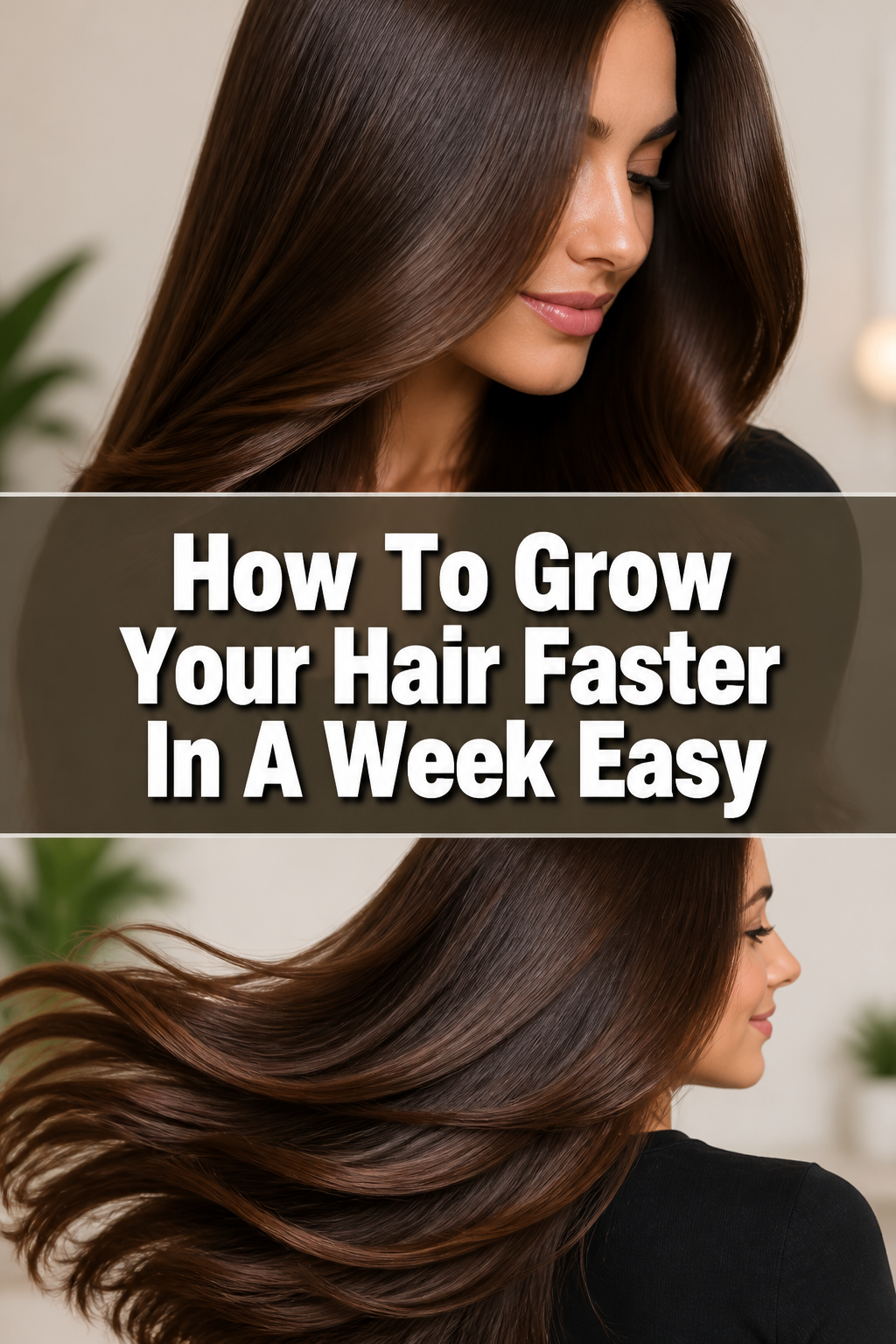
🌿 How To Grow Your Hair Faster In A Week Easy
Many of us dream of longer, luscious hair, and the thought of achieving it quickly can feel like a distant fantasy. I used to struggle with slow growth and constant breakage myself, feeling frustrated by the lack of progress. That’s why I delved into understanding the true science behind hair health, discovering practical steps that genuinely make a difference. This guide shares those effective strategies, helping you optimize your hair’s environment for impressive growth, starting this week.
Quick Overview
Growing your hair faster in a week focuses on optimizing your scalp health, minimizing damage, and providing the right nutrients to support your hair’s natural growth cycle. You’ll learn how to create the ideal conditions for your hair to thrive and appear longer and healthier.
- Time needed: 15-30 minutes daily for routines, plus weekly treatments.
- Difficulty: Beginner
- What you’ll need: Gentle shampoo and conditioner, scalp massager, hair oil (e.g., rosemary, peppermint, jojoba), satin pillowcase, wide-tooth comb, hair mask ingredients, nutritional supplements.
Step-by-Step Instructions
Step 1: Optimize Your Scalp Health with Regular Massage
Your scalp is the foundation for healthy hair growth. A healthy scalp means healthy follicles, which are essential for producing strong strands. Poor circulation or product buildup can hinder this process significantly.
To begin, massage your scalp daily for 5-10 minutes. Use your fingertips or a specialized scalp massager in gentle, circular motions.
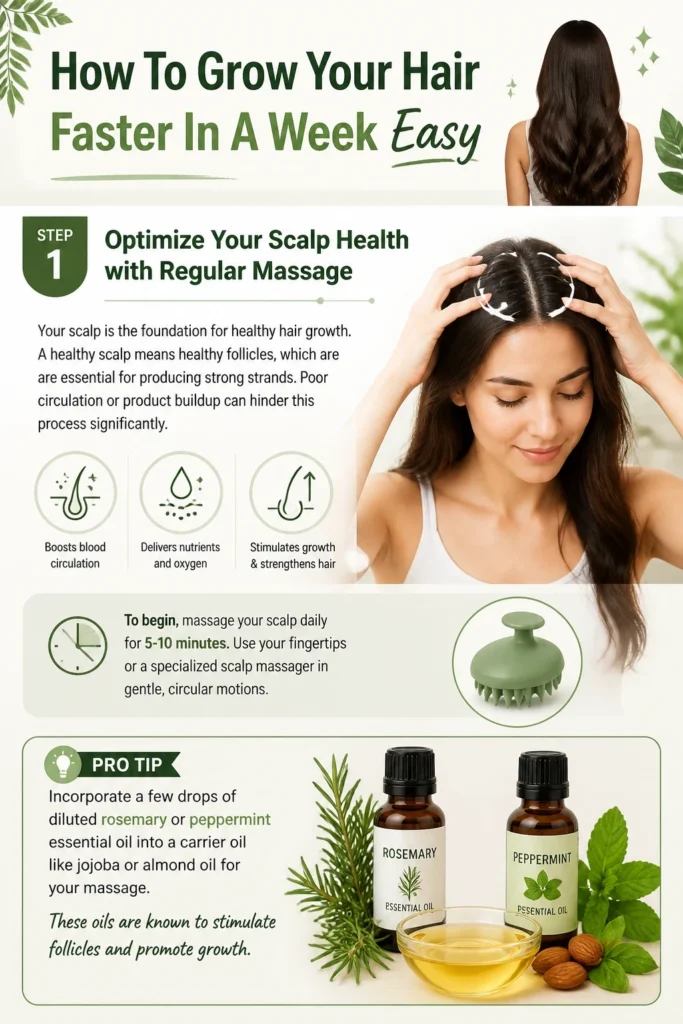
This simple practice boosts blood circulation to the hair follicles. Increased blood flow delivers vital nutrients and oxygen, stimulating growth and strengthening existing hair.
Pro Tip: Incorporate a few drops of diluted rosemary or peppermint essential oil into a carrier oil like jojoba or almond oil for your massage. These oils are known to stimulate follicles and promote growth.
Step 2: Cleanse Gently and Infrequently
Harsh shampoos and frequent washing can strip your scalp of its natural oils, leading to dryness and breakage. This stress directly impacts your hair’s ability to grow long and strong.
Wash your hair every 2-3 days, or even less frequently if possible. When you do wash, use a sulfate-free, gentle shampoo and conditioner.
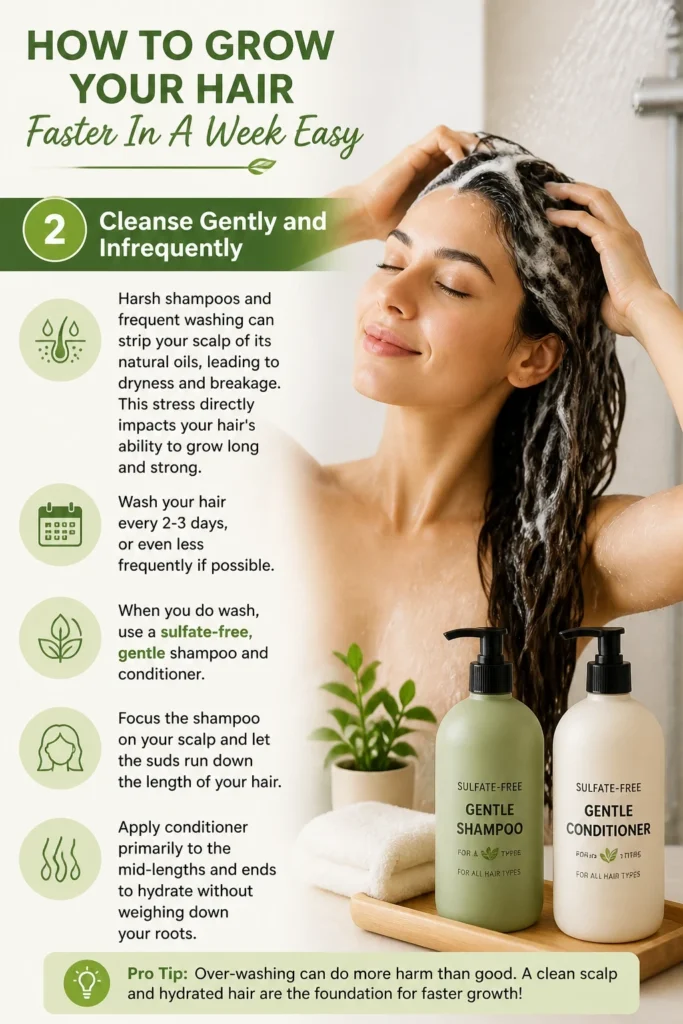
Focus the shampoo on your scalp and let the suds run down the length of your hair. Apply conditioner primarily to the mid-lengths and ends to hydrate without weighing down your roots.
Step 3: Nourish from Within with Essential Nutrients
Hair growth is an internal process, deeply dependent on your body’s nutritional status. A deficiency in key vitamins and minerals can significantly slow down hair growth and lead to thinning.
Incorporate hair-loving nutrients into your diet. Focus on foods rich in protein, biotin, iron, Vitamin D, Vitamin E, and Omega-3 fatty acids.
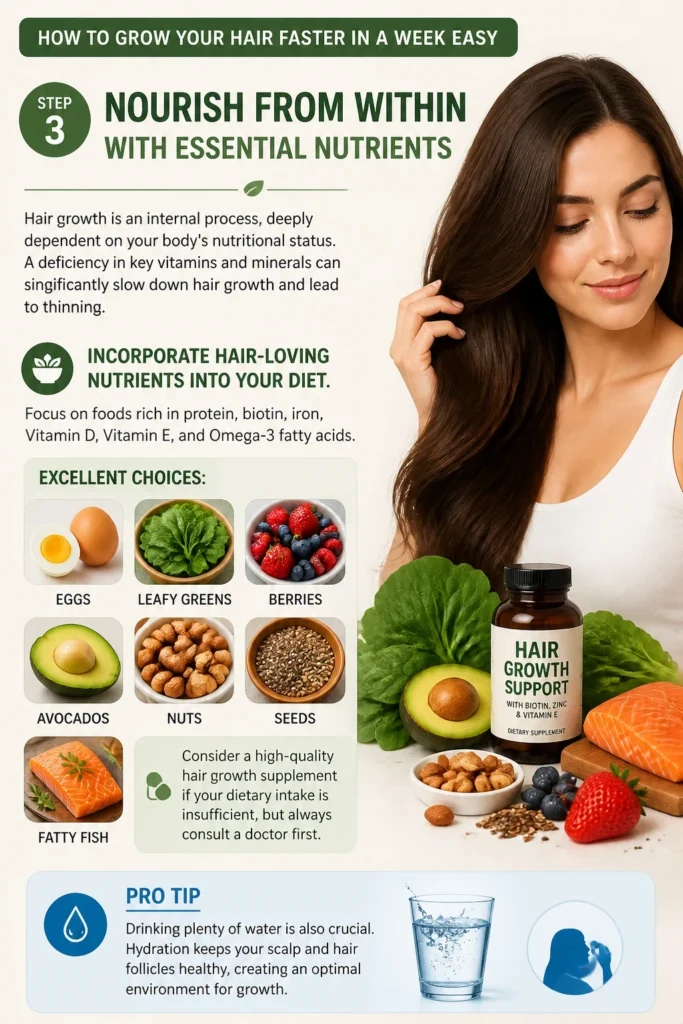
Eggs, leafy greens, berries, avocados, nuts, seeds, and fatty fish are excellent choices. Consider a high-quality hair growth supplement if your dietary intake is insufficient, but always consult a doctor first.
Pro Tip: Drinking plenty of water is also crucial. Hydration keeps your scalp and hair follicles healthy, creating an optimal environment for growth.
Step 4: Protect Your Hair from Mechanical Damage
Everyday habits can inflict significant damage on your hair, leading to breakage that prevents it from reaching its full length. Friction and aggressive styling are major culprits.
Minimize heat styling, chemical treatments, and tight hairstyles. If you must use heat, always apply a heat protectant spray.
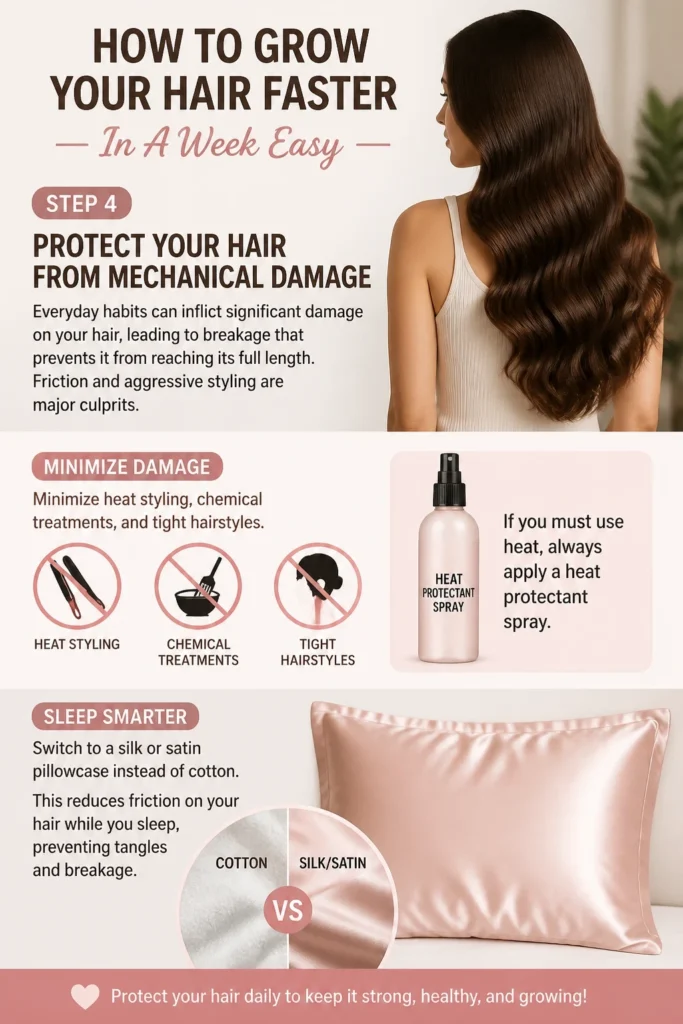
Switch to a silk or satin pillowcase instead of cotton. This reduces friction on your hair while you sleep, preventing tangles and breakage.
Step 5: Master Gentle Detangling
Brushing wet hair aggressively is a common cause of breakage. Hair is most vulnerable when wet, as the bonds are weaker and more elastic.
After washing, gently detangle your hair with a wide-tooth comb. Start from the ends and work your way up to the roots in small sections.
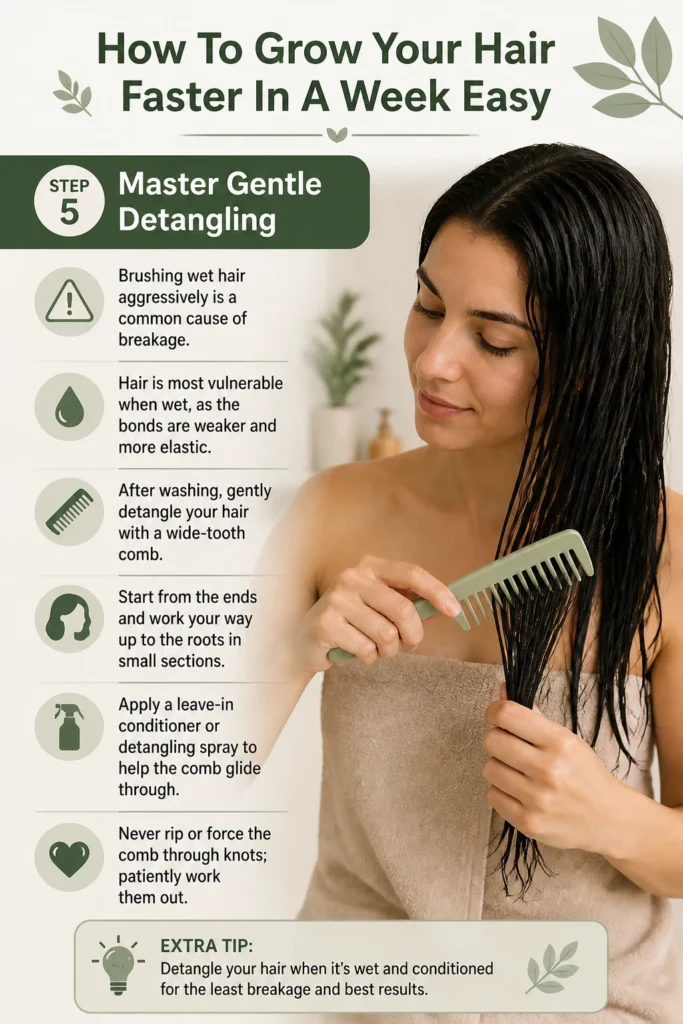
Apply a leave-in conditioner or detangling spray to help the comb glide through. Never rip or force the comb through knots; patiently work them out.
Step 6: Implement a Weekly Deep Conditioning Treatment
Deep conditioning provides an intense boost of hydration and nutrients that regular conditioner cannot match. This helps repair damage, improve elasticity, and prevent future breakage.
Apply a nourishing hair mask once a week. You can use a store-bought product or a DIY mask with ingredients like avocado, coconut oil, or honey.
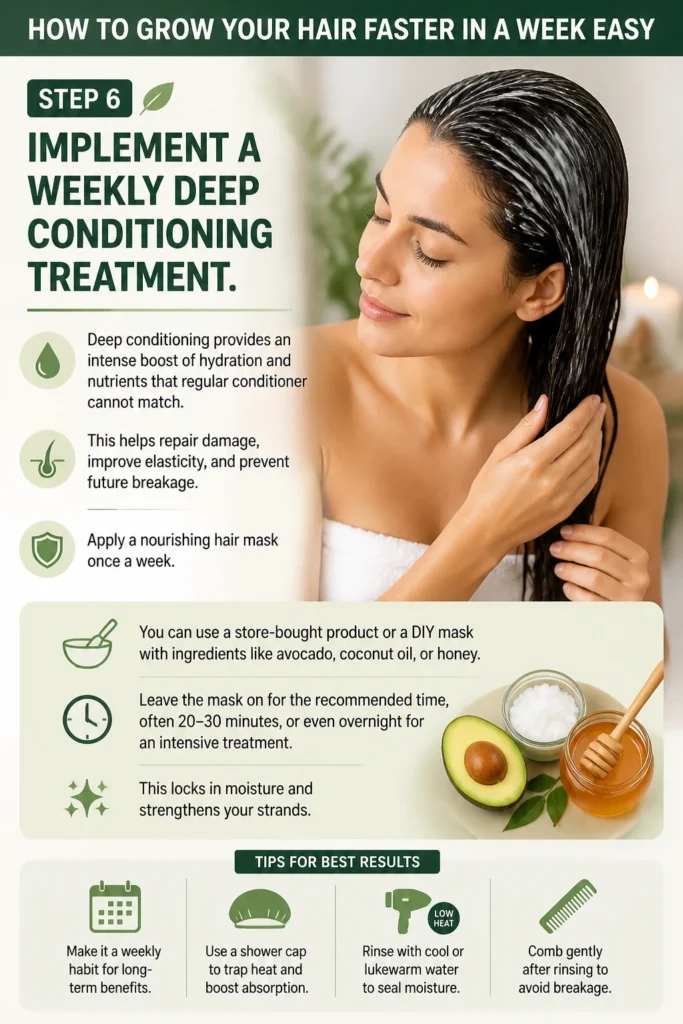
Leave the mask on for the recommended time, often 20-30 minutes, or even overnight for an intensive treatment. This locks in moisture and strengthens your strands.
Step 7: Trim Regularly (But Wisely)
While it might seem counterintuitive to cut your hair when you want it to grow, regular trims are vital. Split ends can travel up the hair shaft, causing more damage and necessitating a bigger cut later.
Get micro-trims every 8-12 weeks to snip off split ends. These are tiny trims, just enough to remove damaged parts without sacrificing length.
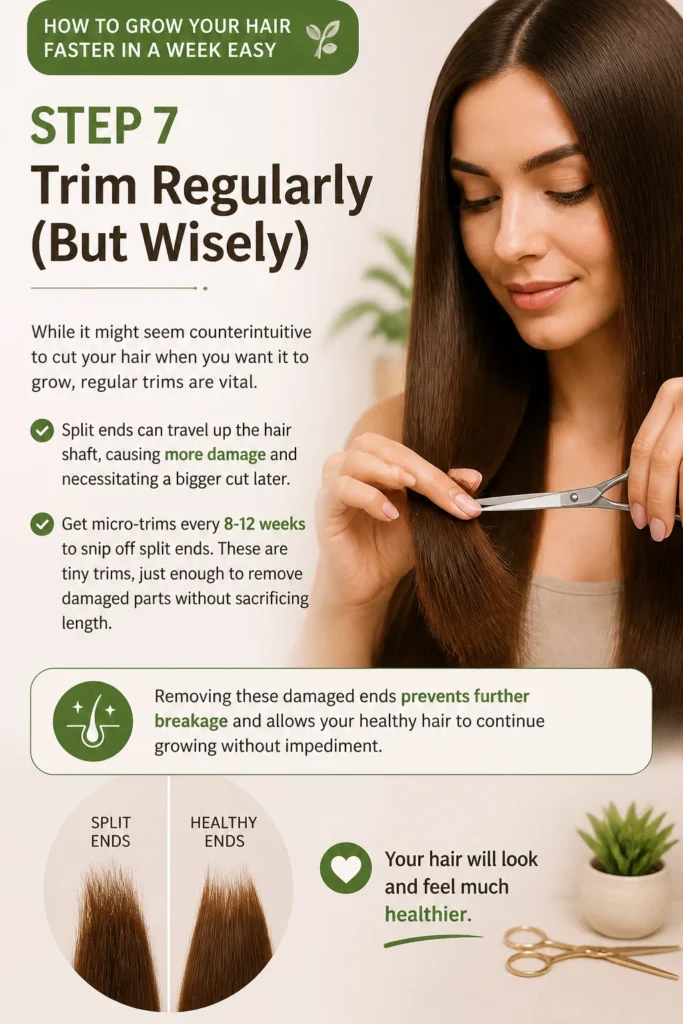
Removing these damaged ends prevents further breakage and allows your healthy hair to continue growing without impediment. Your hair will look and feel much healthier.
Common Mistakes to Avoid
Over-Washing Your Hair
Washing your hair too frequently strips away the natural oils (sebum) that protect and moisturize your scalp and strands. This can lead to a dry, irritated scalp and trigger increased oil production as your body tries to compensate, creating a vicious cycle. Try to extend the time between washes to allow your scalp’s natural balance to regulate.
Neglecting Scalp Health
Many people focus solely on the hair strands, forgetting that hair growth originates from the scalp. A clogged, inflamed, or dry scalp cannot effectively support healthy hair production. Ensure your scalp is clean, hydrated, and stimulated through regular massages and appropriate products.
Aggressive Styling and Heat Damage
Using high heat tools without protection, brushing wet hair forcefully, or wearing tight hairstyles can cause significant mechanical damage. This leads to breakage, split ends, and thinning, counteracting any growth efforts. Opt for air drying, use heat protectants, and choose loose, gentle hairstyles.
Poor Nutrition and Hydration
Your hair is a reflection of your internal health. If your body isn’t getting enough essential vitamins, minerals, and protein, your hair will suffer, resulting in slower growth and weaker strands. Make sure your diet is balanced and you’re drinking enough water daily.
Troubleshooting
My hair still feels brittle and dry.
This often indicates a lack of deep hydration and possibly underlying damage. Ensure you are consistently using a leave-in conditioner and performing weekly deep conditioning treatments. Consider a protein treatment if your hair feels overly elastic or mushy when wet, but use protein sparingly as too much can also cause brittleness.
My scalp is itchy or flaky.
An itchy or flaky scalp can be a sign of product buildup, dryness, or a more specific condition like dandruff. Make sure you are rinsing your hair thoroughly after shampooing and conditioning. Try incorporating a gentle scalp exfoliant once a week to remove buildup, and ensure your shampoo is sulfate-free to prevent dryness. If symptoms persist, consult a dermatologist.
I’m not seeing any significant length change.
Remember that hair growth is a gradual process, averaging about half an inch per month. While these steps optimize growth, dramatic length changes in a single week are unrealistic. Focus on the improvement in hair quality, shine, and reduced breakage. Take before and after photos to track subtle progress over several weeks and months. Consistency is key.
Key Takeaways
- Stimulate your scalp daily with massages to boost blood flow and nutrient delivery to follicles.
- Prioritize gentle hair care by washing infrequently with sulfate-free products and detangling wet hair carefully.
- Fuel hair growth from within by consuming a nutrient-rich diet and staying well-hydrated.
- Protect your hair from damage by avoiding excessive heat, tight styles, and using a satin pillowcase.
- Incorporate weekly deep conditioning to provide intense moisture and strengthen hair strands.
- Schedule micro-trims regularly to eliminate split ends and prevent further breakage, allowing healthy growth.
Frequently Asked Questions
Can hair really grow faster in just one week?
While significant length changes in a single week are biologically impossible (hair grows about 0.5 inches per month on average), these strategies create an optimal environment for growth. They focus on minimizing breakage and maximizing scalp health, which can make your hair appear longer and healthier faster by reducing damage and promoting stronger growth from the root.
Are there any specific supplements that actually work for hair growth?
Supplements containing biotin, collagen, marine proteins, and specific vitamins like D and E are popular for hair growth. While they can be beneficial if you have a deficiency, their effectiveness varies for individuals. Always consult with a healthcare professional before starting any new supplement regimen to ensure it’s appropriate for you.
How often should I use hair oils like rosemary or peppermint?
For targeted scalp stimulation, you can use diluted rosemary or peppermint oil as part of your scalp massage routine 2-3 times a week. It’s important to dilute them with a carrier oil like jojoba or almond oil to prevent irritation. Consistent, moderate use is more effective than infrequent, heavy application.
Will brushing my hair 100 times a day make it grow faster?
No, the old wives’ tale about brushing 100 times a day is a myth and can actually cause more harm than good. Excessive brushing creates friction and can lead to breakage, especially if your brush isn’t gentle or your hair is tangled. Focus on gentle detangling and minimal brushing to distribute natural oils, not aggressive stimulation.
Our Top Recommended Finds
- Soft Bristle Scalp Massager: Excellent for stimulating blood flow without causing irritation, perfect for daily use in the shower or with oils.
- Satin Pillowcase: Reduces friction on your hair while you sleep, preventing tangles, frizz, and breakage that cotton can cause.
- Wide-Tooth Comb: Essential for gently detangling wet hair, which is when strands are most vulnerable to snapping.
Your Journey to Longer, Healthier Hair Starts Now
Embarking on a journey to healthier, longer hair is an investment in yourself, one that yields beautiful results with consistent effort. You’ve now got the practical roadmap to support your hair’s natural growth process, transforming your routine into a powerful ally. Remember, while a week lays the groundwork, true transformation is built on sustained care and patience.
Don’t wait another day wishing for better hair. Take these steps, integrate them into your daily life, and watch as your strands begin to flourish. Consider exploring natural hair masks for different hair types or diving deeper into the benefits of specific essential oils for even more personalized care. Your hair deserves this attention, and you deserve to feel confident in its beauty.