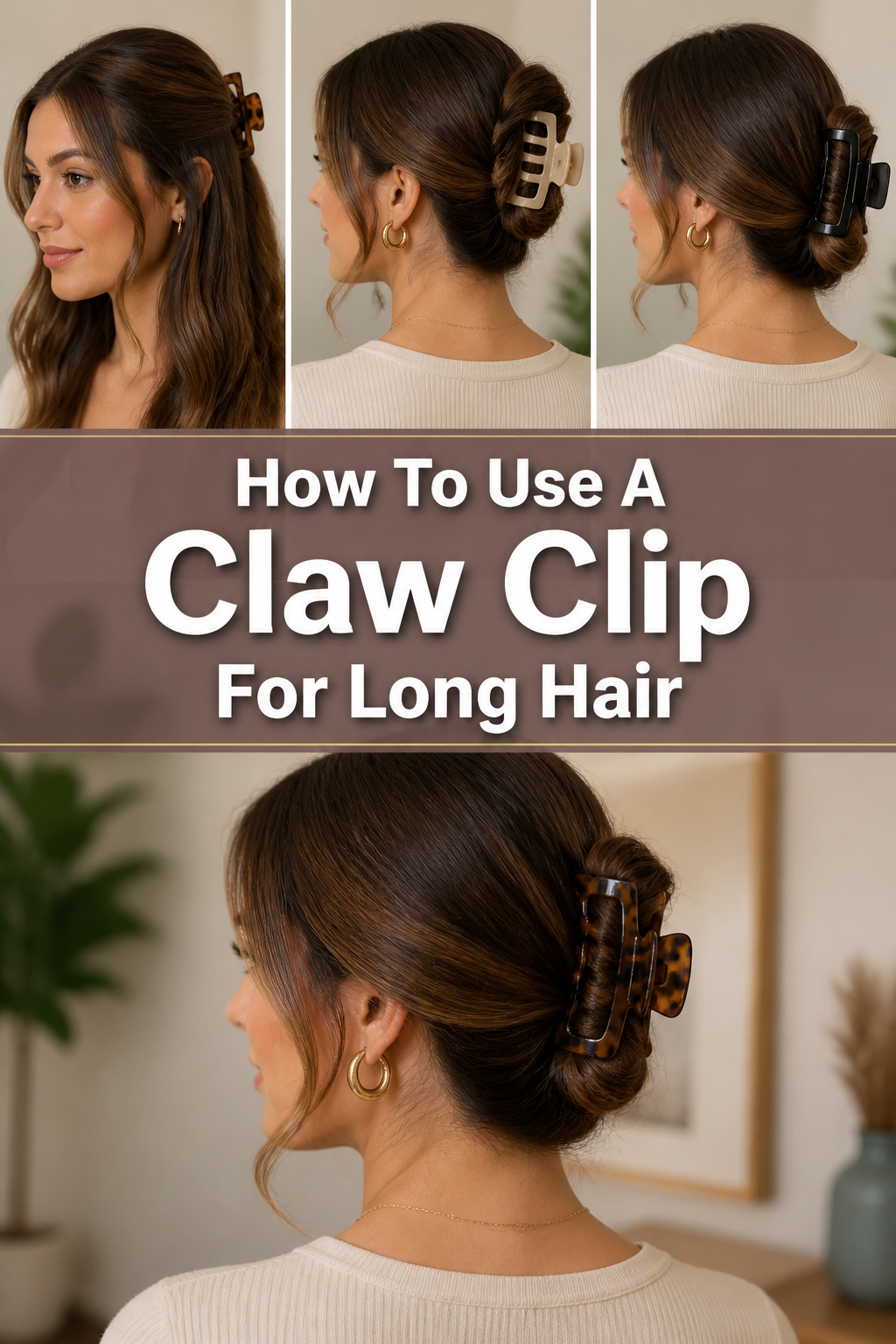
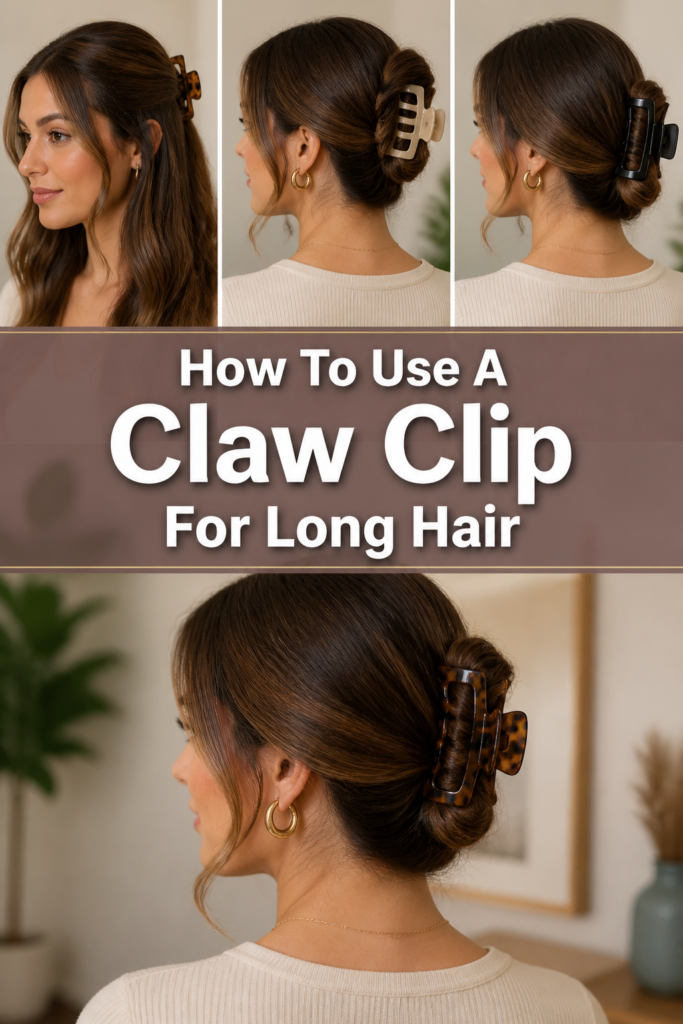
💇 How To Use A Claw Clip For Long Hair
Finding a way to keep long hair secure and stylish all day can feel like a full-time job.
After years of snapping hair ties and dealing with tension headaches, I switched to claw clips and never looked back.
This guide shares the exact techniques I use to keep my waist-length hair perfectly in place from morning to night.
Quick Overview
Mastering the claw clip is the fastest way to achieve an effortless, chic look while protecting your strands from breakage.
- Time needed: 2-5 minutes
- Difficulty: Beginner
- What you’ll need: An extra-large claw clip, a wide-tooth comb or brush, and optional texture spray.
Step-by-Step Instructions
Step 1: Prep Your Canvas
Start by thoroughly detangling your hair from the ends up to the roots.
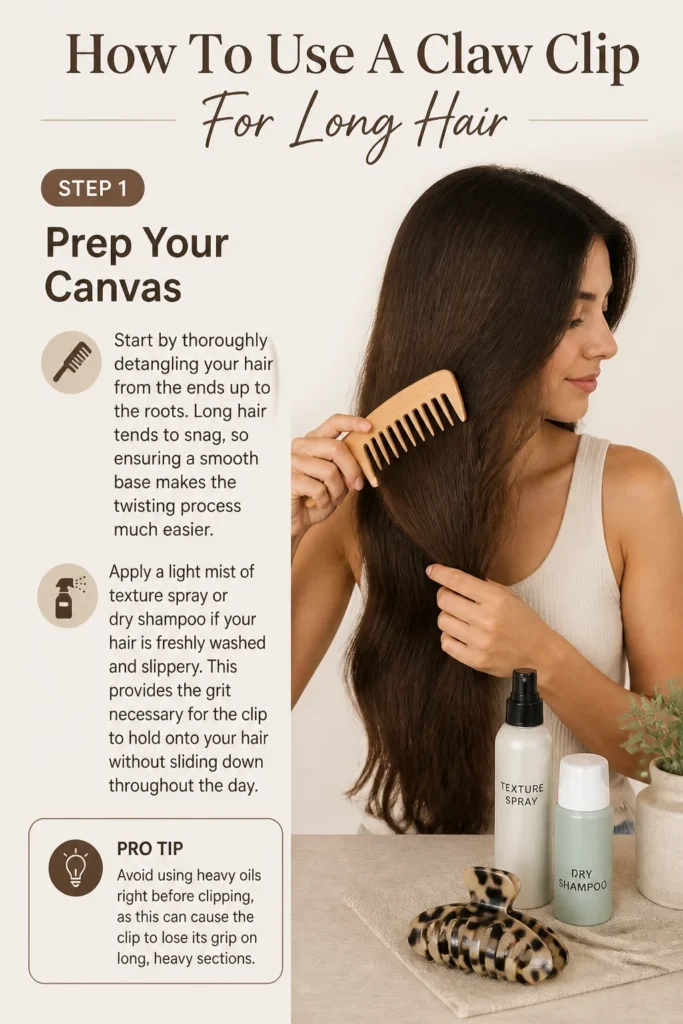
Long hair tends to snag, so ensuring a smooth base makes the twisting process much easier.
Apply a light mist of texture spray or dry shampoo if your hair is freshly washed and slippery.
This provides the “grit” necessary for the clip to hold onto your hair without sliding down throughout the day.
Pro Tip: Avoid using heavy oils right before clipping, as this can cause the clip to lose its grip on long, heavy sections.
Step 2: Gather Into a Low Ponytail
Collect all of your hair at the nape of your neck as if you were about to put it in a low ponytail.
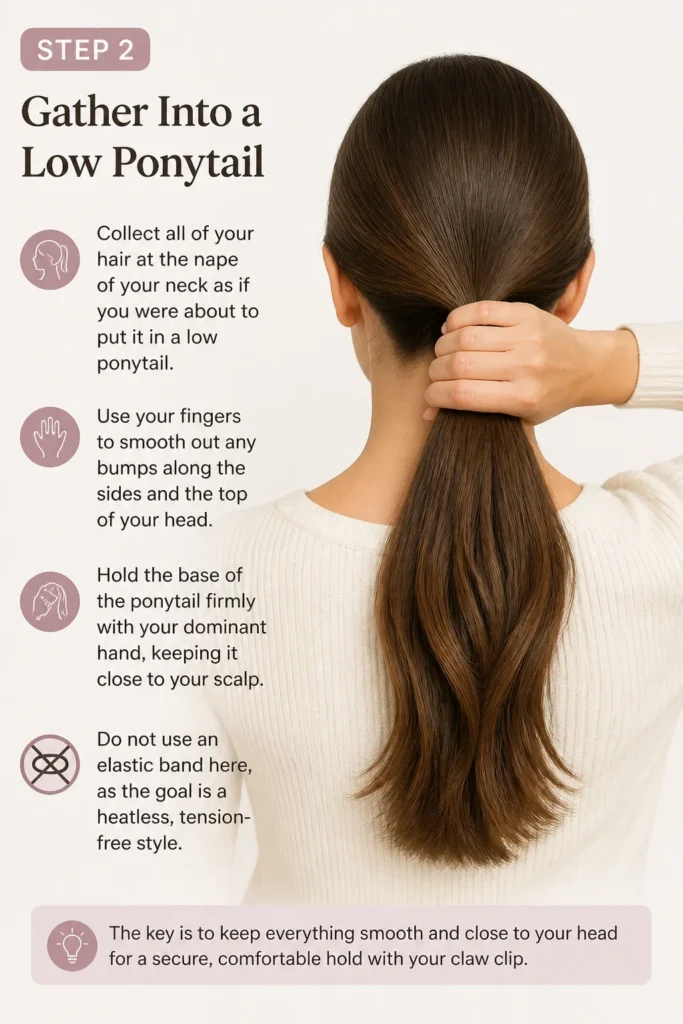
Use your fingers to smooth out any bumps along the sides and the top of your head.
Hold the base of the ponytail firmly with your dominant hand, keeping it close to your scalp.
Do not use an elastic band here, as the goal is a heatless, tension-free style.
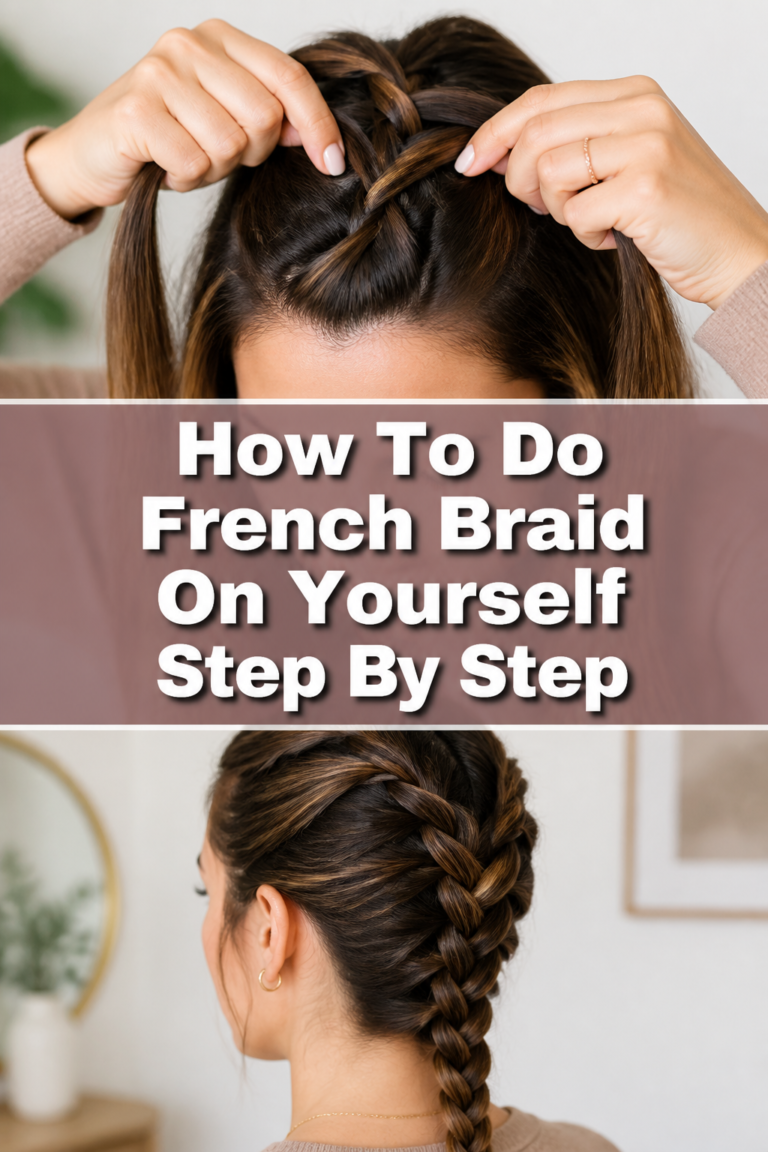
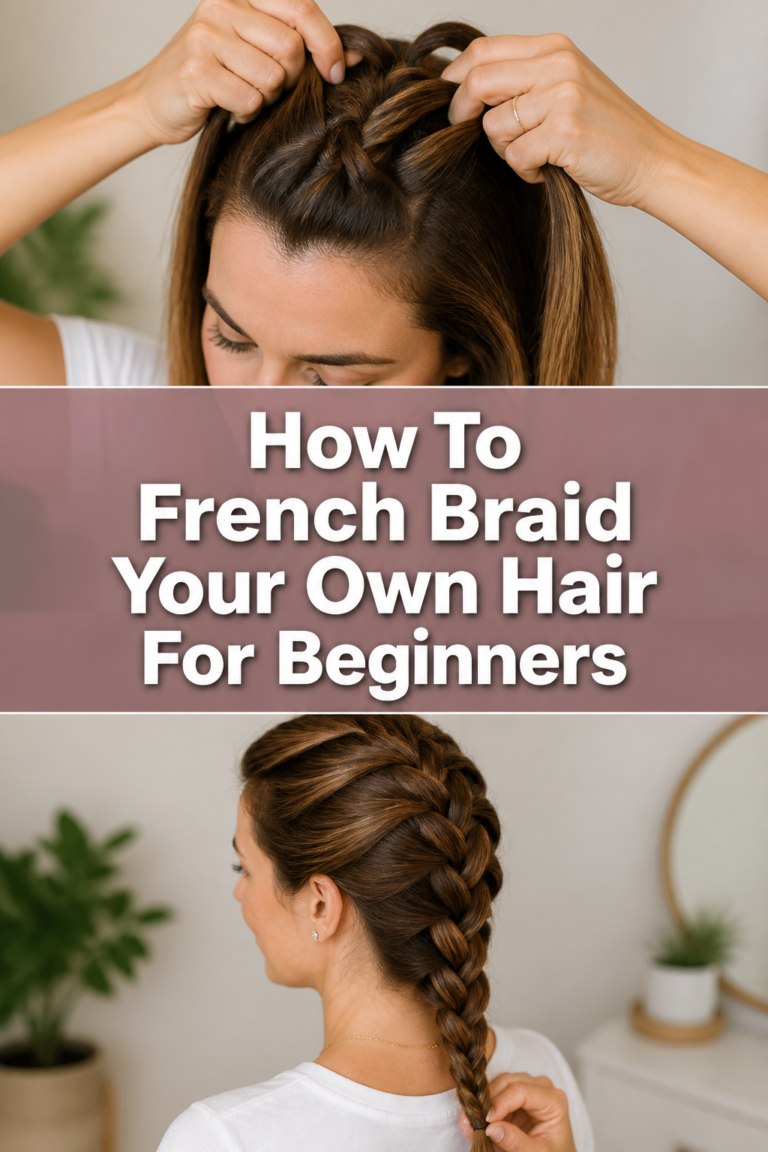
Step 3: Begin the Upward Twist
Rotate your wrist to twist the length of your hair in a clockwise or counter-clockwise direction.
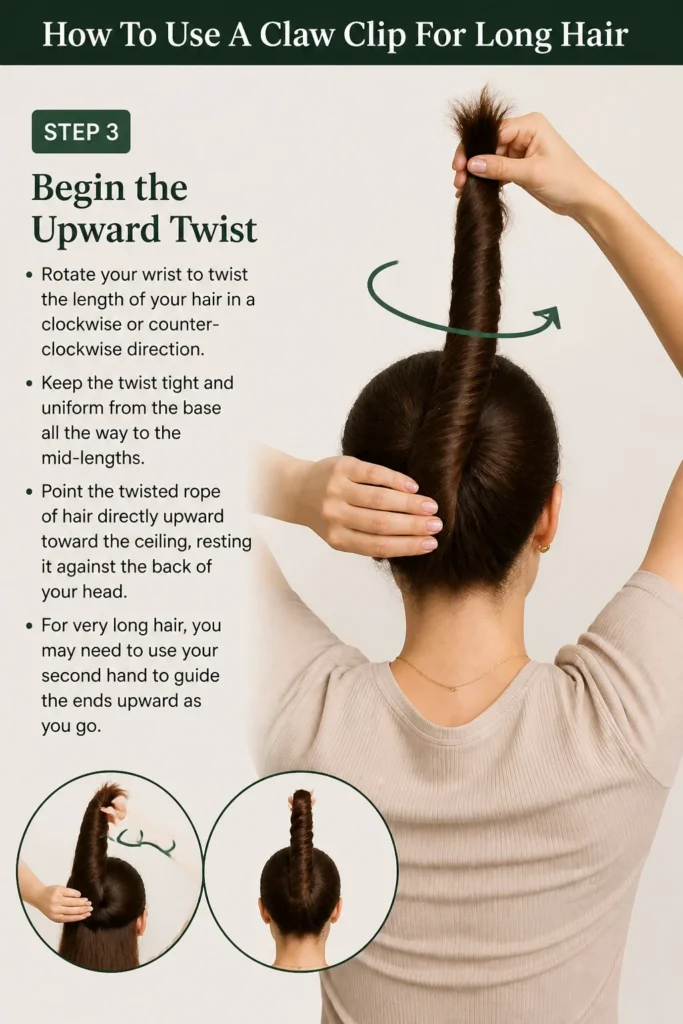
Keep the twist tight and uniform from the base all the way to the mid-lengths.
Point the twisted “rope” of hair directly upward toward the ceiling, resting it against the back of your head.
For very long hair, you may need to use your second hand to guide the ends upward as you go.
Step 4: The Long Hair Fold
Fold the remaining length of the twist back down toward the nape of your neck if your hair is past your shoulder blades.
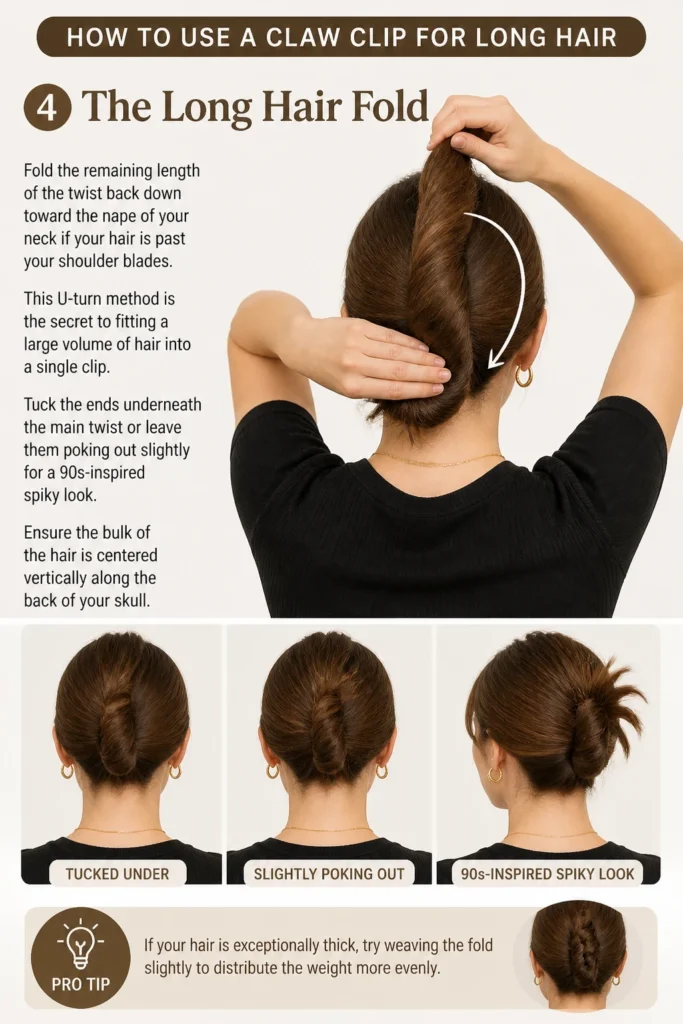
This “U-turn” method is the secret to fitting a large volume of hair into a single clip.
Tuck the ends underneath the main twist or leave them poking out slightly for a 90s-inspired “spiky” look.
Ensure the bulk of the hair is centered vertically along the back of your skull.
Pro Tip: If your hair is exceptionally thick, try “weaving” the fold slightly to distribute the weight more evenly.
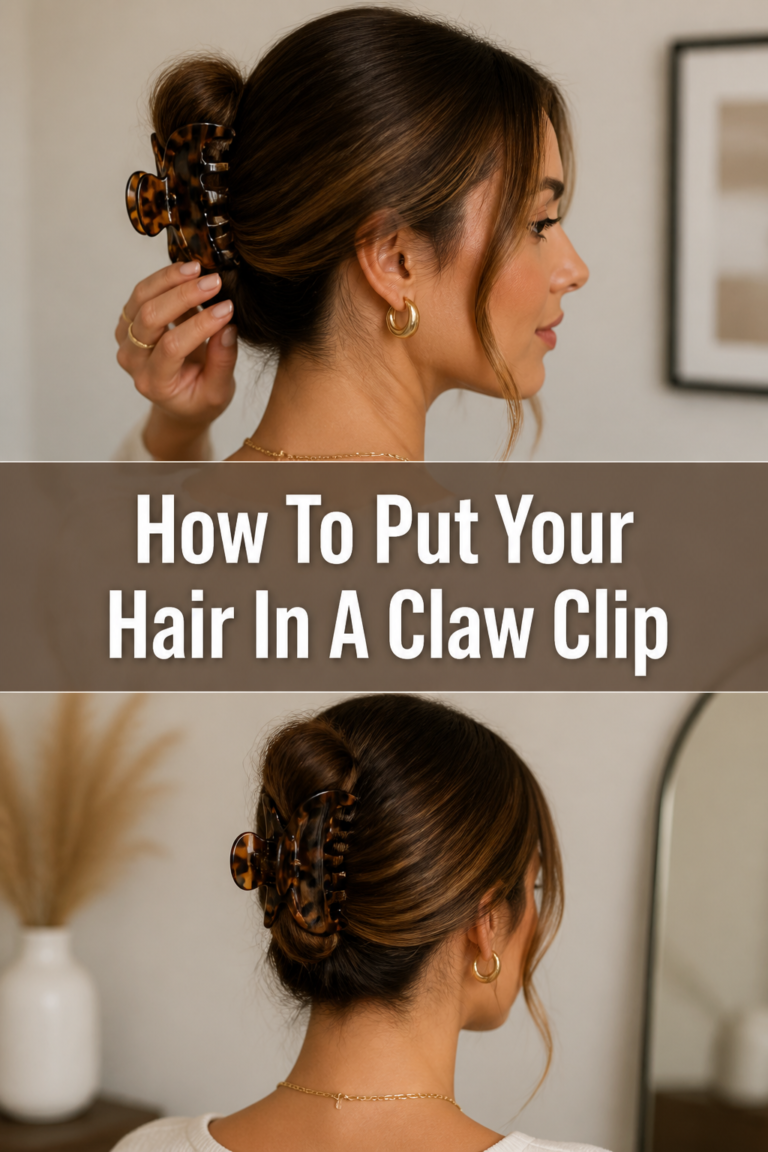
Step 5: Position the Claw Clip
Open the claw clip as wide as possible using your free hand.
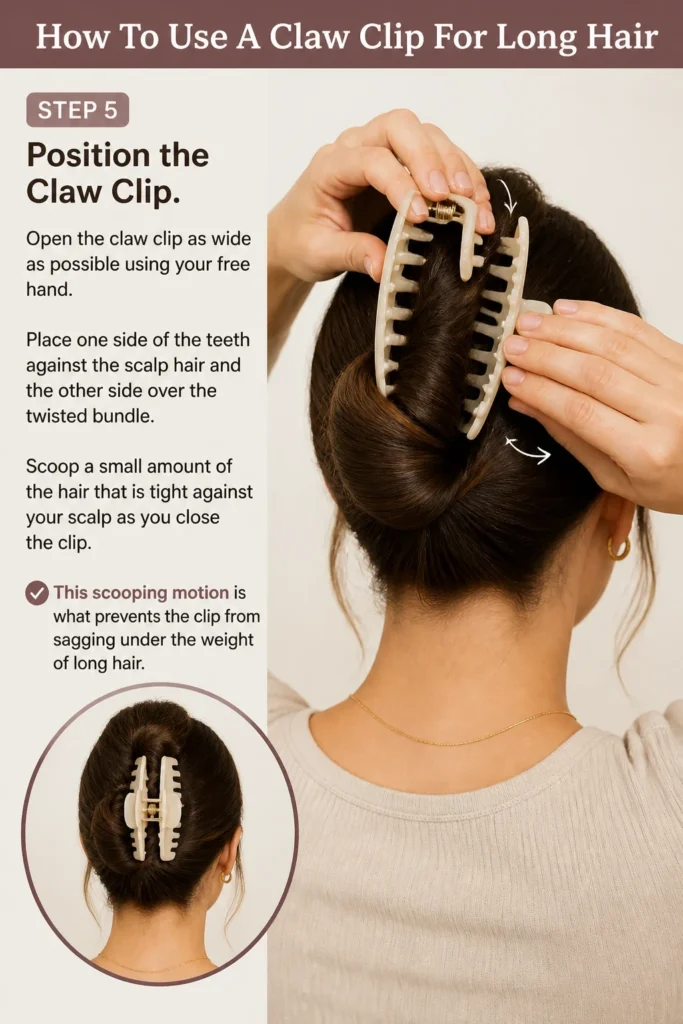
Place one side of the “teeth” against the scalp hair and the other side over the twisted bundle.
Scoop a small amount of the hair that is tight against your scalp as you close the clip.
This “scooping” motion is what prevents the clip from sagging under the weight of long hair.
Step 6: Secure and Lock
Release the clip handles once you feel the teeth have made contact with both the twist and the scalp hair.
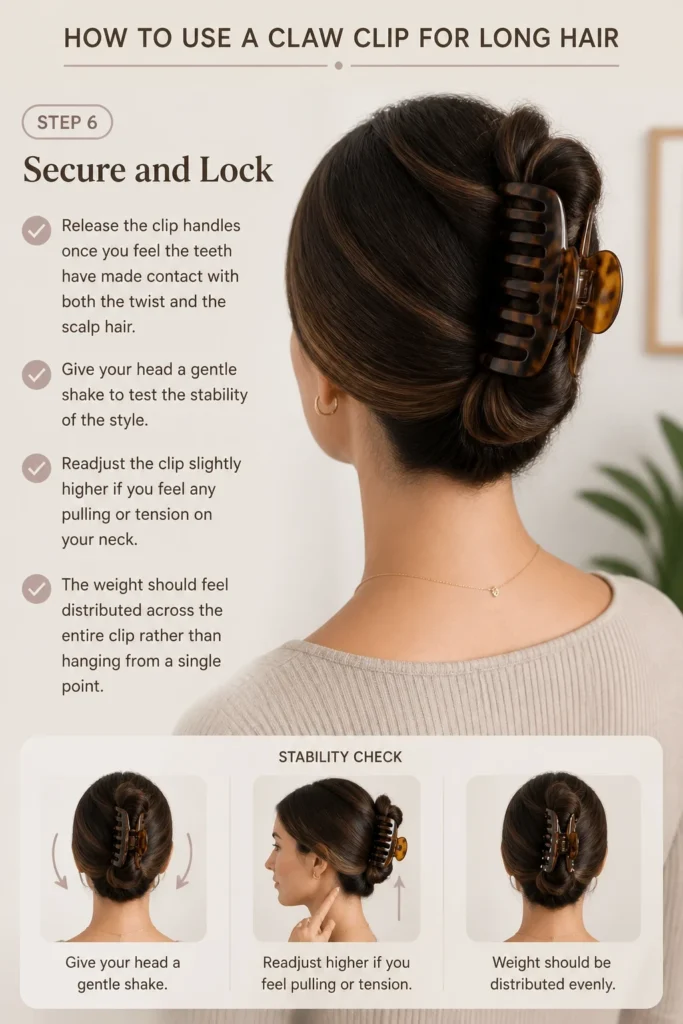
Give your head a gentle shake to test the stability of the style.
Readjust the clip slightly higher if you feel any pulling or tension on your neck.
The weight should feel distributed across the entire clip rather than hanging from a single point.
Step 7: Refine the Face-Framing Pieces
Pull out a few small strands near your ears or temples to soften the look.
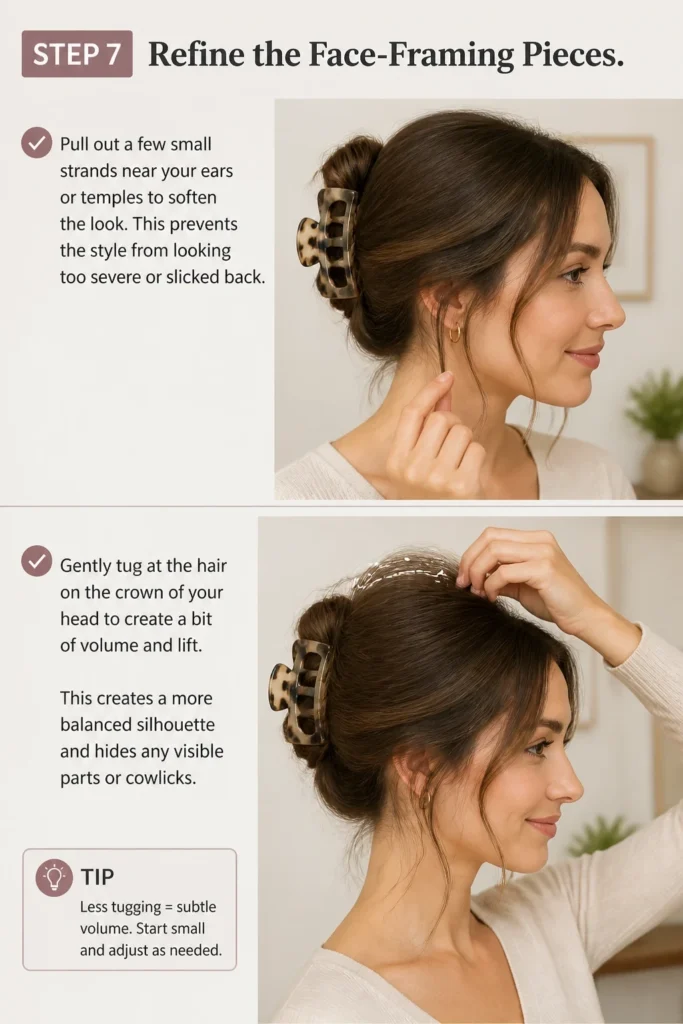
This prevents the style from looking too severe or “slicked back.”
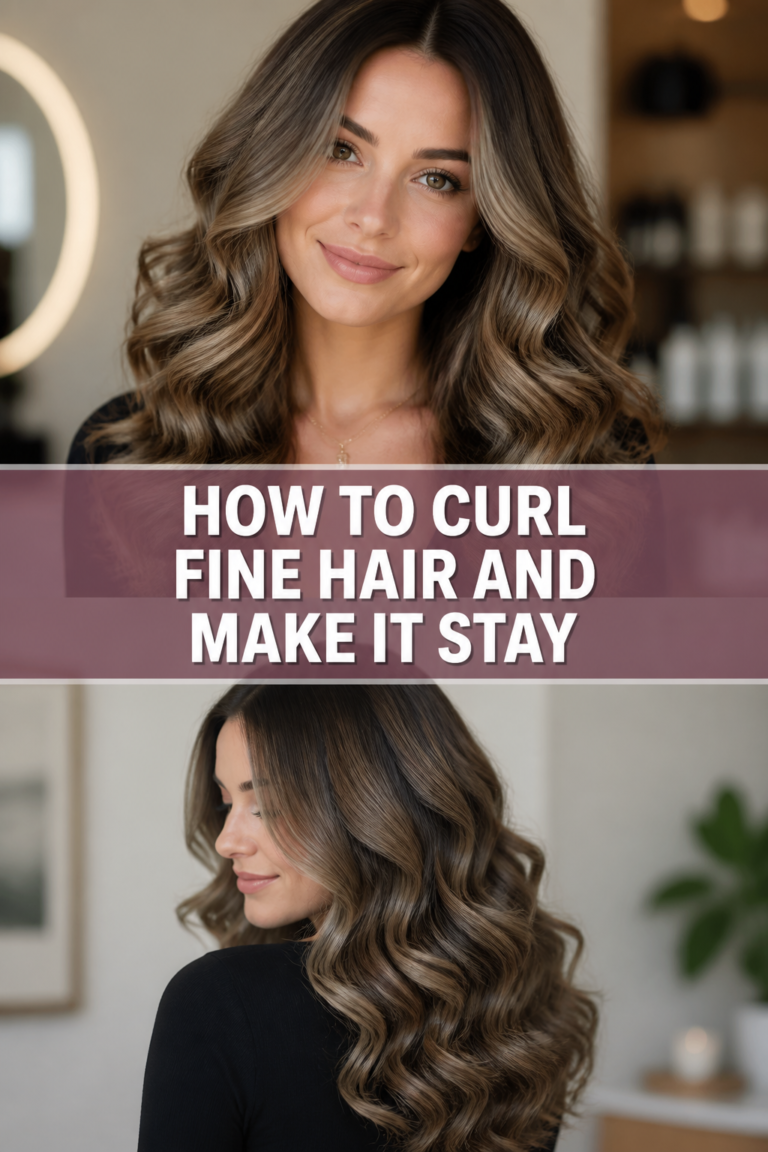
Gently tug at the hair on the crown of your head to create a bit of volume and lift.
This creates a more balanced silhouette and hides any visible parts or cowlicks.
Step 8: Set for Longevity
Check the back of your head with a hand mirror to ensure no large loops of hair are hanging loose.
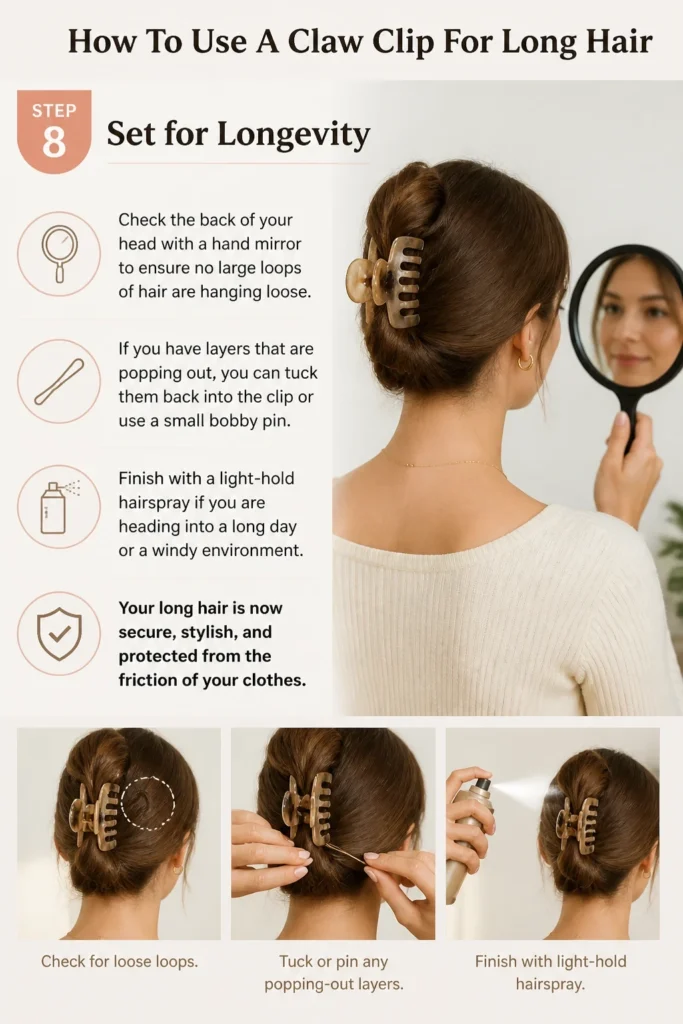
If you have layers that are popping out, you can tuck them back into the clip or use a small bobby pin.
Finish with a light-hold hairspray if you are heading into a long day or a windy environment.
Your long hair is now secure, stylish, and protected from the friction of your clothes.
Common Mistakes to Avoid
Using a Clip That Is Too Small
Many people try to use standard-sized clips for waist-length or thick hair.
This results in the clip snapping or simply sliding off because the teeth cannot reach the scalp.
Always look for “XL” or “Large” clips specifically designed for high-volume hair.
Clipping Only the Twist
One of the most frequent errors is attaching the clip only to the bundle of hair you twisted.
Without catching the hair that is anchored to your scalp, the clip has nothing to hold onto.
The clip will inevitably slide down within minutes if it isn’t “grabbing” the base layer of hair.
Clipping Wet Hair
While it is tempting to clip hair up right out of the shower, long hair is extremely heavy when wet.
The weight can cause significant stretching and breakage where the teeth of the clip bite down.
Wait until your hair is at least 80% dry to ensure the structural integrity of your strands.
Troubleshooting
The Clip Keeps Sliding Down
This usually happens because the hair is too silky or the twist is too loose.
Try twisting the hair more tightly before clipping to create a firmer “shelf” for the clip to sit on.
You can also spray the inside of the clip’s teeth with hairspray for extra friction.
Scalp Pain or Tension Headaches
If you feel a sharp pulling sensation, the clip is likely catching too much hair in one specific spot.
Open the clip and reposition it slightly to the left or right to redistribute the weight.
Ensure the clip is sitting flat against your head rather than tilting outward.
The “Spiky” Ends Look Messy
Long hair often has uneven ends that can look chaotic when tucked into a clip.
Try rolling the ends into a small loop before placing the clip over them.
This creates a cleaner, bun-like appearance that hides the tips of your hair.
Key Takeaways
- Always use an extra-large clip to accommodate the length and weight of long hair.
- The “scoop” technique is essential for anchoring the clip to the hair against your scalp.
- Folding the hair back down is the best way to manage hair that is too long for a single upward twist.
- Texture spray or dry shampoo can help the clip stay in place on clean, slippery hair.
- Avoid clipping wet hair to prevent unnecessary breakage and tension.
- Adjusting the crown volume after clipping creates a more polished and professional look.
Frequently Asked Questions
Can I sleep with a claw clip in my hair?
It is generally not recommended to sleep with a claw clip because the hard plastic can press into your scalp.
This can cause discomfort and potential hair breakage as you move around in your sleep.
Switch to a silk scrunchie or a loose braid for overnight hair protection.
Which clip shape is best for long hair?
Rectangular “box” clips tend to hold more volume than the traditional rounded claw clips.
The flat edges allow the clip to sit closer to the head, which is better for balancing heavy hair.
Look for clips with long, sturdy teeth that overlap when closed.
Will claw clips damage my long hair?
Claw clips are actually much gentler than traditional elastic hair ties.
They do not create the same “choke point” of tension that leads to the mid-shaft breakage often seen with ponytails.
As long as you are not clipping too tightly or using clips with sharp, unfinished plastic edges, they are a very safe option.
How do I make a half-up style work with a claw clip?
For a half-up look, only gather the hair from above your ears and follow the same twisting motion.
Use a medium-sized clip instead of an extra-large one so the weight doesn’t pull the style down.
This is a great way to keep hair out of your face while still showing off your length.
Our Top Recommended Finds
- Matte Extra-Large Rectangular Clips: These provide a sophisticated look and usually have a non-slip coating that helps with grip.
- Acetate French Style Clips: These are made from a more flexible, durable material than cheap plastic and are less likely to snap under the pressure of thick hair.
- Wide-Tooth Bamboo Comb: Perfect for detangling long hair gently before styling without creating static.
Mastering the Effortless Updo
Now that you know the mechanics of the perfect claw clip twist, you can experiment with different heights and textures.
Try a low-slung twist for a professional office look or a high, messy fold for a casual weekend vibe.
The more you practice the “scoop and lock” motion, the more natural it will feel.
Grab your favorite clip today and see how much more comfortable your long hair can be when it is properly supported.
You might even find yourself retiring your old hair ties for good.