
👁️ How To Get Rid Of Dark Circles Under Eye
Waking up to dark shadows under your eyes can feel like starting the day with a disadvantage.
I spent years testing every cream and home remedy after my late-night shifts left me looking perpetually exhausted.
This guide combines my personal experience with dermatological insights to help you reclaim a refreshed look.

Quick Overview
Getting rid of dark circles is rarely a one-night fix because the skin in this area is incredibly delicate. You will need a combination of topical treatments, lifestyle adjustments, and patience to see a significant difference.
- Time needed: 2 to 6 weeks for visible improvement
- Difficulty: Beginner
- What you’ll need: Cold compress, Vitamin C serum, Retinol eye cream, high-SPF sunscreen, and a consistent sleep schedule
Step-by-Step Instructions
Step 1: Identify the root cause of your dark circles
Perform a simple “pinch test” to determine why your under-eye area looks dark. Gently pinch the skin under your eye and lift it slightly to see if the color moves with the skin.
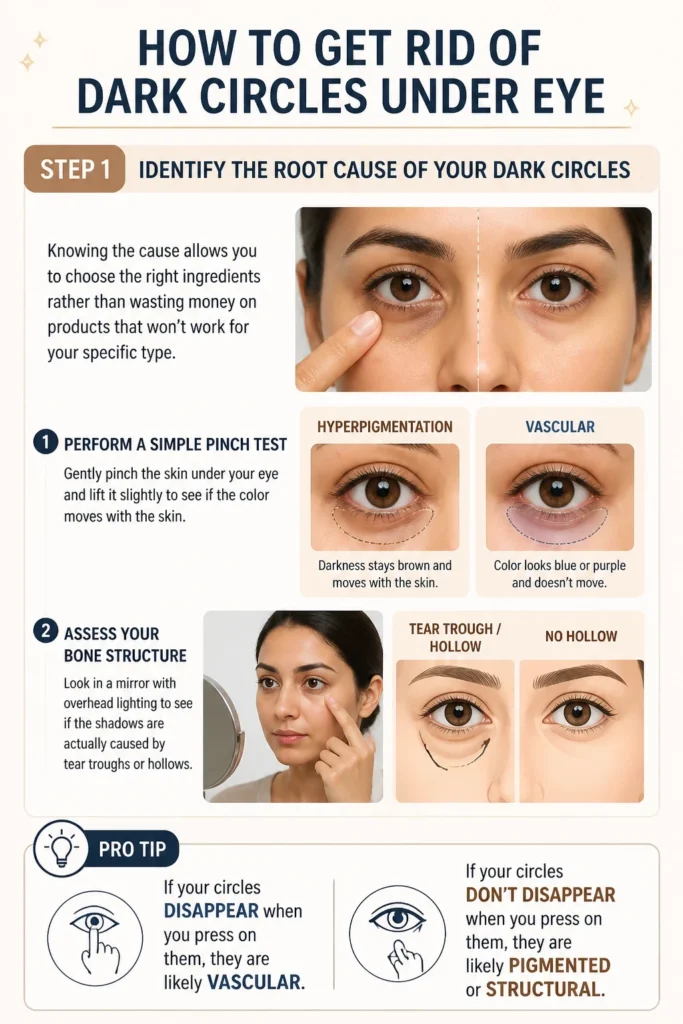
Check the results to see if the darkness stays brown and moves with the skin, which suggests hyperpigmentation. If the color looks blue or purple and doesn’t move, it usually means your blood vessels are showing through thin skin.
Assess your bone structure in a mirror with overhead lighting to see if the shadows are actually caused by “tear troughs” or hollows. Knowing the cause allows you to choose the right ingredients rather than wasting money on products that won’t work for your specific type.
Pro Tip: If your circles disappear when you press on them, they are likely vascular; if they don’t, they are likely pigment-based.
Step 2: Implement a cold compress routine
Apply a cold compress to your eyes for about five to ten minutes every morning. The cold temperature causes blood vessels to constrict quickly, which reduces the blue tint often seen under thin skin.
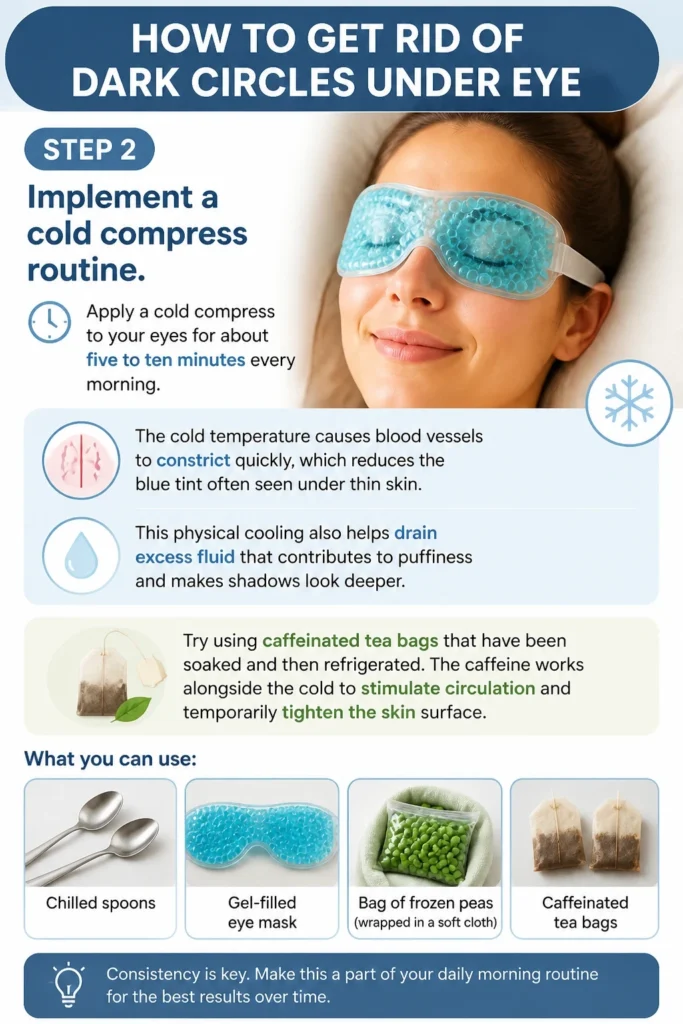
Use chilled spoons, a gel-filled eye mask, or even a bag of frozen peas wrapped in a soft cloth. This physical cooling also helps drain excess fluid that contributes to puffiness and makes shadows look deeper.
Try using caffeinated tea bags that have been soaked and then refrigerated. The caffeine works alongside the cold to stimulate circulation and temporarily tighten the skin surface.
Step 3: Hydrate the area with targeted humectants
Look for eye serums or creams that contain hyaluronic acid or glycerin. These ingredients draw moisture into the skin cells, making the area look “plumped” and healthy.
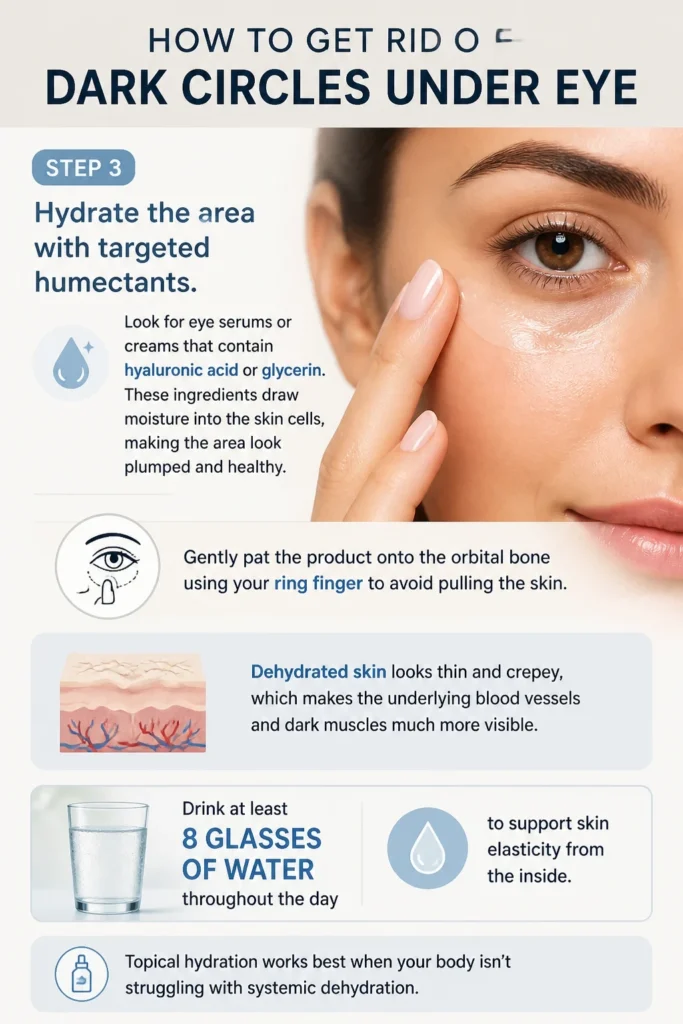
Gently pat the product onto the orbital bone using your ring finger to avoid pulling the skin. Dehydrated skin looks thin and crepey, which makes the underlying blood vessels and dark muscles much more visible.
Drink at least eight glasses of water throughout the day to support skin elasticity from the inside. Topical hydration works best when your body isn’t struggling with systemic dehydration.
Step 4: Introduce Vitamin C in the morning
Apply a Vitamin C serum specifically formulated for the eyes every morning after cleansing. Vitamin C is a powerful antioxidant that blocks the production of abnormal pigment.

Ensure the product is stable, as Vitamin C can degrade quickly when exposed to light and air. Regular use helps build collagen, which thickens the dermis and hides the dark veins underneath.
Wait a few minutes for the serum to absorb before applying your moisturizer or sunscreen. This ensures the active ingredients penetrate deeply into the skin layers where pigment is formed.
Pro Tip: Look for “Sodium Ascorbyl Phosphate” or “THD Ascorbate” on the label, as these versions are often less irritating for the sensitive eye area.
Step 5: Use a gentle Retinoid at night
Incorporate a retinol eye cream into your evening routine two to three times a week to start. Retinol stimulates cell turnover and encourages the production of new collagen fibers.
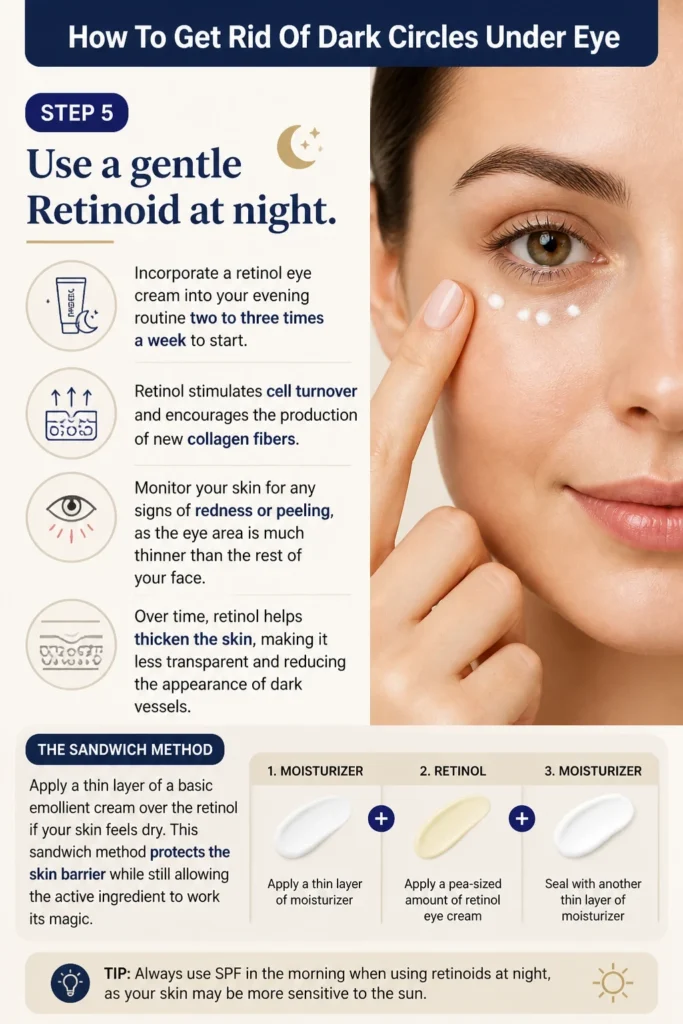
Monitor your skin for any signs of redness or peeling, as the eye area is much thinner than the rest of your face. Over time, retinol helps thicken the skin, making it less transparent and reducing the appearance of dark vessels.
Apply a thin layer of a basic emollient cream over the retinol if your skin feels dry. This “sandwich method” protects the skin barrier while still allowing the active ingredient to work its magic.
Step 6: Adjust your sleeping position
Elevate your head with an extra pillow when you go to sleep at night. This simple change uses gravity to prevent fluid from pooling in the lower eyelids.

Sleep on your back whenever possible to avoid putting pressure on your face. Side sleeping or stomach sleeping can cause “sleep lines” and localized swelling that emphasizes dark circles.
Aim for seven to nine hours of quality rest to allow your body to repair damaged skin cells. Sleep deprivation causes the skin to become pale, which allows the dark tissues and blood vessels beneath your skin to show through.
Step 7: Apply sunscreen religiously
Cover the entire under-eye area with a broad-spectrum SPF 30 or higher every single day. Sun damage is a leading cause of hyperpigmentation and the breakdown of collagen.
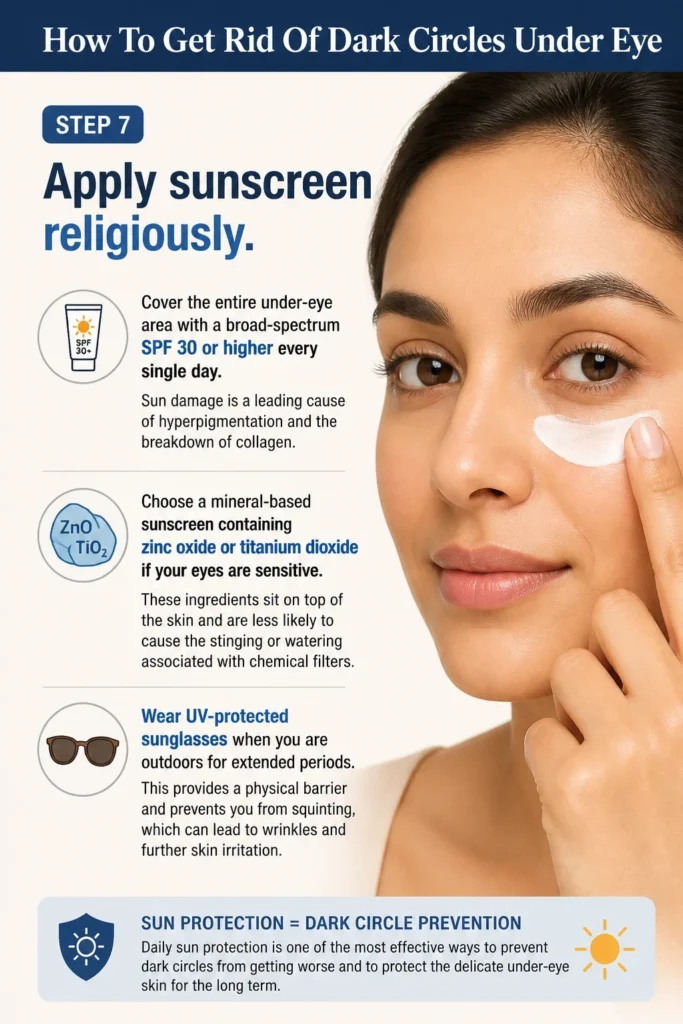
Choose a mineral-based sunscreen containing zinc oxide or titanium dioxide if your eyes are sensitive. These ingredients sit on top of the skin and are less likely to cause the stinging or watering associated with chemical filters.
Wear UV-protected sunglasses when you are outdoors for extended periods. This provides a physical barrier and prevents you from squinting, which can lead to wrinkles and further skin irritation.
Step 8: Practice gentle lymphatic drainage
Use your ring fingers to lightly tap in a circular motion around the eye socket. Start at the inner corner, move up over the brow bone, and come back around under the eye toward the nose.
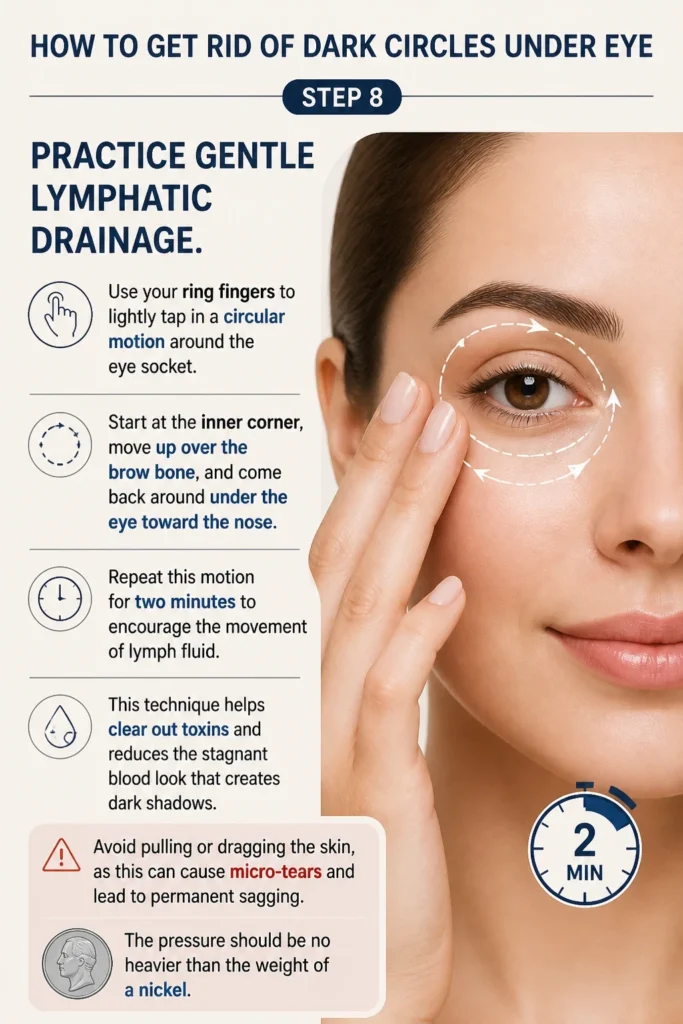
Repeat this motion for two minutes to encourage the movement of lymph fluid. This technique helps clear out toxins and reduces the “stagnant” blood look that creates dark shadows.
Avoid pulling or dragging the skin, as this can cause micro-tears and lead to permanent sagging. The pressure should be no heavier than the weight of a nickel.
Common Mistakes to Avoid
Rubbing your eyes frequently
Many people rub their eyes due to allergies or tiredness without realizing the damage it causes. Constant friction can break tiny capillaries under the skin, leading to bruising and long-term darkness. It also triggers post-inflammatory hyperpigmentation, which is very difficult to treat with standard creams.
Using heavy facial moisturizers under the eyes
The skin under your eyes has very few oil glands compared to your cheeks or forehead. Applying a thick, heavy face cream can lead to milia, which are tiny white bumps, or cause the area to look puffy. Always use products specifically tested for the eye area to ensure the molecular weight is appropriate for absorption.
Neglecting your allergy symptoms
Seasonal allergies are a major contributor to “allergic shiners” because they cause inflammation and swelling. If you ignore the underlying itchiness, you will likely continue to rub the area and exacerbate the darkness. Managing your allergies with antihistamines can often do more for dark circles than the most expensive eye cream.
Expecting immediate results from topical products
Skin cells take roughly 28 to 40 days to turn over and show the effects of new treatments. Many users give up on a Vitamin C or Retinol cream after only one week because they don’t see a change. You must remain consistent for at least two months to see the true impact of any skincare intervention.
Troubleshooting
The skin is becoming red and flaky
This is a common reaction when starting active ingredients like retinol or high-strength Vitamin C. If this happens, stop using the active product immediately and focus on basic hydration with a fragrance-free balm. Once the skin has healed, reintroduce the product only once or twice a week to build up a tolerance slowly.
Dark circles look worse after a salty meal
High sodium intake causes the body to retain water, which often manifests as puffiness under the eyes. This puffiness casts a shadow downward, making existing dark circles look significantly deeper and darker. Increase your water intake and use a cold compress to help flush out the excess salt and reduce the swelling.
The darkness is deep-set and doesn’t respond to creams
If you have tried topical treatments for months with no change, the issue may be structural rather than skin-related. Deep tear troughs are caused by fat loss or genetics and usually require professional treatments like dermal fillers or laser therapy. Consult with a dermatologist to determine if your dark circles are a result of “hollowness” that creams cannot fix.
Key Takeaways
- Identify if your circles are caused by pigment, thin skin, or shadows before buying products.
- Use cold compresses and caffeine-based products to constrict blood vessels and reduce puffiness.
- Apply Vitamin C in the morning and Retinol at night to brighten skin and build collagen.
- Never skip sunscreen, as UV rays are the primary cause of worsening pigmentation.
- Elevate your head during sleep and stay hydrated to prevent fluid buildup.
- Be patient and consistent, as significant skin changes take at least four to six weeks.
Frequently Asked Questions
Do cucumbers really help with dark circles?
Cucumbers provide a cooling effect and mild hydration, but they aren’t a permanent cure. The main benefit comes from the cold temperature, which constricts blood vessels similarly to a cold spoon. While they are refreshing, they lack the concentrated active ingredients found in professional eye serums.
Can diet affect the appearance of under-eye shadows?
Yes, a diet high in salt and alcohol can lead to dehydration and fluid retention, both of which make dark circles more prominent. Foods rich in Vitamin K and Vitamin C can support vascular health and skin strength. Maintaining a balanced diet helps ensure the skin has the nutrients it needs to repair itself.
Is it possible to get rid of dark circles permanently?
If your dark circles are caused by lifestyle factors like lack of sleep or dehydration, they can be eliminated by changing your habits. However, if they are genetic or caused by aging and bone structure, you may only be able to fade them or manage their appearance. In these cases, consistent maintenance is required to keep the area looking bright.
Does drinking more water actually help?
Hydration is essential because dehydrated skin becomes thin and loses its “plump” quality. When the skin is thin, the dark structures beneath it become much more visible to the naked eye. While water alone won’t erase pigment, it provides the foundation for all other topical treatments to work effectively.
Our Top Recommended Finds
- Caffeine Eye Serum: A lightweight serum that provides an immediate tightening effect and reduces morning puffiness.
- Gel Eye Mask: A reusable mask you can keep in the fridge for a mess-free cold compress every morning.
- Silk Sleep Mask: This protects the delicate eye area from friction against your pillowcase and helps you achieve deeper sleep.
Your Path To Brighter Eyes
Taking control of your under-eye area is a journey that involves both internal health and external care.
Start by implementing the cold compress technique tomorrow morning and selecting one active serum to add to your routine.
If you found this guide helpful, you might also want to look into the benefits of facial rolling or the best foods for skin health.
Consistency is your most powerful tool, so commit to these small changes starting today.