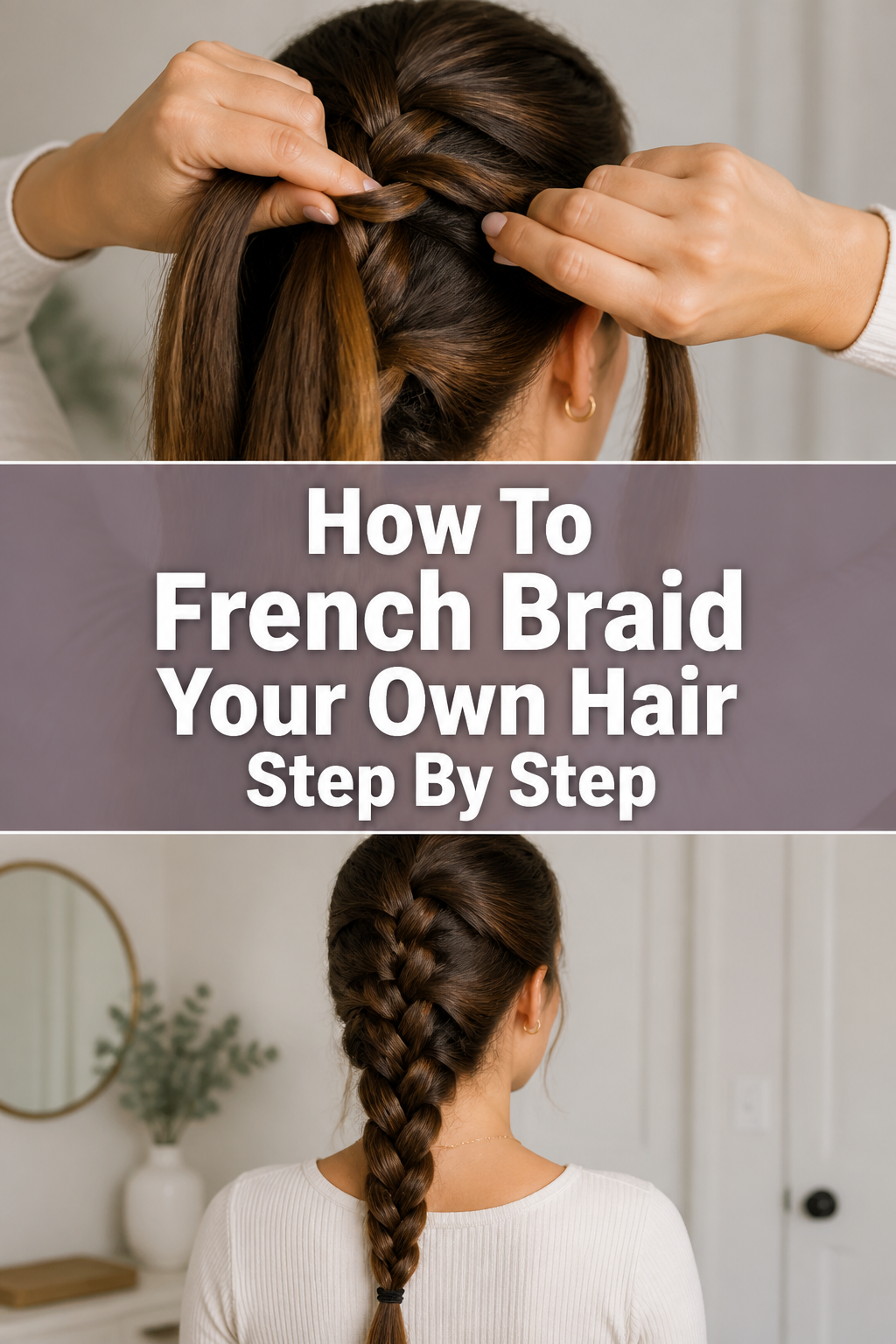
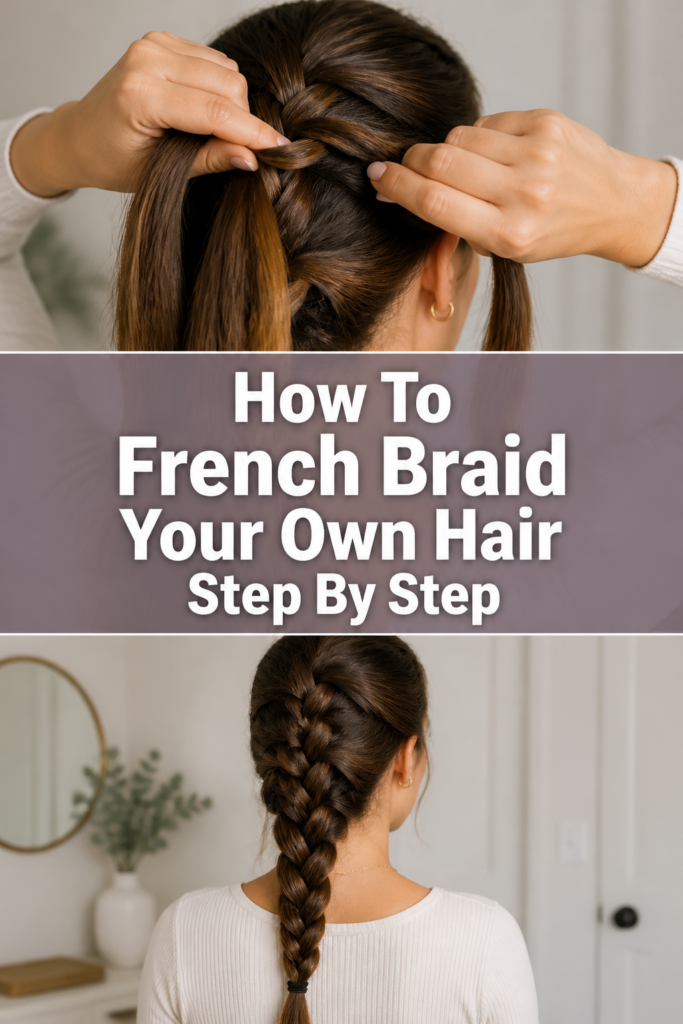
👱♀️ How To French Braid Your Own Hair Step By Step
Learning to French braid your own hair might seem like a daunting challenge. Many people struggle with the angles and coordination, often giving up before they even start. I remember countless frustrating attempts in front of the mirror, arms aching, hair falling out, feeling like it was an impossible feat.
But with patience and the right guidance, it’s absolutely achievable. This guide comes from years of practice and perfecting my own technique, helping you bypass the common pitfalls and achieve a beautiful, secure French braid on yourself.
Quick Overview
Mastering the self-French braid requires a bit of dexterity but offers a timeless, elegant style. You’ll learn the foundational technique to create a neat, classic braid that holds all day.
- Time needed: 15-30 minutes (depending on practice)
- Difficulty: Intermediate (Beginner-friendly with patience)
- What you’ll need: Hairbrush, fine-tooth comb, hair elastics, optional mirror setup
Step-by-Step Instructions
Step 1: Prepare Your Hair
Begin with clean, dry, and thoroughly brushed hair. Any tangles will make the braiding process much harder and can lead to a messy result. Ensure your hair is smooth from roots to ends.
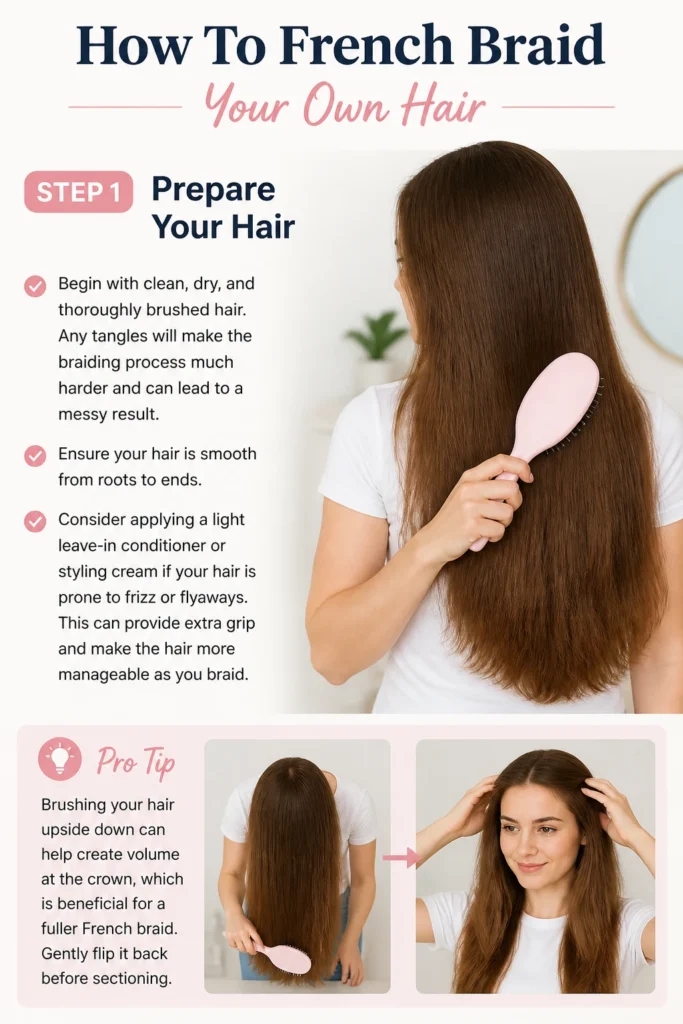
Consider applying a light leave-in conditioner or styling cream if your hair is prone to frizz or flyaways. This can provide extra grip and make the hair more manageable as you braid.
Pro Tip: Brushing your hair upside down can help create volume at the crown, which is beneficial for a fuller French braid. Gently flip it back before sectioning.
Step 2: Set Up Your Mirror(s)
Find a comfortable spot with good lighting and access to at least one mirror. Ideally, use two mirrors: one in front of you and a handheld one behind, or a three-panel mirror. This setup allows you to see the back of your head clearly.
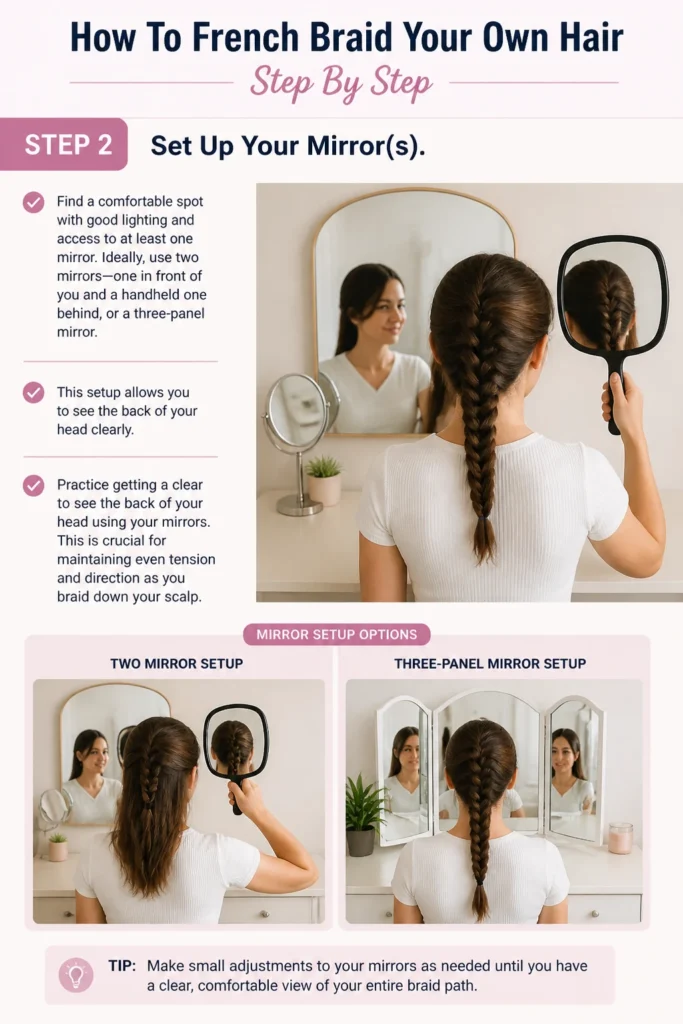
Practice getting a clear view of the back of your head using your mirrors. This is crucial for maintaining even tension and direction as you braid down your scalp.
Step 3: Create Your Initial Section
Use your fine-tooth comb to section off a triangular piece of hair at the very top of your head. This section should start at your hairline and extend back towards your crown. The wider this section, the wider the top of your braid will be.
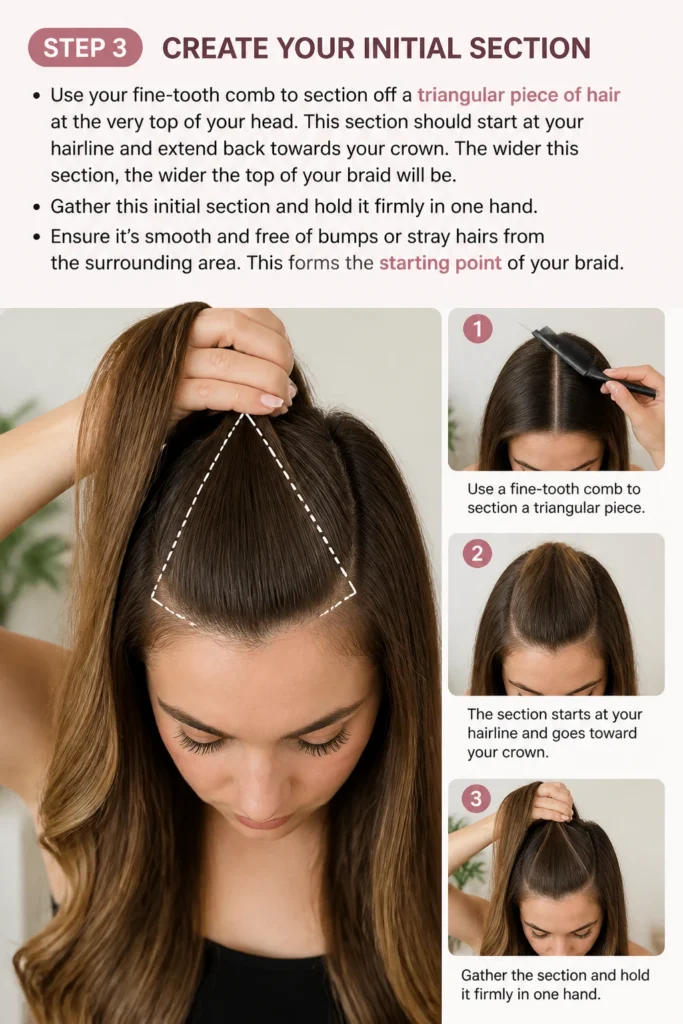
Gather this initial section and hold it firmly in one hand. Ensure it’s smooth and free of bumps or stray hairs from the surrounding area. This forms the starting point of your braid.
Step 4: Divide into Three Strands
Divide the initial section of hair into three equal smaller strands. Hold the right strand between your thumb and index finger, the middle strand between your index and middle finger, and the left strand between your middle and ring finger.
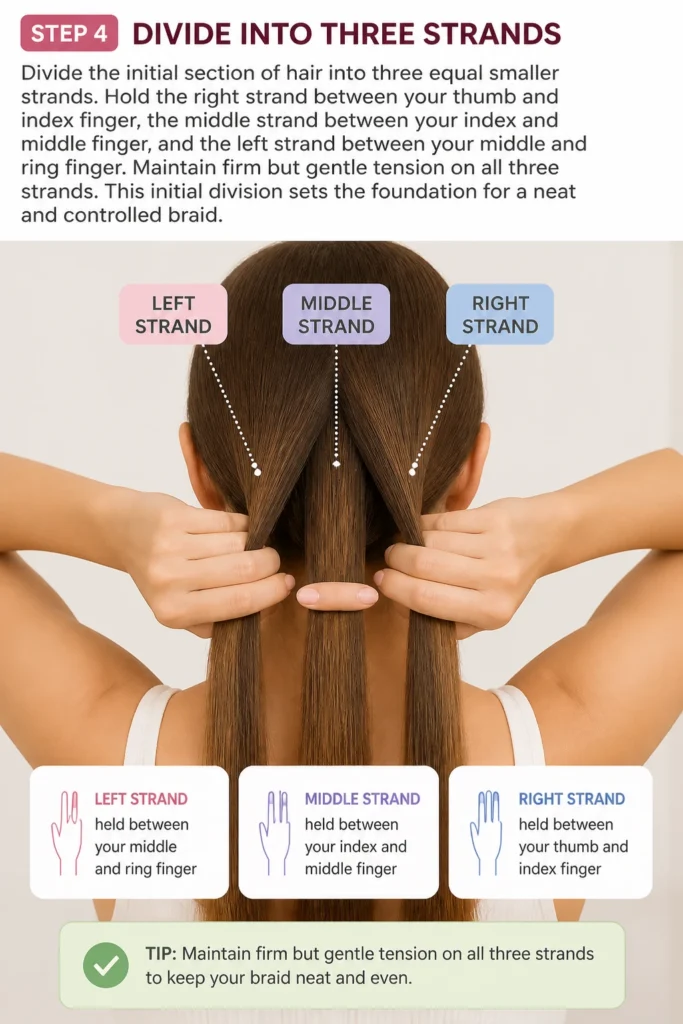
Maintain firm but gentle tension on all three strands. This initial division sets the foundation for a neat and controlled braid.
Step 5: Perform the First Cross-Over (Right Over Middle)
Take the rightmost strand and cross it over the middle strand. The strand that was originally on the right is now in the middle position. The strand that was originally in the middle is now on the right.
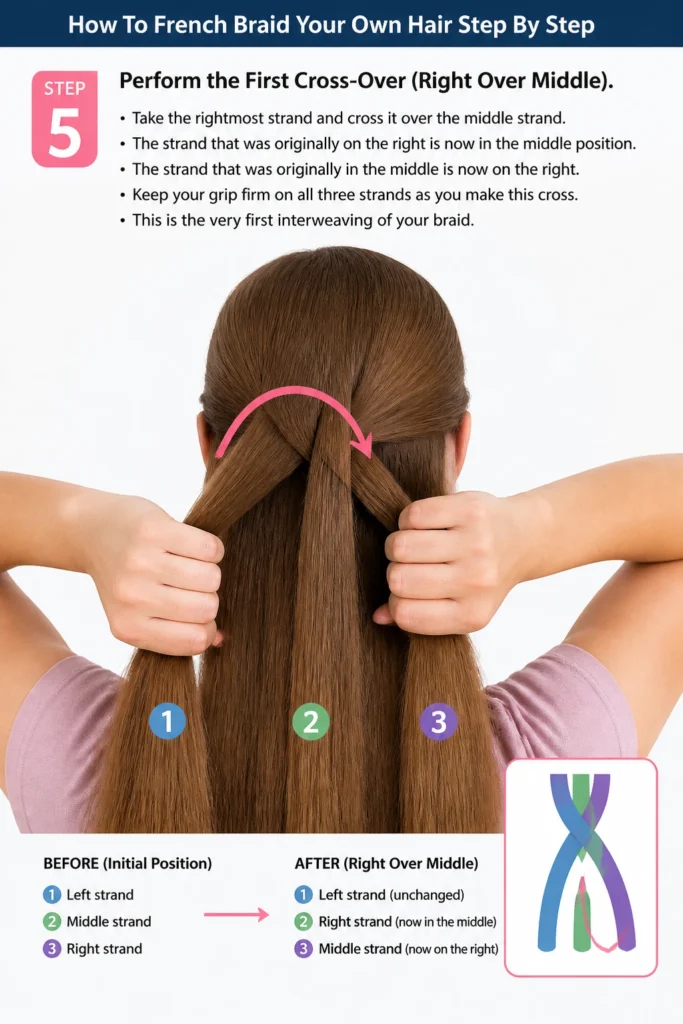
Keep your grip firm on all three strands as you make this cross. This is the very first interweaving of your braid.
Step 6: Perform the Second Cross-Over (Left Over Middle)
Now take the leftmost strand and cross it over the new middle strand. The strand that was originally on the left is now in the middle position. The strand that was originally in the middle is now on the left.
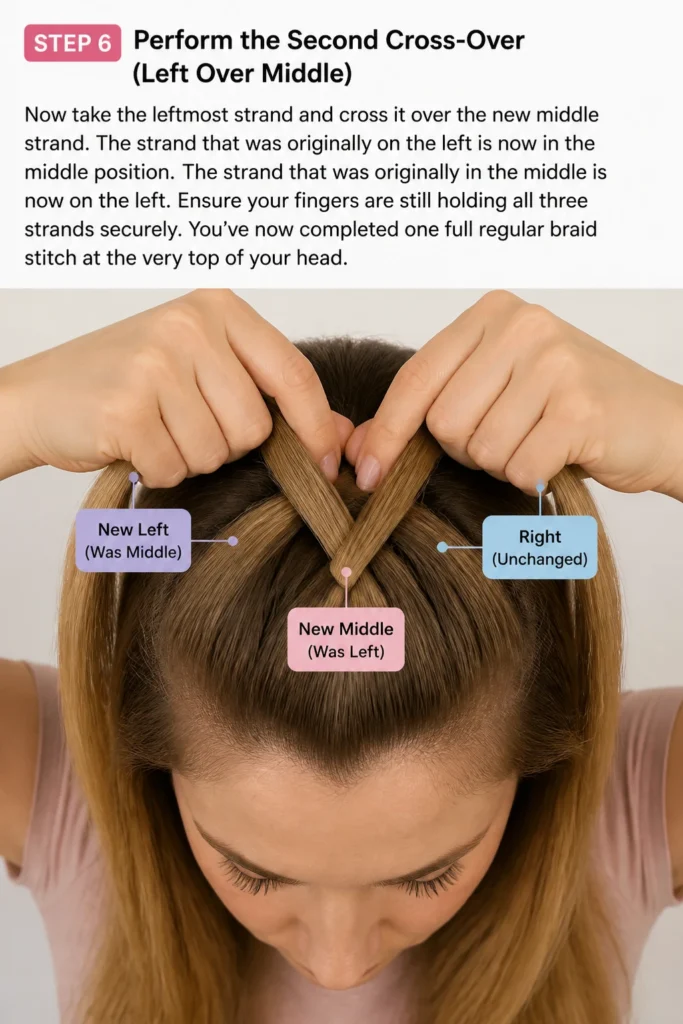
Ensure your fingers are still holding all three strands securely. You’ve now completed one full “regular” braid stitch at the very top of your head.
Step 7: Add Hair to the Right Strand
Take the rightmost strand of hair that is now on the outside. Before crossing it over, use your free hand to gather a small, even section of loose hair from the right side of your head, near your temple.
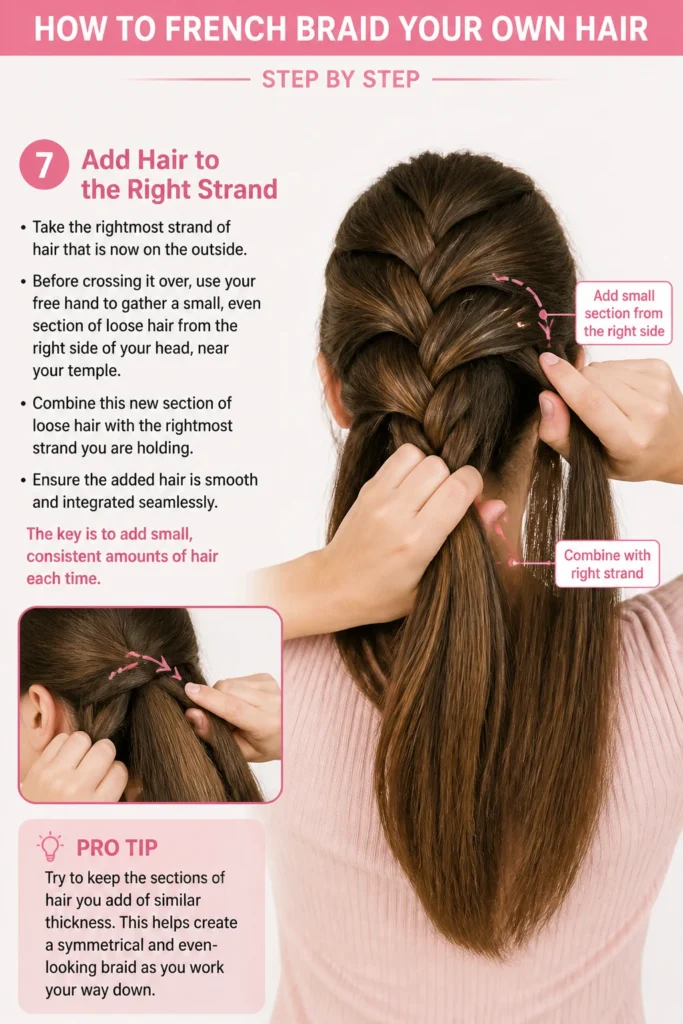
Combine this new section of loose hair with the rightmost strand you are holding. Ensure the added hair is smooth and integrated seamlessly. The key is to add small, consistent amounts of hair each time.
Pro Tip: Try to keep the sections of hair you add of similar thickness. This helps create a symmetrical and even-looking braid as you work your way down.
Step 8: Cross the Combined Right Strand Over the Middle
Now that you’ve added hair to the rightmost strand, cross this newly thickened strand over the current middle strand. This new, larger strand now becomes the middle.
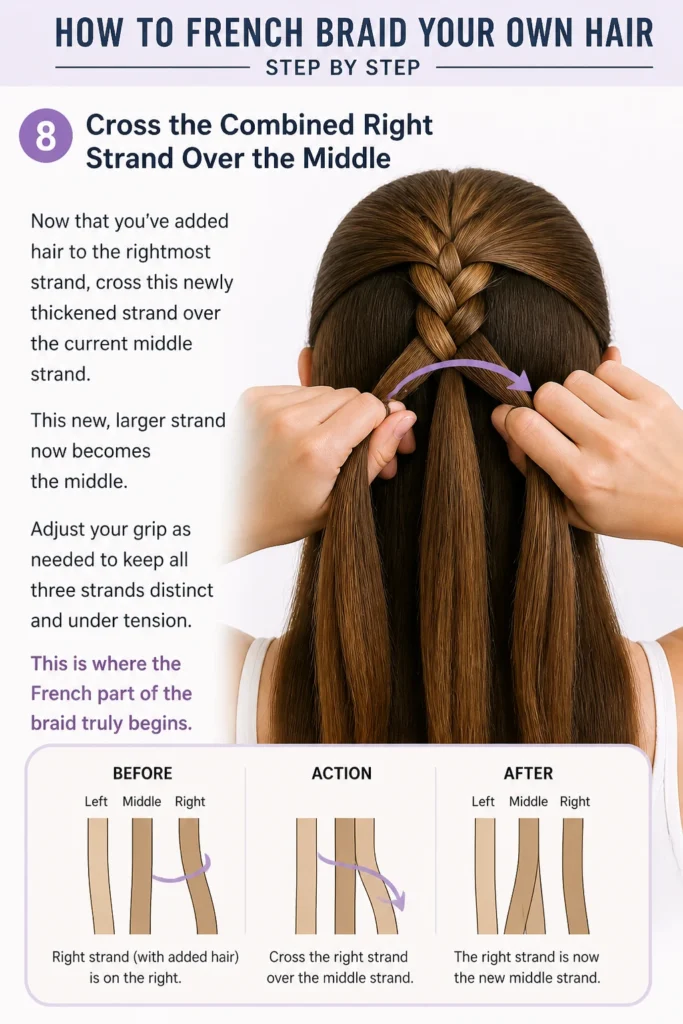
Adjust your grip as needed to keep all three strands distinct and under tension. This is where the “French” part of the braid truly begins.
Step 9: Add Hair to the Left Strand
Next, take the leftmost strand of hair that is now on the outside. Similar to the right side, use your free hand to gather a small, even section of loose hair from the left side of your head.
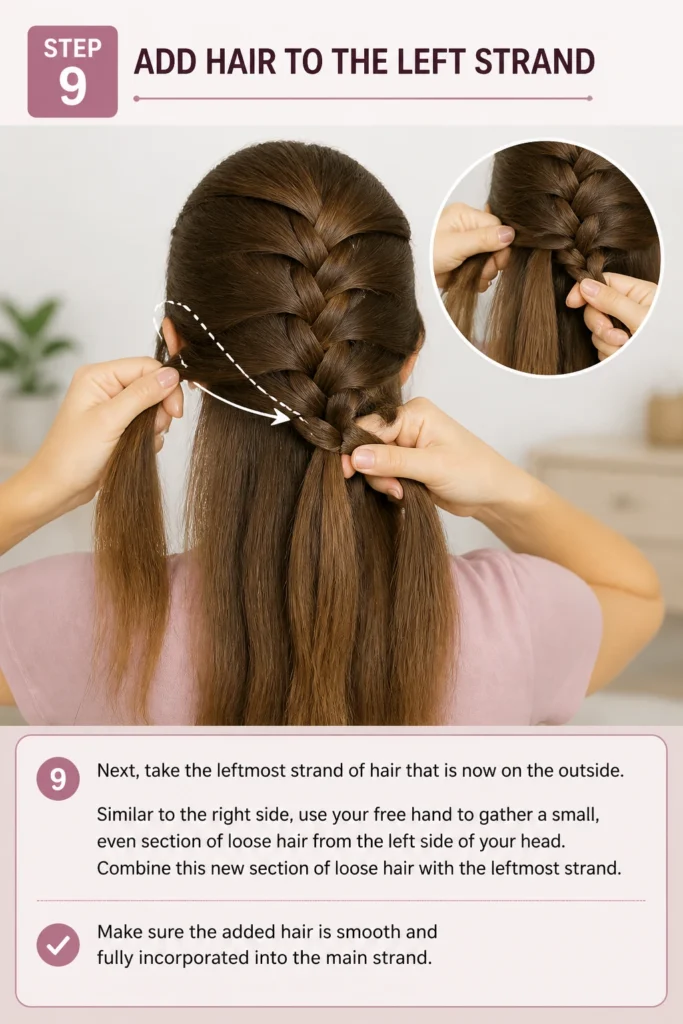
Combine this new section of loose hair with the leftmost strand. Make sure the added hair is smooth and fully incorporated into the main strand.
Step 10: Cross the Combined Left Strand Over the Middle
With the added hair, cross this newly thickened leftmost strand over the current middle strand. This strand now takes the middle position.
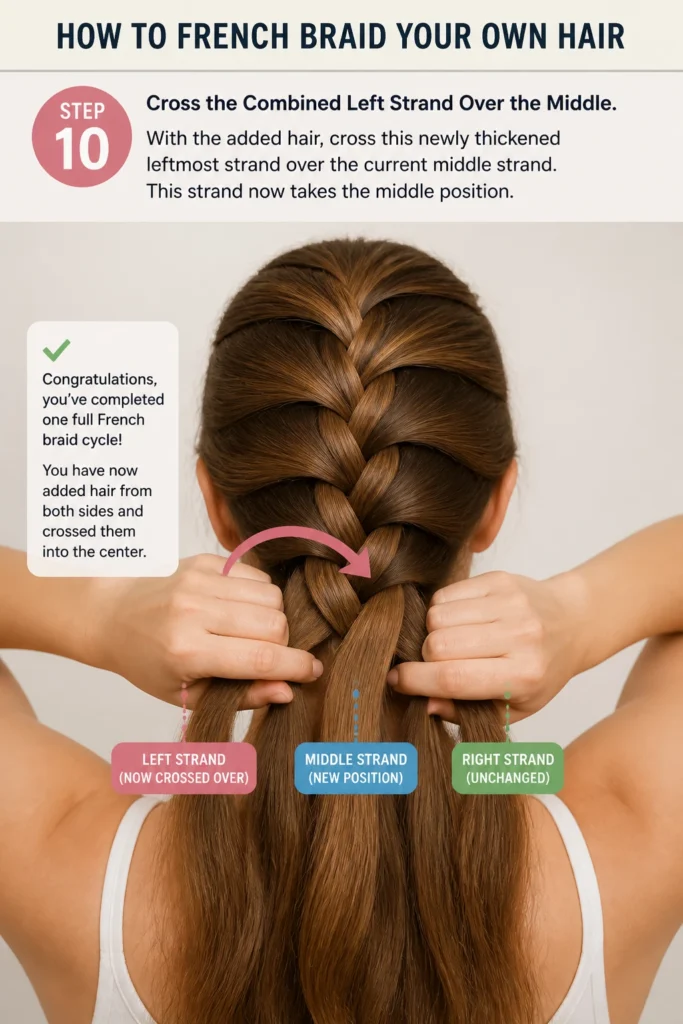
Congratulations, you’ve completed one full French braid cycle! You have now added hair from both sides and crossed them into the center.
Step 11: Continue Braiding Down Your Head
Repeat Steps 7 through 10, consistently adding small, even sections of loose hair from the sides each time an outer strand is about to cross into the middle. Work your way down the back of your head.
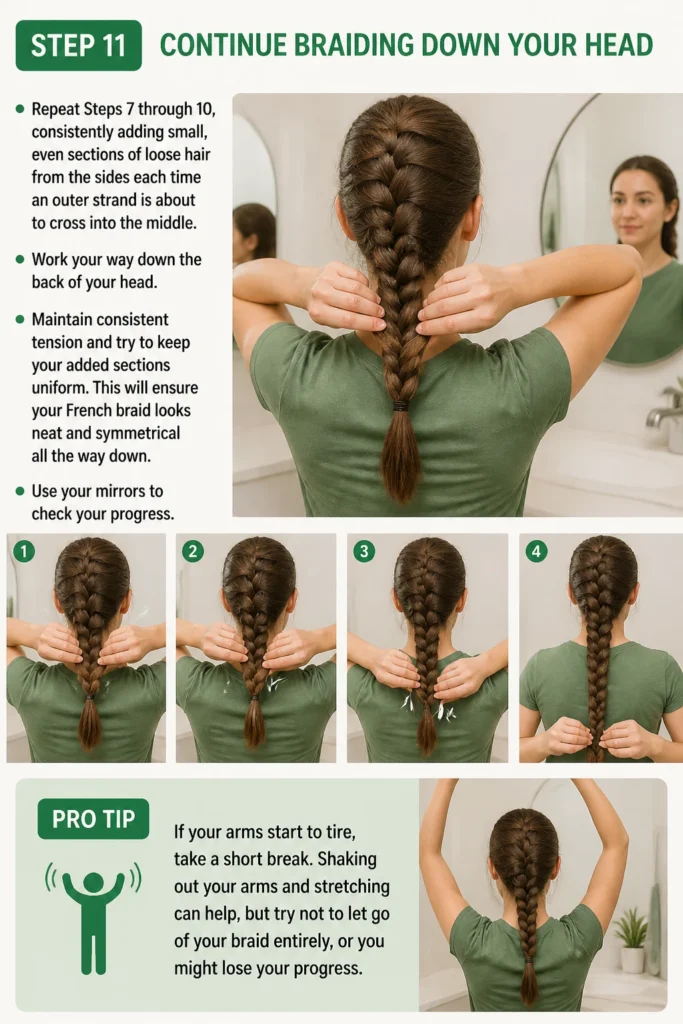
Maintain consistent tension and try to keep your added sections uniform. This will ensure your French braid looks neat and symmetrical all the way down. Use your mirrors to check your progress.
Pro Tip: If your arms start to tire, take a short break. Shaking out your arms and stretching can help, but try not to let go of your braid entirely, or you might lose your progress.
Step 12: Finish with a Regular Braid
Once you’ve run out of loose hair to add from the sides (usually around the nape of your neck), continue braiding the remaining three strands as a regular three-strand braid. Braid all the way down to the ends of your hair.
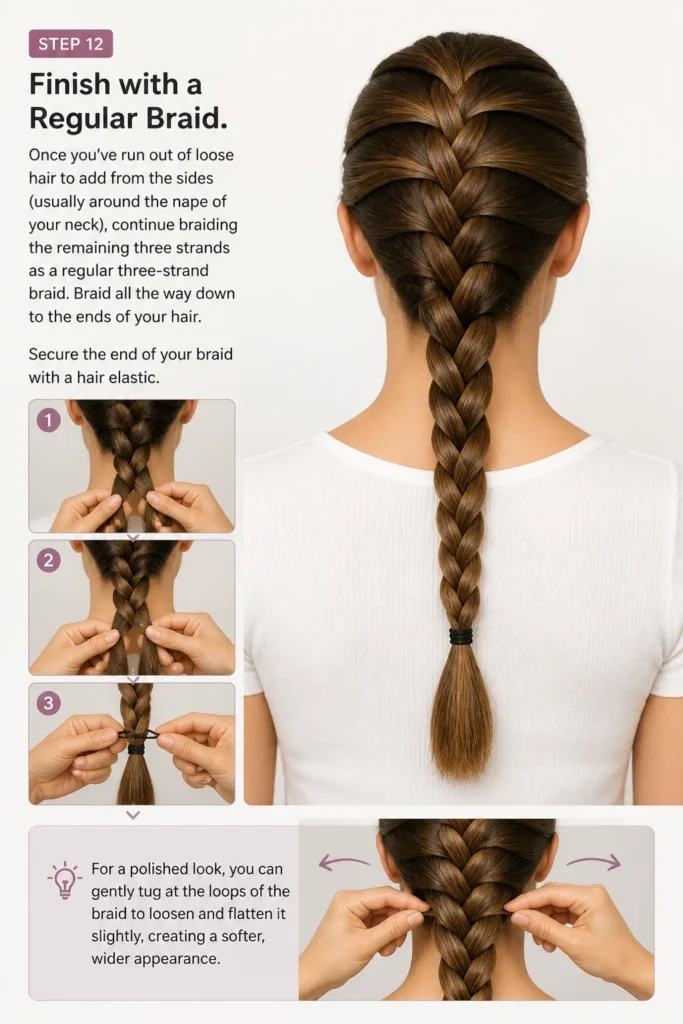
Secure the end of your braid with a hair elastic. For a polished look, you can gently tug at the loops of the braid to loosen and flatten it slightly, creating a softer, wider appearance.
Common Mistakes to Avoid
Uneven Sections of Added Hair
When you add hair from the sides, it’s easy to grab inconsistent amounts. This leads to a lopsided or bumpy braid, as some parts will be thicker than others. Always aim for small, even sections from both sides. Take your time to comb through and isolate these additions carefully before incorporating them.
Losing Tension
A common pitfall is letting the tension slacken, especially as you reach the back of your head or as your arms get tired. Loose tension results in a floppy, messy braid that won’t hold its shape. Keep a firm but gentle grip on all three strands throughout the entire process. Practice helps build the muscle memory needed to maintain this tension.
Starting Too Loose or Too Tight
If you start the braid too loosely at the crown, it will look messy and fall out quickly. If you start too tightly, it can be uncomfortable and pull on your scalp. Aim for a comfortable, snug tension at the very beginning, ensuring the base of your braid is secure but not painful. This sets the stage for the rest of the braid.
Forgetting to Comb Through
Skipping the initial thorough brushing or failing to comb through each section before adding it can lead to tangles being braided into your hair. This not only looks messy but can also be painful to remove later. Always ensure each strand and each added section is smooth and tangle-free.
Troubleshooting
My Arms Get Tired Quickly
This is a very common issue, especially when you’re first learning. Your arm muscles aren’t used to holding them up in that position for so long.
Solution: Take frequent, short breaks. Drop your hands, shake them out, and stretch your shoulders. You can also try doing a few braids over a week to build up your arm strength and endurance. Practicing in shorter segments can also help.
My Braid Looks Lopsided or Crooked
A lopsided braid usually means you’re adding uneven amounts of hair from each side, or you’re pulling one side tighter than the other. It can also happen if you’re not seeing the back of your head clearly.
Solution: Focus intently on adding symmetrical sections of hair. Use your mirrors to constantly check your progress and adjust your hand position to keep the braid running straight down the center of your head. Slow down and be deliberate with each added section.
Hair Keeps Slipping Out of the Braid
If strands are constantly escaping, it could be due to slippery hair, lack of tension, or not securing the ends properly. Fine or very silky hair is especially prone to this.
Solution: Ensure your hair isn’t too freshly washed; day-old hair often has more grip. You can also apply a texturizing spray or dry shampoo before braiding to add some hold. Maintain consistent, firm tension throughout the braid. Once finished, use a strong, good-quality hair elastic and consider a light mist of hairspray to tame flyaways.
Key Takeaways
- Preparation is Key: Always start with brushed, tangle-free hair and a clear mirror setup.
- Consistent Sectioning: Aim for small, even sections of hair added from each side to ensure symmetry.
- Maintain Tension: A firm but gentle grip throughout the process prevents a loose, messy braid.
- Patience and Practice: French braiding your own hair is a skill that improves significantly with repetition.
- Utilize Mirrors: Good visibility of the back of your head is crucial for a straight, even braid.
- Don’t Rush: Take your time with each step, especially when first learning, to build good habits.
Frequently Asked Questions
Can I French braid short hair?
Yes, you can French braid shorter hair, but it will be more challenging. Your hair needs to be long enough to reach across your head and be incorporated into the braid. Pixie cuts are generally too short, but a bob or lob length can often be French braided, especially if you focus on keeping the sections small and tight.
How do I make my French braid last longer?
To extend the life of your French braid, start with clean but not freshly washed hair (day-old hair has more grip). Use a texturizing spray or dry shampoo for added hold. Braid snugly, and once finished, apply a light-hold hairspray. For sleeping, consider wearing a silk bonnet or pillowcase to reduce frizz and preserve the style.
What if my hair is very layered?
Layered hair can be tricky, as shorter layers tend to slip out. To manage this, apply a styling cream or gel to help smooth down the layers before braiding. Keep your added sections smaller and tighter, ensuring all layers are firmly incorporated. A light mist of hairspray on the shorter pieces as you go can also help them stay in place.
Our Top Recommended Finds
- Fine-Tooth Tail Comb: Essential for precise sectioning and smoothing. The tail end is perfect for creating clean lines.
- Snag-Free Hair Elastics: Look for seamless, fabric-covered elastics. These prevent damage and hold your braid securely without pulling.
- Multi-Panel Mirror: A three-way mirror or a good wall mirror with a handheld one provides the best visibility for self-braiding.
Embrace Your Braiding Journey
You’ve taken the first step by reading through this guide, now it’s time to put it into practice. Don’t be discouraged if your first attempts aren’t perfect; every flawless braid you see started with many less-than-perfect ones. This is a skill that truly builds with muscle memory and repetition.
Once you master the classic French braid, a whole world of styling opens up. You might try Dutch braids, French pigtails, or even incorporating your braid into an updo. So, grab your comb, find your mirrors, and start braiding today. Your beautiful, self-braided style awaits!