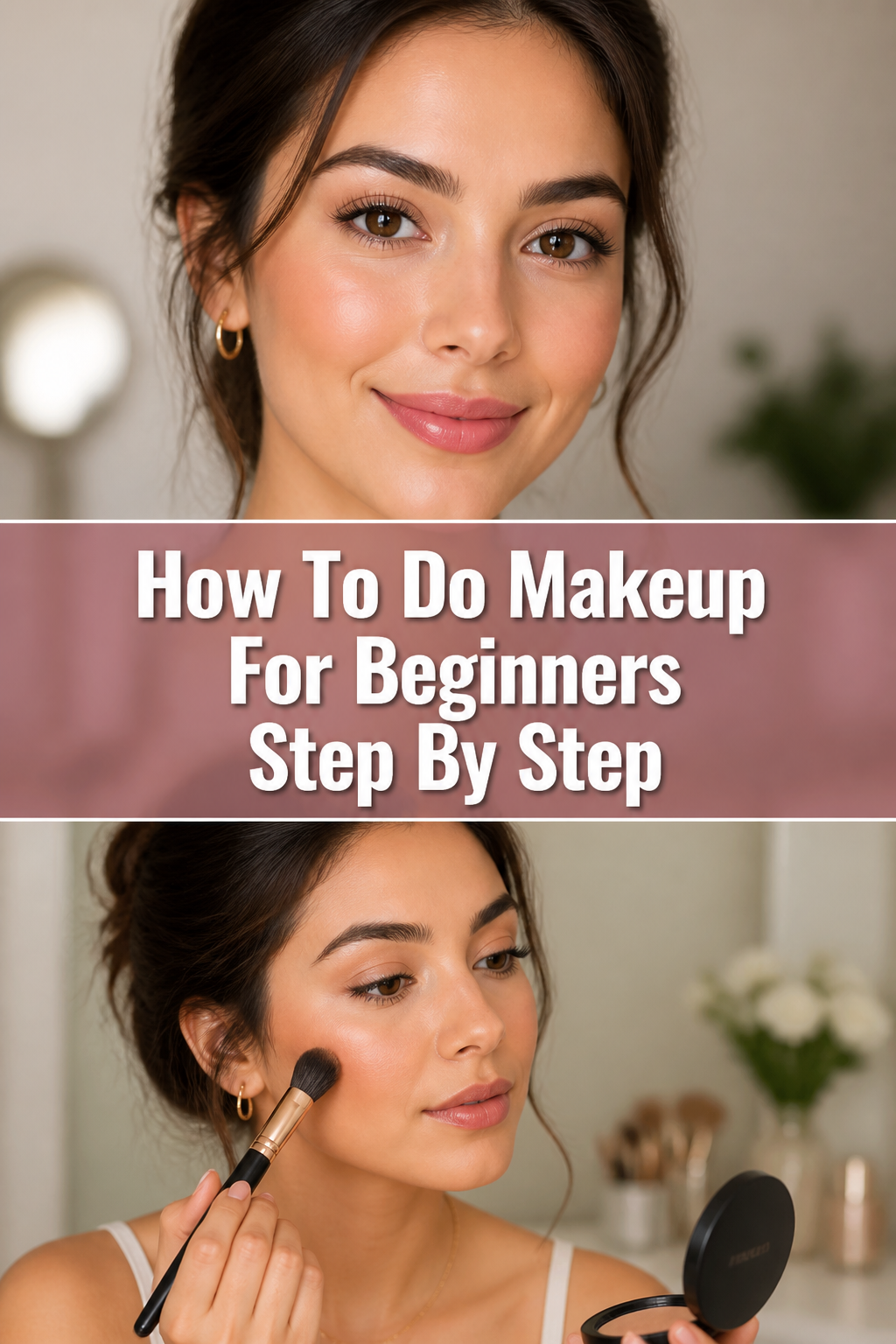
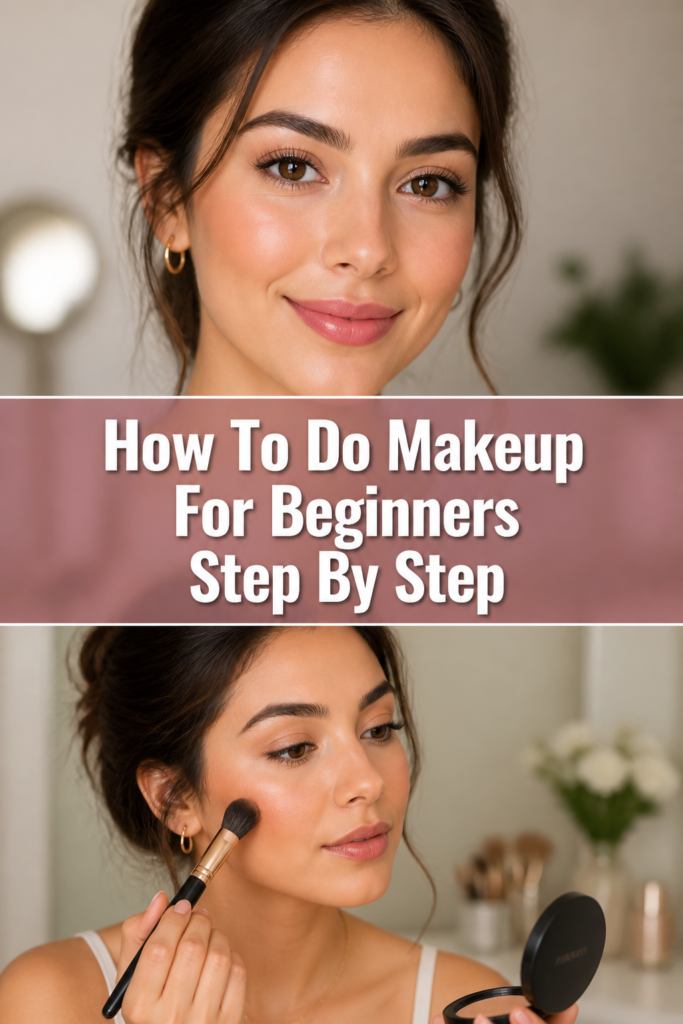
✨ How To Do Makeup For Beginners Step By Step
Ever felt overwhelmed staring at a makeup counter, wondering where to even begin?
I’ve been there, too, feeling lost amidst countless brushes and palettes.
This guide distills years of personal trial and error into simple, easy-to-follow steps, designed to build your confidence and help you create a beautiful, everyday look.
Quick Overview
This guide will walk you through the essential steps for creating a basic, natural makeup look. You’ll learn how to prepare your skin, apply a flawless base, define your features, and finish with a touch of color.
By the end, you’ll have a practical routine you can replicate daily, enhancing your natural beauty with ease.
- Time needed: 15-20 minutes for a complete look
- Difficulty: Beginner
- What you’ll need: Gentle cleanser, moisturizer, face primer, foundation or BB cream, concealer, setting powder, brow pencil or gel, mascara, blush, and a lip product.
Step-by-Step Instructions
Step 1: Prep Your Canvas
Cleanse your face gently to remove any impurities or oils. This creates a fresh, clean base for your makeup. Follow with a light moisturizer to hydrate your skin, making it supple and ready for application.
Next, apply a thin layer of primer across your face. Primer helps to smooth out your skin’s texture and creates a barrier. It also ensures your makeup adheres better and lasts longer throughout the day.
Pro Tip: Choosing the right primer for your skin type (hydrating, mattifying, pore-filling) makes a significant difference in your final look and how long it lasts.
Step 2: Perfect Your Base
Dispense a small amount of foundation or BB cream onto the back of your hand. Start with a pea-sized amount; you can always add more if needed.
Using a damp beauty sponge or a foundation brush, dot the product onto your face: forehead, cheeks, nose, and chin. Then, blend it outwards in small, tapping or buffing motions. Ensure seamless blending into your jawline and neck to avoid a harsh line.
Pro Tip: Always match your foundation shade to your jawline in natural daylight. This ensures the most seamless and natural transition between your face and neck.
Step 3: Conceal and Brighten
Apply a small amount of concealer to any areas needing extra coverage. This typically includes under-eye circles, blemishes, or areas of redness.
For under-eyes, draw a small triangle with the base under your eye and the point extending down towards your cheek. Gently tap and blend the concealer with your ring finger or a small, damp sponge. For blemishes, dab a tiny amount directly onto the spot and blend only the edges.
Pro Tip: Use a concealer one shade lighter than your foundation for under-eyes to brighten. For blemishes, use a shade that perfectly matches your foundation for seamless coverage.
Step 4: Set Your Look
Dip a fluffy brush into your setting powder. Gently tap off any excess product to prevent a cakey appearance.
Lightly dust the powder over areas where you applied concealer and foundation, particularly your T-zone (forehead, nose, chin), which tends to get oily. This step locks your liquid products in place and helps control shine.
Pro Tip: For extra oil control, gently press the powder into your skin using a puff in your T-zone. This technique is called “baking” and can extend wear.
Step 5: Define Your Brows
Brush your brow hairs upwards with a spoolie brush. This reveals their natural shape and any sparse areas.
Using a brow pencil or gel, lightly fill in any gaps with small, hair-like strokes. Follow the natural direction of your hair growth. Finish by brushing through your brows again with the spoolie to soften any harsh lines and distribute the product evenly.
Pro Tip: Don’t try to draw on new brows. Instead, enhance your existing shape. A good rule is to start filling from the arch outwards, then lightly fill the inner brow.
Step 6: Add a Pop of Color
Smile gently to find the apples of your cheeks. These are the plumpest parts of your cheeks when you smile.
Using a fluffy blush brush, apply a small amount of blush to the apples of your cheeks. Blend the color upwards towards your temples for a natural, lifted look. Start with a light hand and build up the intensity as desired.
Pro Tip: Choose a blush shade that complements your natural flush. Peachy tones often suit warmer skin, while pinks look lovely on cooler undertones.
Step 7: Brighten Your Eyes
Curl your eyelashes with an eyelash curler. Hold for a few seconds at the base, then gently pump. This opens up your eyes and prepares them for mascara.
Next, wiggle the mascara wand at the base of your upper lashes. Then, sweep it upwards towards the tips. Apply one to two coats for defined, voluminous lashes. For lower lashes, use the tip of the wand for a lighter application.
Pro Tip: To avoid clumping, twist the mascara wand out of the tube instead of pumping it, which can introduce air and dry out the product.
Step 8: Finish with Lips
Hydrate your lips with a nourishing lip balm. This creates a smooth base for any lip color you choose.
For a beginner-friendly look, apply a tinted lip balm, lip gloss, or a sheer lipstick in a natural shade. This adds a touch of color and completes your everyday makeup without being too bold.
Pro Tip: A subtle lip color that’s close to your natural lip shade, or just a few shades darker, is perfect for an everyday, polished finish.
Common Mistakes to Avoid
Wrong Foundation Shade
Using a foundation that doesn’t match your skin tone can create a noticeable line at your jawline, making your face appear disconnected from your neck. This often results in a mask-like effect, drawing unwanted attention.
Always test foundation shades on your jawline, not your hand or arm, and observe it in natural light. The correct shade should blend seamlessly, disappearing into your skin without effort.
Applying Too Much Product
Over-applying foundation, concealer, or powder can lead to a heavy, cakey appearance. This can settle into fine lines and pores, making them more prominent rather than concealing them.
Remember that less is often more, especially for a natural, everyday look. Start with a small amount of product and build up coverage gradually only where needed, ensuring each layer is blended thoroughly.
Forgetting to Blend
Unblended makeup, particularly around the edges of foundation, concealer, or blush, can create harsh lines and an unnatural finish. This makes it obvious where your makeup starts and ends.
Dedicate time to blending every product into your skin. Use a damp sponge or a soft brush and work in gentle, circular, or tapping motions until there are no visible lines or streaks.
Skipping Skin Prep
Neglecting to cleanse and moisturize your skin before makeup application can lead to a patchy, uneven finish. Dry patches can cause foundation to cling and look flaky, while oily skin might make makeup slide off quickly.
Proper skin preparation ensures a smooth, hydrated canvas for makeup. This allows products to apply more evenly, look more natural, and last significantly longer throughout the day.
Troubleshooting
Makeup Looks Cakey
If your makeup appears thick or cakey, you might be using too much product or not blending enough. Start by applying less foundation and concealer.
Ensure you are blending each product thoroughly into your skin using a damp beauty sponge or a well-suited brush. Lightly set your makeup with a fine setting powder, focusing only on oily areas, rather than applying a thick layer everywhere.
Foundation Disappearing or Fading
If your foundation seems to vanish throughout the day, it could be due to a lack of proper skin prep or setting. Oily skin types are particularly prone to this issue.
Always use a primer suited for your skin type before foundation to create a gripping base. Set your foundation with a good quality setting powder, and consider using a setting spray as a final step to lock everything in place for extended wear.
Mascara Smudges Under Eyes
Mascara smudging can be frustrating, often caused by natural oils, humidity, or simply touching your eyes. Some mascaras are also more prone to smudging than others.
Try switching to a waterproof or “tubing” mascara, which forms tiny tubes around each lash that are resistant to smudging. Allow your mascara to dry completely before blinking or applying other products. You can also lightly dust translucent powder under your eyes before mascara application to absorb excess oil.
Key Takeaways
- Skin preparation is the foundational step for any successful makeup look.
- For beginners, less makeup is always more for a natural, enhancing finish.
- Thorough blending is crucial to avoid harsh lines and achieve a seamless appearance.
- Practice is essential; your skills will improve with consistent effort and experimentation.
- Always choose makeup products that complement your specific skin type and tone.
- Makeup should serve to enhance your natural features, rather than mask them entirely.
Frequently Asked Questions
What’s the difference between foundation and BB cream?
Foundation typically offers more coverage, ranging from medium to full, and is designed to create an even skin tone. BB cream, or “blemish balm,” provides lighter coverage, often includes skincare benefits like SPF, and offers a more natural, sheer finish.
For beginners seeking a natural look, a BB cream can be an excellent starting point due to its ease of application and lighter feel.
Do I really need a primer?
While not strictly mandatory, a primer can significantly improve the longevity and finish of your makeup. It creates a smooth canvas, helps fill in pores, and allows foundation to glide on more evenly.
If you experience issues with makeup fading quickly, settling into lines, or uneven application, a primer can be a game-changer for your routine.
How do I clean my brushes?
Regularly cleaning your makeup brushes is vital for hygiene and product application. Dirty brushes can harbor bacteria, leading to breakouts, and can also make makeup appear streaky or muddy.
You can use a gentle soap, baby shampoo, or a dedicated brush cleanser. Lather the bristles, rinse thoroughly until the water runs clear, reshape them, and lay them flat to air dry completely overnight.
What’s the best way to remove makeup?
Effective makeup removal is crucial for healthy skin. Starting with a cleansing balm or oil is highly recommended, as these products efficiently dissolve makeup, including waterproof formulas, without harsh rubbing.
Follow with a gentle water-based cleanser to remove any residue and thoroughly cleanse your skin. This “double cleansing” method ensures all makeup is gone, leaving your skin clean and refreshed.
Our Top Recommended Finds
- Damp Beauty Sponge: Essential for blending foundation and concealer seamlessly, giving a natural, airbrushed finish without absorbing too much product.
- Gentle Cleansing Balm: A luxurious way to melt away all makeup, even stubborn mascara, without stripping your skin of its natural moisture.
- Fluffy Powder Brush: Perfect for lightly dusting setting powder, ensuring an even application that sets your makeup without looking heavy or cakey.
Your Journey to Confident Beauty Begins Now
You’ve taken the first step towards understanding makeup, and that’s a huge achievement. Remember, makeup is a journey of self-expression and discovery, not a destination.
Don’t be afraid to experiment with different products and techniques outlined here. Practice makes perfect, and with each attempt, you’ll gain more confidence and finesse.
Start with these basic steps today, and watch your skills and confidence bloom. Embrace the process, have fun, and enjoy enhancing your unique beauty.