🎨 How To Dye Hair At Home Step By Step
Thinking about a fresh hair color without the salon price tag?
Dyeing your hair at home can be incredibly rewarding and budget-friendly.
I’ve been coloring my own hair for years, experimenting with everything from subtle highlights to vibrant reds, and I’ve learned a few tricks along the way to achieve salon-quality results right in my bathroom.
Quick Overview
This guide will walk you through everything you need to know to dye your hair successfully at home, from preparation to aftercare.
You’ll learn how to choose the right color, apply it evenly, and avoid common pitfalls for a stunning new look.
- Time needed: 1.5 – 3 hours (depending on hair length and type)
- Difficulty: Beginner
- What you’ll need: Hair dye kit, old towels, gloves, petroleum jelly, hair clips, comb, timer.
Step-by-Step Instructions
Step 1: Choose Your Color Wisely
Selecting the right shade is the most crucial first step.
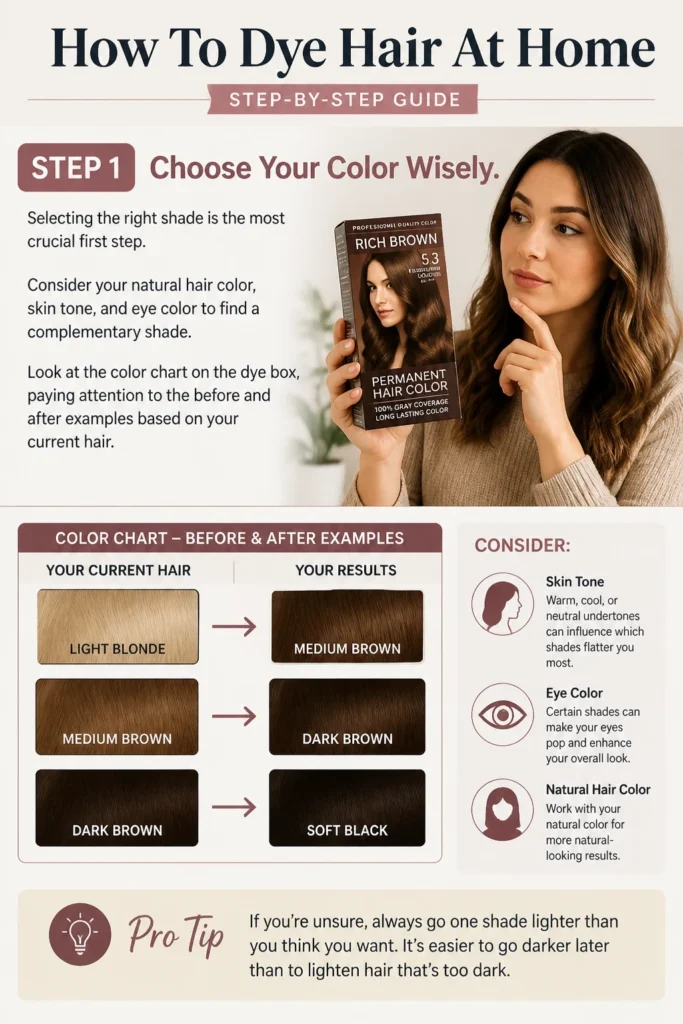
Consider your natural hair color, skin tone, and eye color to find a complementary shade.
Look at the color chart on the dye box, paying attention to the “before” and “after” examples based on your current hair.
Pro Tip: If you’re unsure, always go one shade lighter than you think you want. It’s easier to go darker later than to lighten hair that’s too dark.
Step 2: Gather All Your Supplies
Preparation makes the dyeing process smooth and stress-free.
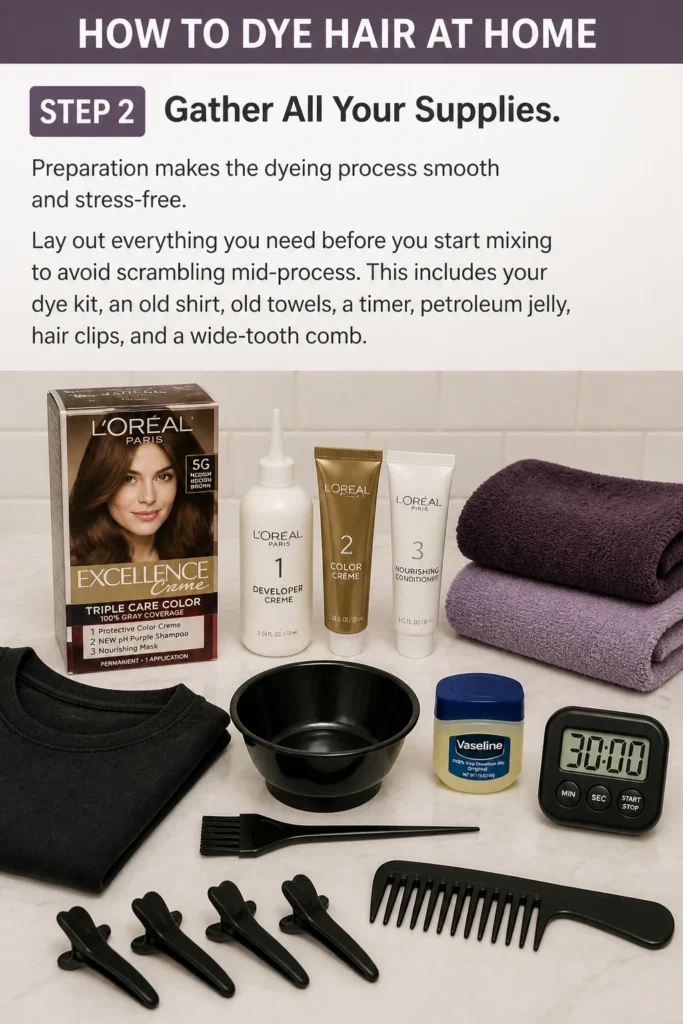
Lay out everything you need before you start mixing to avoid scrambling mid-process.
This includes your dye kit, an old shirt, old towels, a timer, petroleum jelly, hair clips, and a wide-tooth comb.
Step 3: Perform a Patch and Strand Test
Never skip these two vital tests.
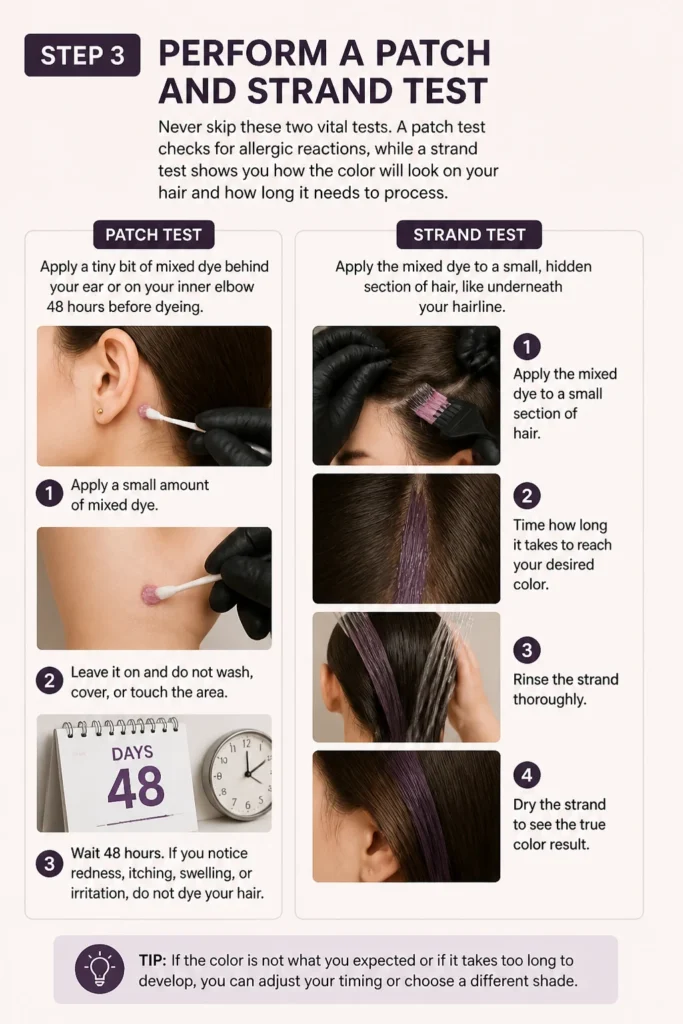
A patch test checks for allergic reactions, while a strand test shows you how the color will look on your hair and how long it needs to process.
Apply a tiny bit of mixed dye behind your ear or on your inner elbow 48 hours before dyeing.
For the strand test, apply the mixed dye to a small, hidden section of hair, like underneath your hairline.
Time how long it takes to reach your desired color, then rinse and dry to see the true result.
Step 4: Prepare Your Hair and Workspace
Start with dry, unwashed hair, ideally washed 24-48 hours prior.
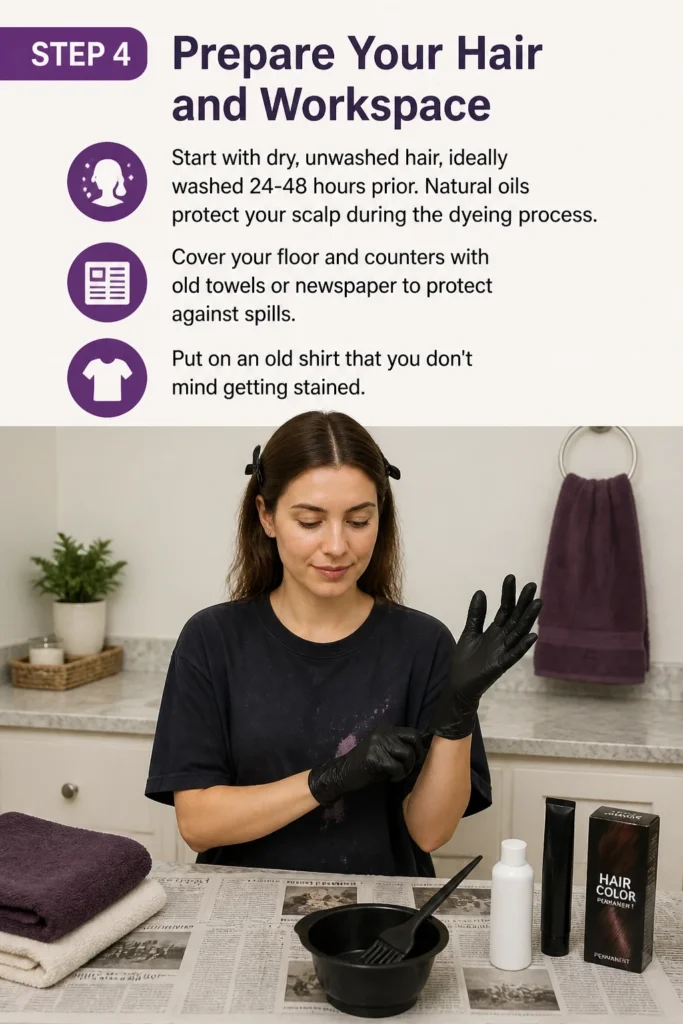
Natural oils protect your scalp during the dyeing process.
Cover your floor and counters with old towels or newspaper to protect against spills.
Put on an old shirt that you don’t mind getting stained.
Step 5: Protect Your Skin
Hair dye can stain skin, so create a barrier.
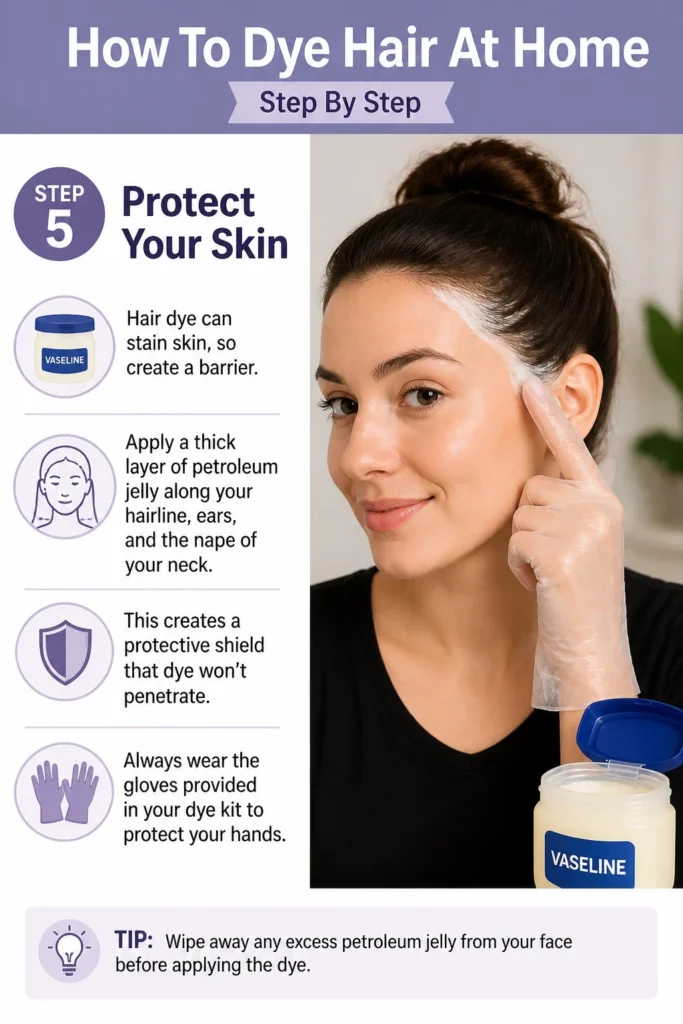
Apply a thick layer of petroleum jelly along your hairline, ears, and the nape of your neck.
This creates a protective shield that dye won’t penetrate.
Always wear the gloves provided in your dye kit to protect your hands.
Step 6: Mix the Dye
Carefully read the instructions in your dye kit.
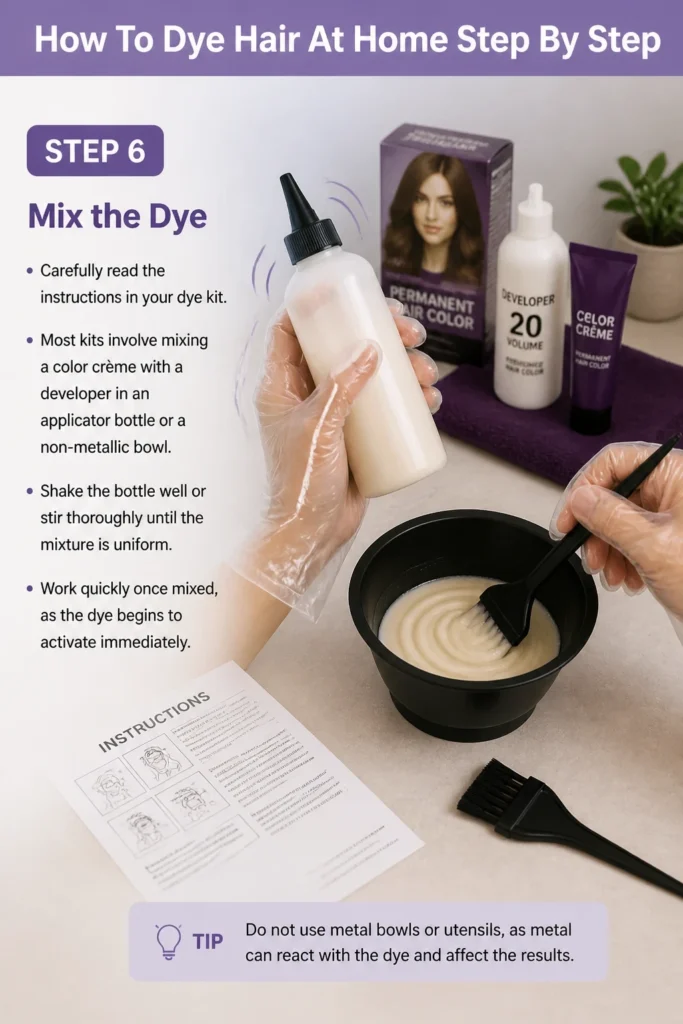
Most kits involve mixing a color crème with a developer in an applicator bottle or a non-metallic bowl.
Shake the bottle well or stir thoroughly until the mixture is uniform.
Work quickly once mixed, as the dye begins to activate immediately.
Step 7: Apply the Dye Evenly
Divide your hair into four sections using clips: two in front, two in back.
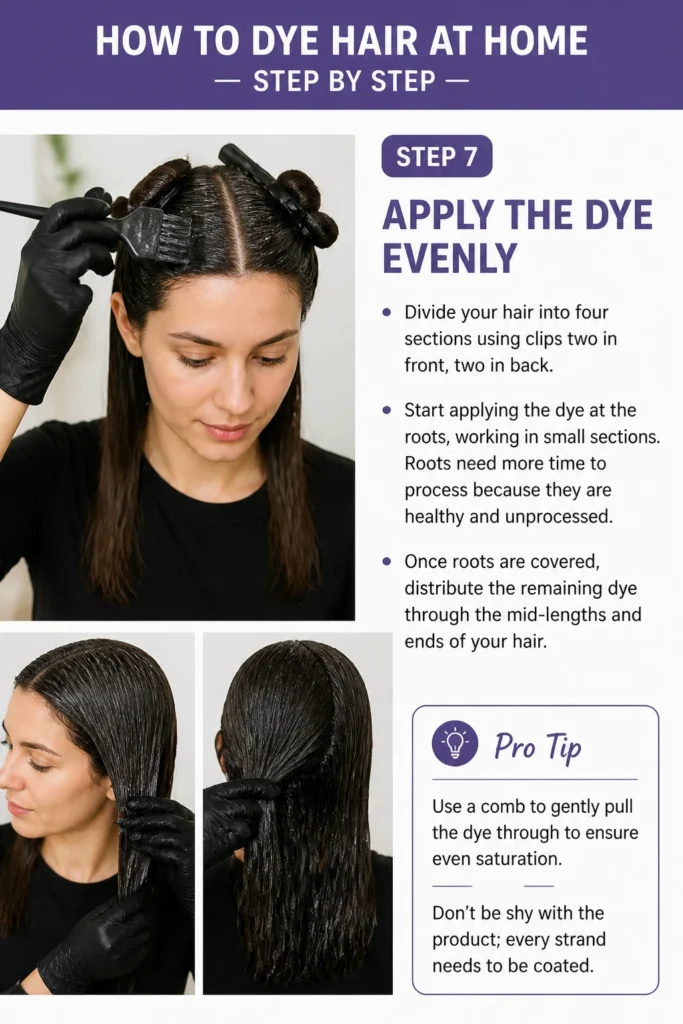
Start applying the dye at the roots, working in small sections.
Roots need more time to process because they are healthy and unprocessed.
Once roots are covered, distribute the remaining dye through the mid-lengths and ends of your hair.
Pro Tip: Use a comb to gently pull the dye through to ensure even saturation. Don’t be shy with the product; every strand needs to be coated.
Step 8: Set Your Timer and Wait
Refer to your strand test results for the ideal processing time.
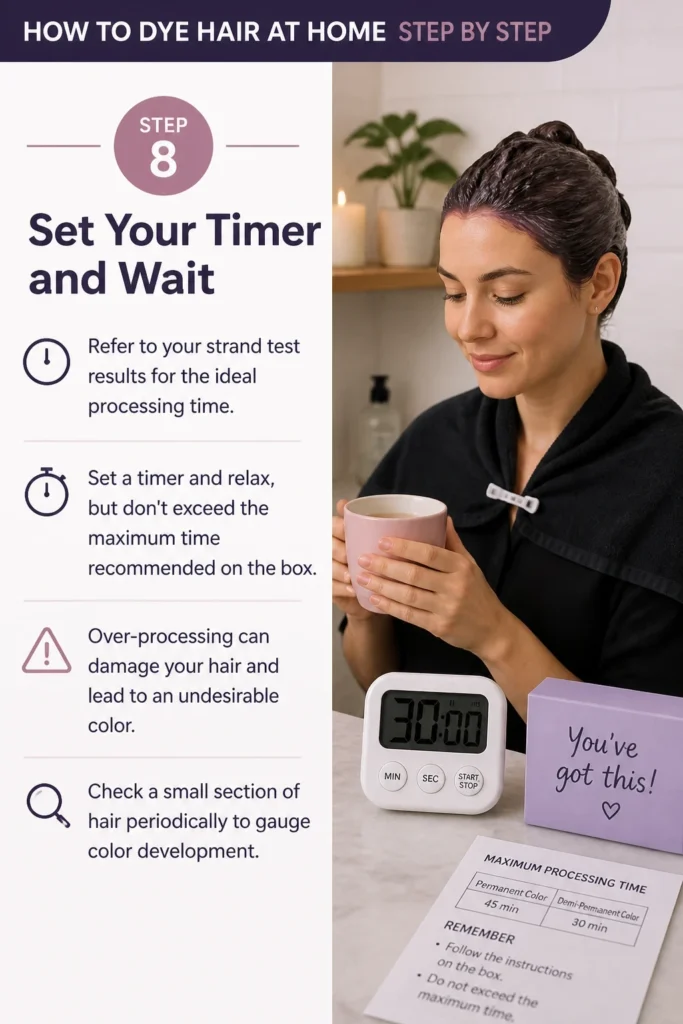
Set a timer and relax, but don’t exceed the maximum time recommended on the box.
Over-processing can damage your hair and lead to an undesirable color.
Check a small section of hair periodically to gauge color development.
Step 9: Rinse and Condition
When the timer goes off, head to the shower.
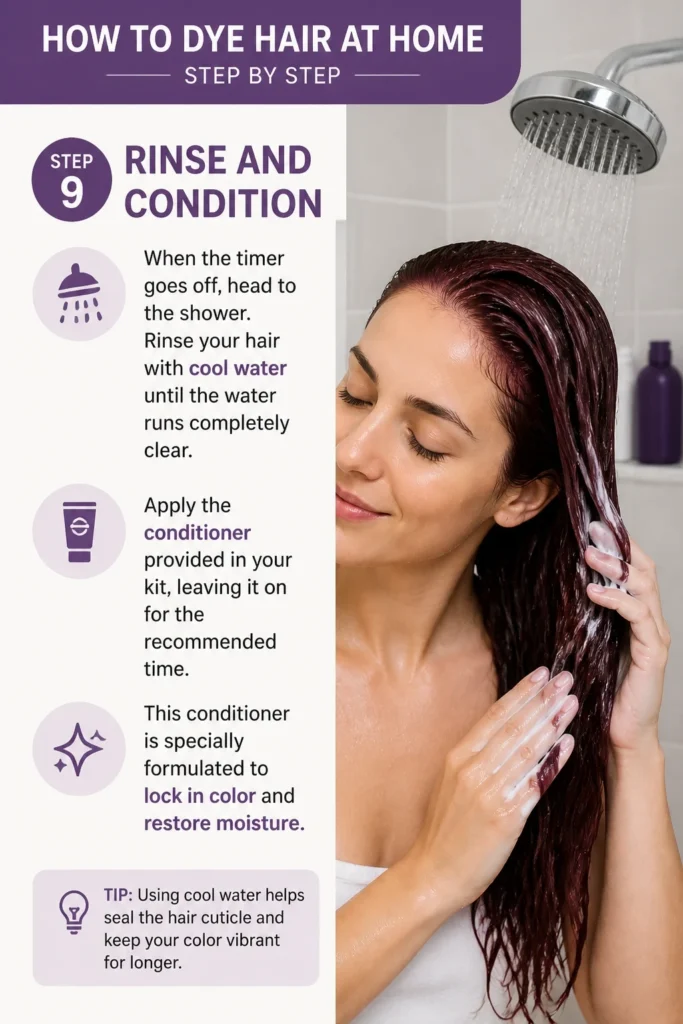
Rinse your hair with cool water until the water runs completely clear.
Apply the conditioner provided in your kit, leaving it on for the recommended time.
This conditioner is specially formulated to lock in color and restore moisture.
Step 10: Dry and Style Your New Look
Gently towel-dry your hair and then style as usual.
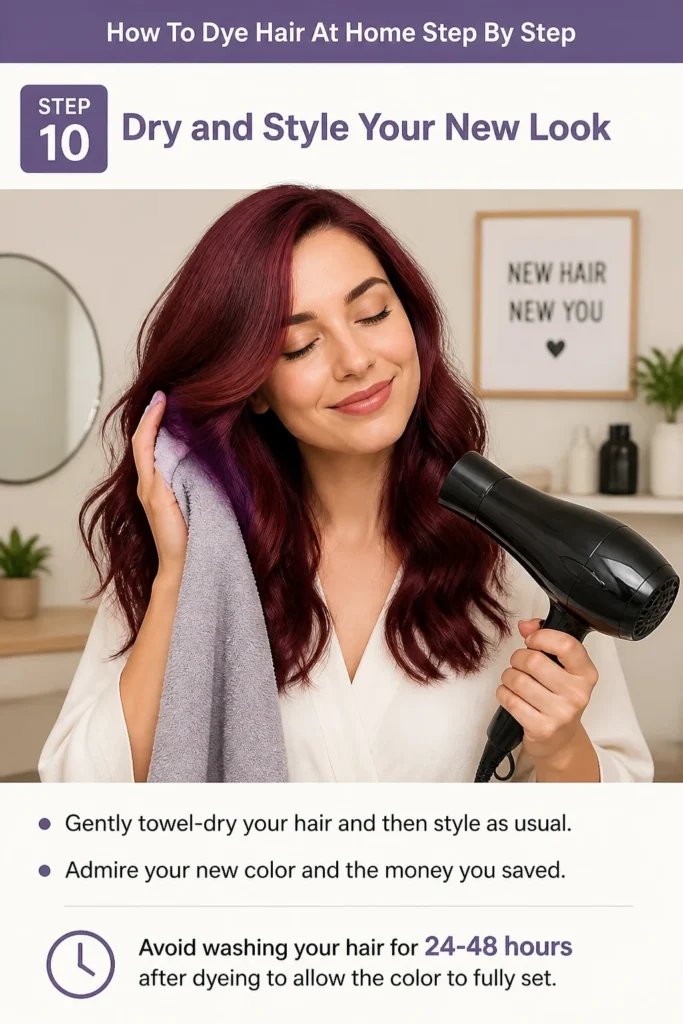
Admire your new color and the money you saved.
Avoid washing your hair for 24-48 hours after dyeing to allow the color to fully set.
Common Mistakes to Avoid
Not Doing a Patch or Strand Test
Skipping these tests is a common and risky oversight.
A patch test prevents severe allergic reactions, which can be dangerous.
The strand test ensures you get the color you expect and prevents surprises like an unintended shade or damaged hair.
Dyeing Hair That’s Too Clean
Applying dye to freshly washed hair can lead to scalp irritation.
The natural oils produced after 24-48 hours provide a protective barrier for your scalp.
These oils also help the color adhere better for a more even result.
Uneven Application
Rushing through the application process often results in patchy color.
Take your time to section your hair thoroughly and apply the dye from roots to ends systematically.
Ensure every strand is saturated for a uniform and professional-looking finish.
Over-Processing the Dye
Leaving dye on for too long won’t make the color more intense; it will likely damage your hair.
Over-processing can lead to dry, brittle hair or an unwanted brassy tone.
Always stick to the recommended processing time from your strand test or the box instructions.
Troubleshooting
Color is Too Dark
If your hair color turned out darker than intended, don’t panic.
Wash your hair with a clarifying shampoo immediately after dyeing to help strip some of the color.
You can also try a color remover designed for home use, but follow instructions carefully as these can be harsh.
Color is Patchy or Uneven
Patchy color often indicates uneven application.
For minor patchiness, you can try spot-treating with leftover dye if you have any, being careful to blend it.
For more significant issues, wait a week or two, deep condition your hair, then consider re-dyeing with a very similar shade, ensuring thorough, even application this time.
Scalp Irritation or Stains
If you experience mild irritation, rinse your scalp thoroughly with cool water.
For dye stains on your skin, try gently rubbing with a damp cloth and a small amount of shampoo or a specialized dye remover wipe.
Petroleum jelly is your best friend for prevention in future applications.
Key Takeaways
- Always perform a patch and strand test to prevent allergies and predict color results.
- Prepare your workspace and skin thoroughly to avoid mess and stains.
- Apply dye to dry, unwashed hair for better scalp protection and color adherence.
- Work in sections, starting at the roots, for even color distribution.
- Stick to the recommended processing time to prevent hair damage and unwanted tones.
- Rinse hair with cool water until it runs clear, then use the provided conditioner.
Frequently Asked Questions
Can I dye my hair if it’s already damaged?
It’s generally not recommended to dye highly damaged hair. Dyeing can worsen dryness, breakage, and split ends. Focus on deep conditioning treatments and allow your hair to recover before attempting to color it.
How long should I wait between dye jobs?
Ideally, wait at least 4-6 weeks between full-head dye applications. This gives your hair time to recover and minimizes potential damage. For root touch-ups, you can often do them every 2-3 weeks as needed.
Will permanent dye wash out eventually?
Permanent dye does not “wash out” in the same way semi-permanent colors do. It chemically changes your hair’s pigment. However, it will fade over time due to washing, sun exposure, and heat styling, and your roots will grow out.
What if I don’t like the color?
If you dislike the color, resist the urge to immediately re-dye. This can severely damage your hair. Wait at least a week, focusing on deep conditioning. Consult a professional stylist for correction options, or try a color remover for home use with caution.
Our Top Recommended Finds
- Petroleum Jelly: Essential for creating a protective barrier against skin stains.
- Old Towels & Shirt: Protect your clothes and surfaces from accidental dye spills.
- Hair Clips & Wide-Tooth Comb: Crucial for sectioning hair and ensuring even dye distribution.
Embrace Your New Shade
Dyeing your hair at home might seem daunting at first, but with careful preparation and these step-by-step instructions, you can achieve beautiful results.
Trust the process, be patient, and enjoy the transformation.
Ready to refresh your look and express your unique style? Pick out your perfect shade today and get started!