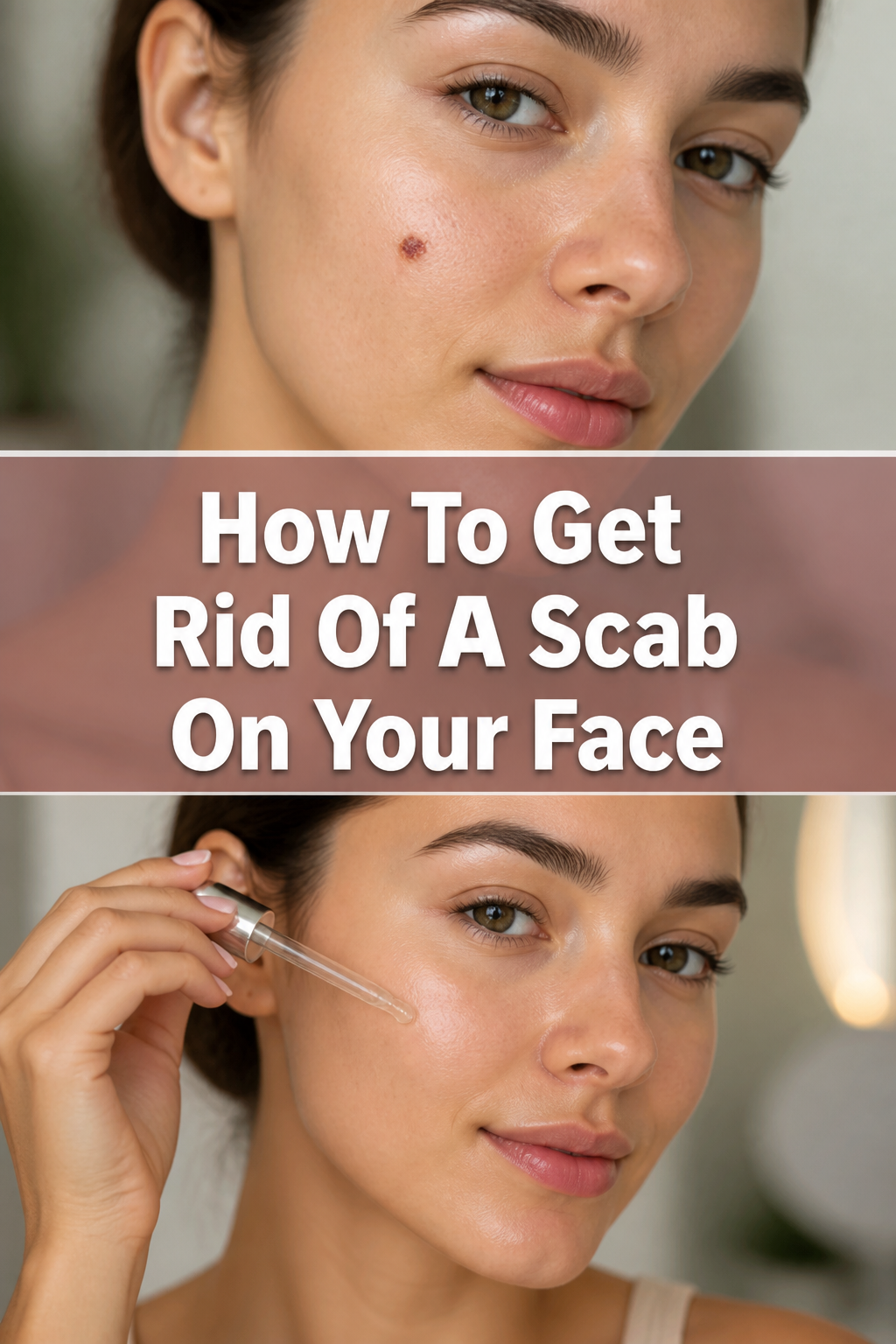
How To Get Rid Of A Scab On Your Face
Dealing with a scab on your face can be frustrating, especially when you want it gone quickly and without a trace. I’ve been there, picking at a healing spot only to make it worse, leaving an unwelcome mark.
Through trial and error, and a lot of research, I’ve learned the best ways to encourage fast, scar-free healing. This guide distills that experience, offering you a clear path to a smoother complexion.
Quick Overview
This guide will walk you through the gentle, effective steps to care for a facial scab, promoting quick healing and minimizing the risk of scarring. You’ll learn how to protect your skin and support its natural repair process.
- Time needed: 10-15 minutes initial setup, then 5 minutes daily care
- Difficulty: Beginner
- What you’ll need: Gentle cleanser, soft towel, warm water, hydrating moisturizer, petroleum jelly or healing ointment, broad-spectrum sunscreen
Step-by-Step Instructions
Step 1: Understand Your Scab’s Stage
Before you do anything, take a moment to observe your scab. Is it fresh and dark, or older and starting to lift at the edges? Understanding its stage helps you tailor your approach.
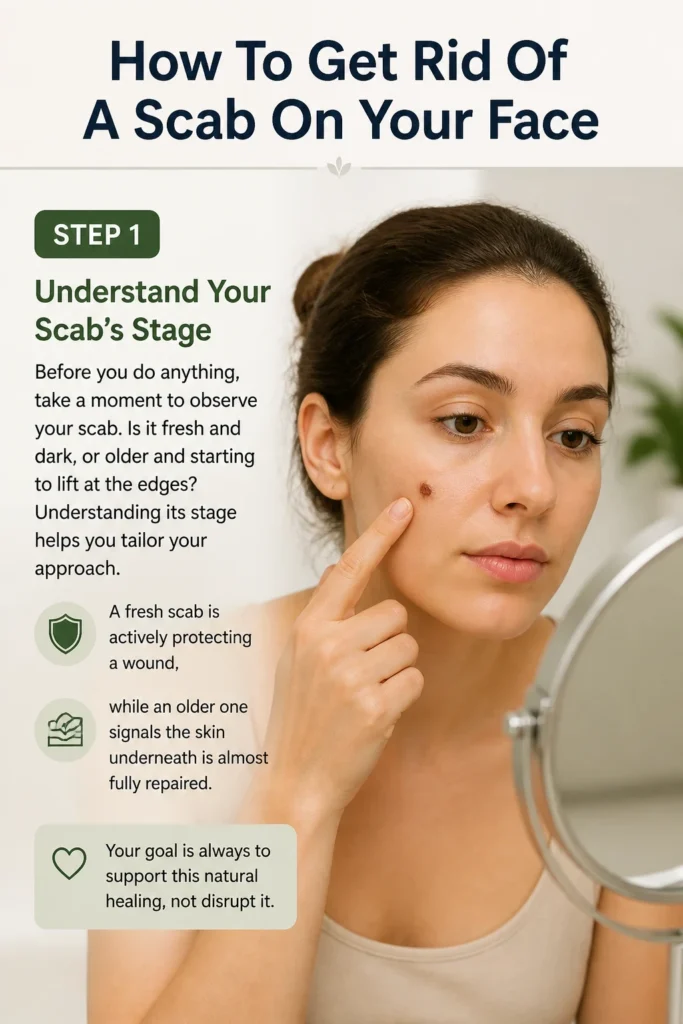
A fresh scab is actively protecting a wound, while an older one signals the skin underneath is almost fully repaired. Your goal is always to support this natural healing, not disrupt it.
Step 2: Cleanse Gently and Carefully
Wash your face twice daily with a mild, fragrance-free cleanser. Use lukewarm water and your fingertips, avoiding any scrubbing motion directly on the scab.
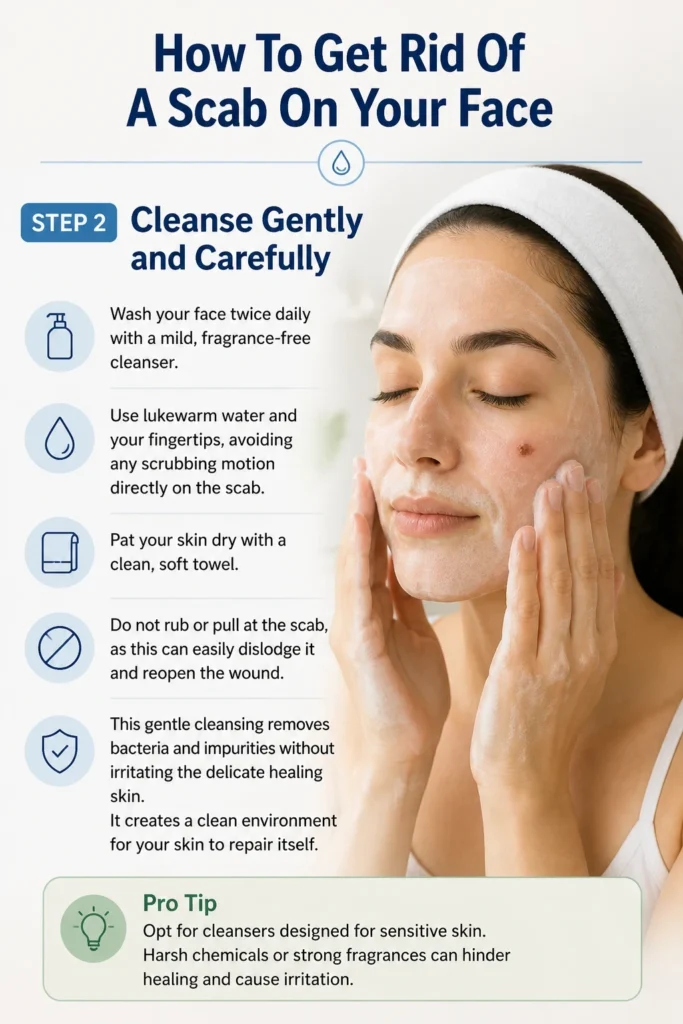
Pat your skin dry with a clean, soft towel. Do not rub or pull at the scab, as this can easily dislodge it and reopen the wound.
This gentle cleansing removes bacteria and impurities without irritating the delicate healing skin. It creates a clean environment for your skin to repair itself.
Pro Tip: Opt for cleansers designed for sensitive skin. Harsh chemicals or strong fragrances can hinder healing and cause irritation.
Step 3: Moisturize Consistently for Optimal Healing
Apply a thick layer of a hydrating, fragrance-free moisturizer or a healing ointment like petroleum jelly (Vaseline) or Aquaphor over the scab. Do this immediately after cleansing while your skin is still slightly damp.
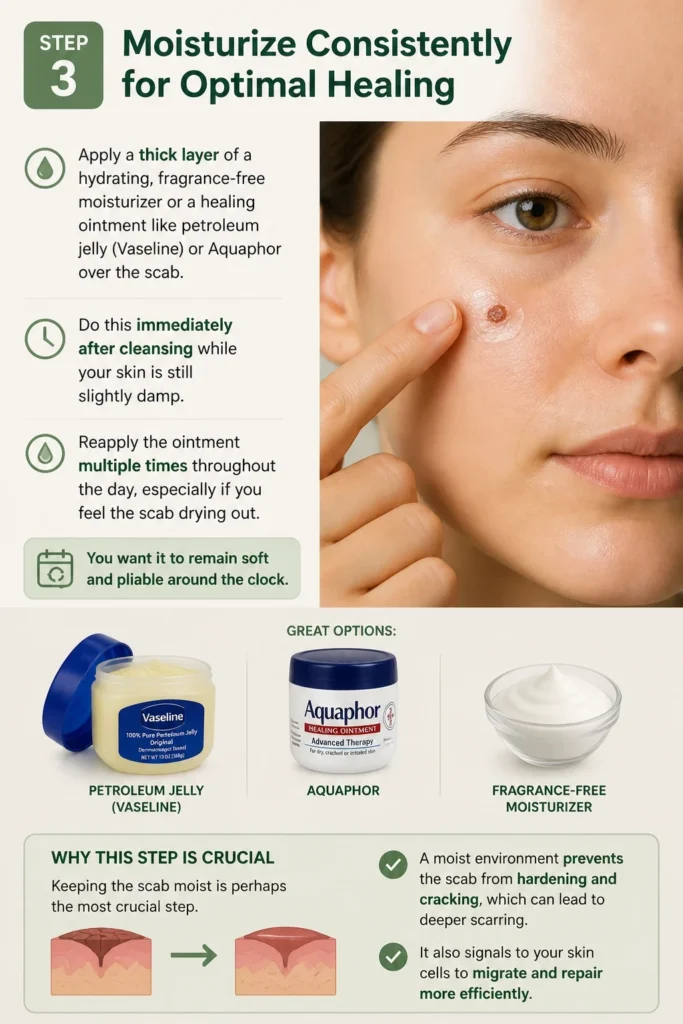
Keeping the scab moist is perhaps the most crucial step. A moist environment prevents the scab from hardening and cracking, which can lead to deeper scarring. It also signals to your skin cells to migrate and repair more efficiently.
Reapply the ointment multiple times throughout the day, especially if you feel the scab drying out. You want it to remain soft and pliable around the clock.
Step 4: Protect from Picking and Trauma
Resist the urge to pick, scratch, or peel the scab. This is incredibly tempting, but it’s the fastest way to prolong healing, introduce bacteria, and guarantee a scar.
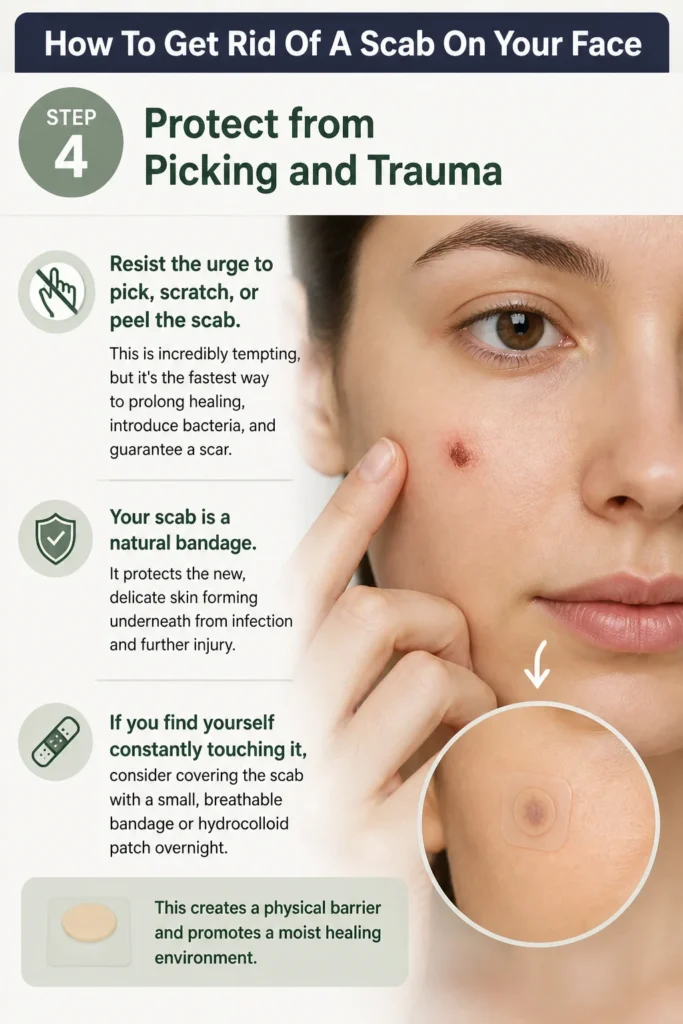
Your scab is a natural bandage. It protects the new, delicate skin forming underneath from infection and further injury. Removing it prematurely exposes the raw skin, making it vulnerable.
If you find yourself constantly touching it, consider covering the scab with a small, breathable bandage or hydrocolloid patch overnight. This creates a physical barrier and promotes a moist healing environment.
Step 5: Shield from Harmful UV Rays
Apply a broad-spectrum sunscreen with an SPF of 30 or higher to your entire face, including the scab, every single day. Do this even if you’re indoors or on a cloudy day.
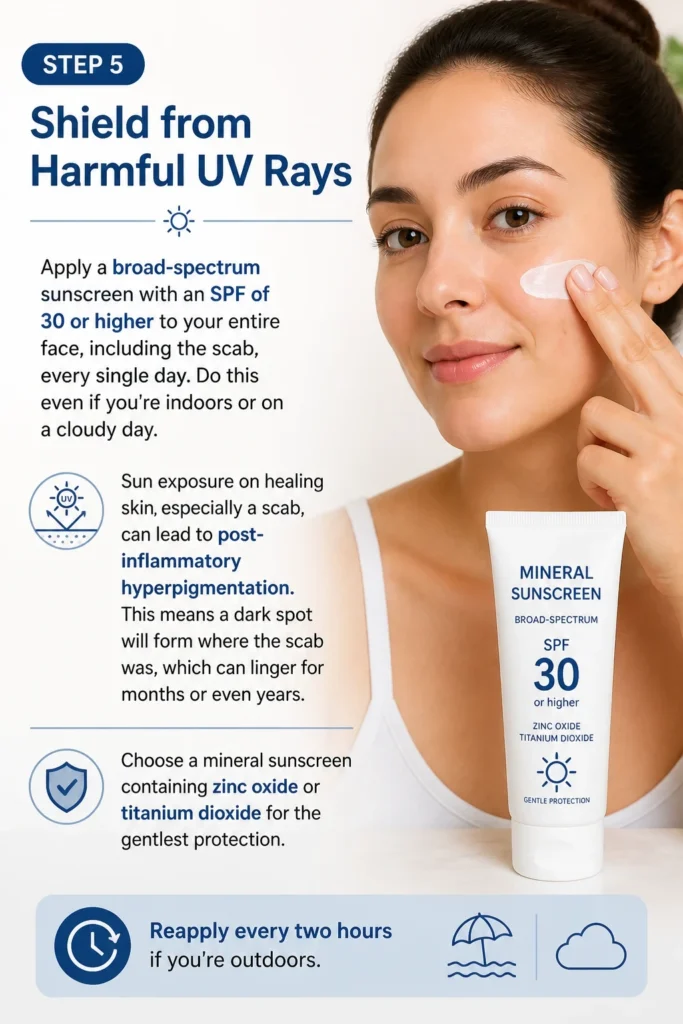
Sun exposure on healing skin, especially a scab, can lead to post-inflammatory hyperpigmentation. This means a dark spot will form where the scab was, which can linger for months or even years.
Choose a mineral sunscreen containing zinc oxide or titanium dioxide for the gentlest protection. Reapply every two hours if you’re outdoors.
Step 6: Maintain Good Hygiene and Avoid Contamination
Keep your hands clean, especially before touching your face. Avoid sharing towels or makeup applicators that might come into contact with the scab.
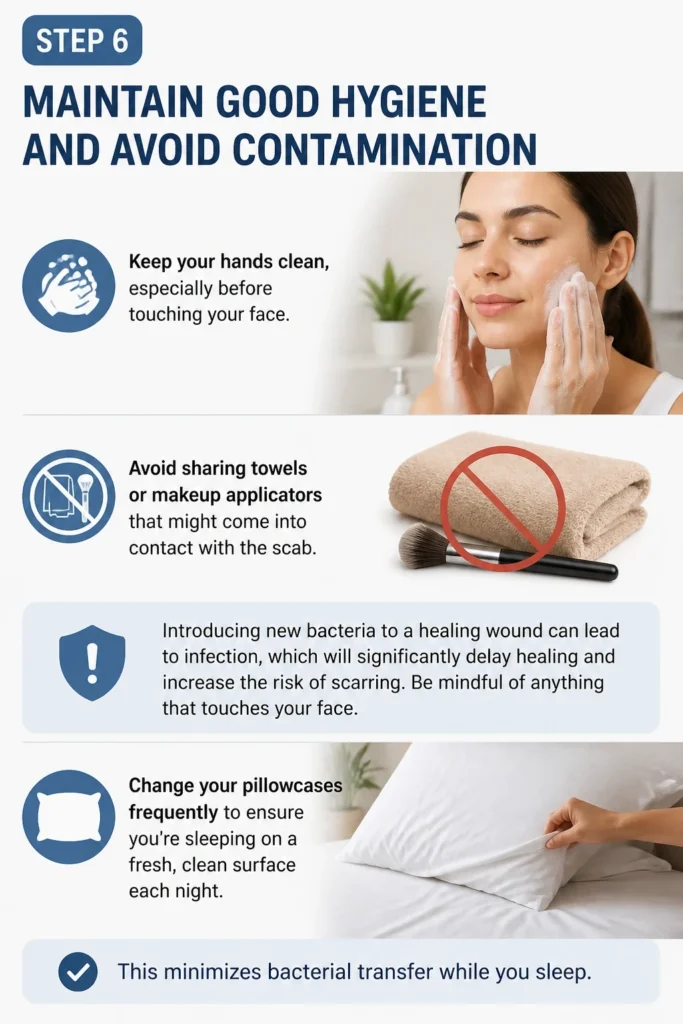
Introducing new bacteria to a healing wound can lead to infection, which will significantly delay healing and increase the risk of scarring. Be mindful of anything that touches your face.
Change your pillowcases frequently to ensure you’re sleeping on a fresh, clean surface each night. This minimizes bacterial transfer while you sleep.
Step 7: Hydrate Internally and Eat Well
Drink plenty of water throughout the day. Staying well-hydrated supports overall skin health and aids in the body’s natural healing processes.
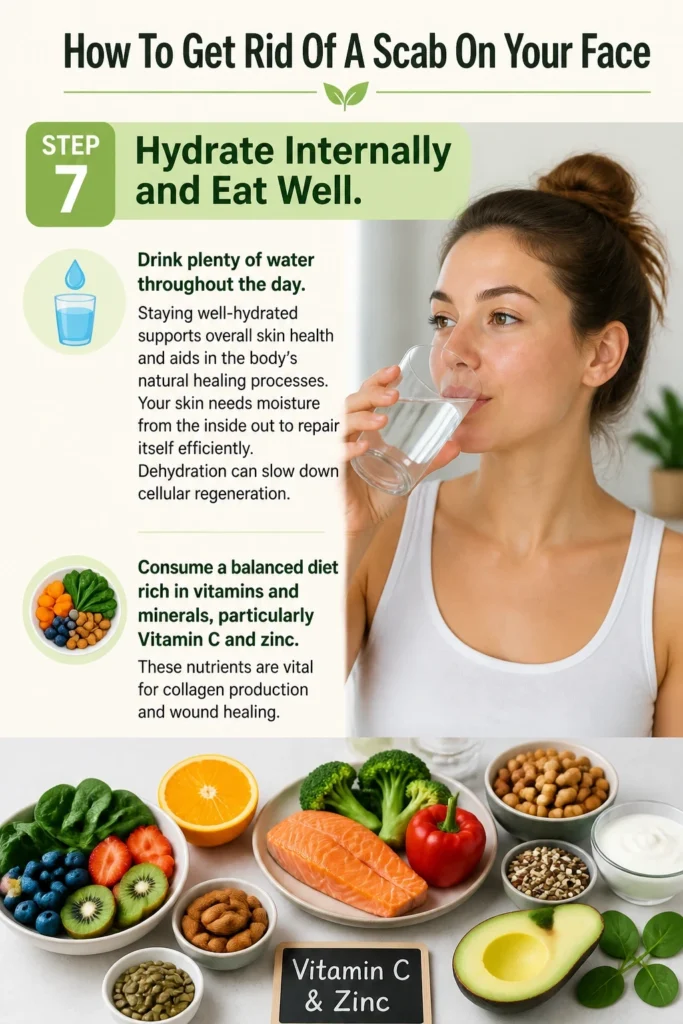
Your skin needs moisture from the inside out to repair itself efficiently. Dehydration can slow down cellular regeneration.
Consume a balanced diet rich in vitamins and minerals, particularly Vitamin C and zinc. These nutrients are vital for collagen production and wound healing.
Step 8: Practice Patience and Let Nature Work
Allow the scab to fall off naturally. This is the clearest sign that the new skin underneath is ready to face the world.
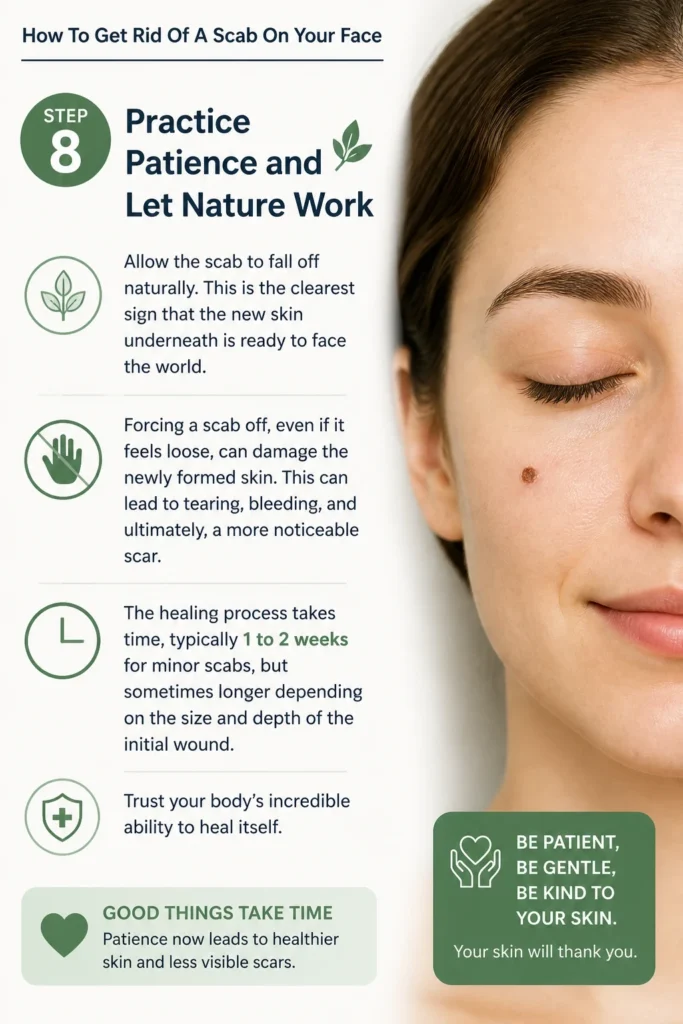
Forcing a scab off, even if it feels loose, can damage the newly formed skin. This can lead to tearing, bleeding, and ultimately, a more noticeable scar.
The healing process takes time, typically 1 to 2 weeks for minor scabs, but sometimes longer depending on the size and depth of the initial wound. Trust your body’s incredible ability to heal itself.
Common Mistakes to Avoid
Picking or Scratching the Scab
This is the most common and damaging mistake people make. Picking at a scab directly interferes with the healing process. It rips away the protective layer, exposes the delicate new skin, and can re-open the wound. This action introduces bacteria, increases the risk of infection, and almost guarantees a scar will form. Always let the scab detach naturally.
Using Harsh or Drying Products
Applying alcohol, hydrogen peroxide, or astringents directly to a scab can be counterproductive. These products dry out the wound and surrounding skin, which can actually slow down healing. A dry scab is more prone to cracking, which can lead to further damage and scarring. Stick to gentle, hydrating products only.
Neglecting Sun Protection
Exposing a healing scab or the new skin underneath to direct sunlight without protection is a recipe for hyperpigmentation. The delicate new skin is extremely vulnerable to UV radiation, which can stimulate melanin production and cause a dark spot to form. This discoloration can last for months, sometimes even years, making the scab area more noticeable.
Forgetting to Moisturize
Allowing the scab to dry out completely is a significant oversight. A dry, hard scab is more likely to crack, bleed, and fall off prematurely, leaving raw skin exposed. A consistently moist environment, created by regular application of ointments, keeps the scab soft and flexible. This promotes faster, more efficient healing and minimizes scar formation.
Troubleshooting
Scab Not Healing or Getting Worse
If your scab appears redder, more swollen, or starts oozing pus, these are signs of a potential infection. This also applies if you develop a fever or increased pain around the scab. You should consult a doctor or dermatologist promptly. They can assess the situation and prescribe appropriate treatment, like antibiotics, if necessary.
Persistent Itching Around the Scab
Itching is a common part of the healing process as new skin cells form. However, intense or unbearable itching can be frustrating. To relieve it, ensure the scab is well-moisturized with a healing ointment. You can also try applying a cool compress gently for a few minutes. If the itching is severe and disrupting your sleep, speak to a pharmacist about over-the-counter hydrocortisone cream or antihistamines.
Dark Spot Forming After Scab Falls Off
Sometimes, even with careful treatment, a dark spot (post-inflammatory hyperpigmentation) can appear after the scab has healed. This is more common in individuals with darker skin tones or those who had sun exposure during healing. Continue to use broad-spectrum sunscreen daily. Over-the-counter products containing ingredients like vitamin C, niacinamide, or alpha arbutin can help fade these spots over time. For persistent or very dark spots, a dermatologist can recommend stronger treatments.
Key Takeaways
- Gentle cleansing and consistent moisturizing are essential for proper scab healing.
- Never pick or scratch a scab; allow it to fall off naturally to prevent scarring.
- Protect the scab and new skin from sun exposure with broad-spectrum sunscreen daily.
- A moist healing environment promotes faster and more effective skin repair.
- Patience is crucial; the body’s natural healing process takes time.
- Seek professional medical advice if you notice signs of infection or unusual healing.
Frequently Asked Questions
How long does a facial scab usually take to heal?
The healing time for a facial scab varies depending on its size and depth. Minor scabs from small cuts or blemishes might heal within 7-10 days. Larger or deeper wounds can take 2-4 weeks or even longer. Consistent, gentle care can help optimize this timeline.
Can I wear makeup over a scab?
It’s generally not recommended to wear makeup directly over a scab. Makeup can trap bacteria against the healing skin, increasing the risk of infection. It can also dry out the scab or stick to it, causing further irritation or even pulling the scab off prematurely when removed. If you must wear makeup, apply it carefully around the scab, not directly on it, and ensure your brushes are clean.
When should I see a doctor or dermatologist about a scab?
You should consult a doctor if the scab shows signs of infection, such as increasing redness, swelling, warmth, pus, or if you develop a fever. Also seek medical advice if the scab doesn’t heal within a typical timeframe, continues to bleed, or if you’re concerned about potential scarring. Early intervention can prevent complications.
Is it normal for a scab to itch as it heals?
Yes, it’s very common for a healing scab to itch. This sensation is often a sign that new skin cells are regenerating and nerves are reconnecting in the area. Resist the urge to scratch, as this can disrupt the healing process. Keeping the scab well-moisturized can often help alleviate the itching sensation.
Our Top Recommended Finds
- CeraVe Hydrating Facial Cleanser: A gentle, non-foaming cleanser that effectively cleans without stripping the skin’s natural moisture barrier. Perfect for daily use on sensitive, healing skin.
- Aquaphor Healing Ointment: An excellent multi-purpose ointment that creates a protective barrier, locking in moisture and promoting a healing environment for scabs and compromised skin.
- EltaMD UV Clear Broad-Spectrum SPF 46: A lightweight, oil-free mineral sunscreen that provides strong UV protection without irritating sensitive or acne-prone skin. Crucial for preventing hyperpigmentation.
Beyond the Scab: Nurturing Your Complexion
Getting rid of a scab on your face is more than just waiting; it’s about actively supporting your skin’s incredible ability to heal. By following these gentle, consistent steps, you’re not just speeding up the process, you’re also significantly reducing the chance of lasting marks.
Embrace this mindful approach to skincare. Your commitment to proper care during this healing phase will pay off with a smoother, clearer complexion. Start today, and give your skin the kindness it deserves.